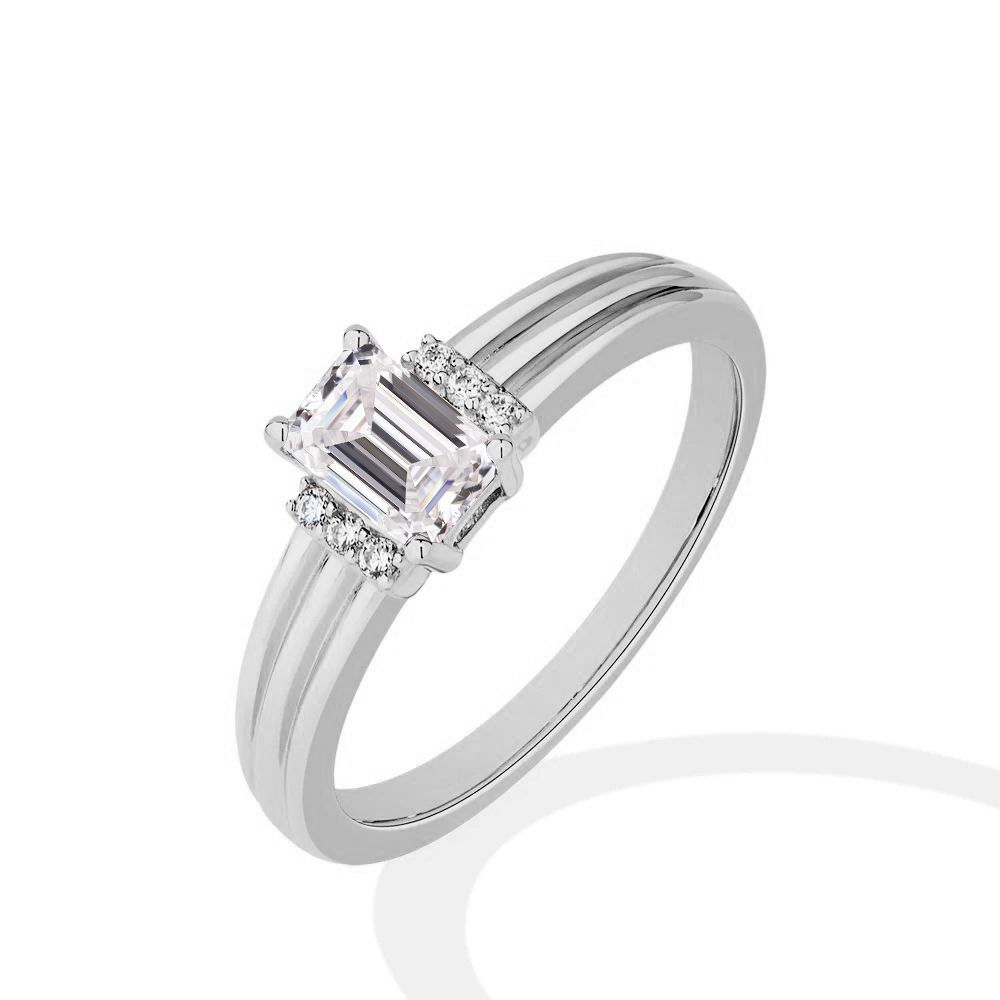
The first question we ask a client is rarely about the stone. It is about the metal, and almost no one walks in knowing what 14k, 18k or platinum actually mean on the hand. We will lay it out the way we explain it across our own workbench.
14k gold is 58.3% pure gold mixed with durable alloys. In the USA it is the everyday default for a reason: it is hard enough to survive a life of hand-washing, typing, gardening, and it resists scratches far better than softer metals. If you wear your ring without taking it off, 14k is usually the right call. It also leaves more room in the budget for a better center stone.
18k gold is 75% pure. It carries a warmer, richer color and a slightly heavier feel, especially in yellow and rose gold. The trade-off is that it is softer and will show wear sooner. We recommend 18k when the ring is a statement piece worn on special occasions, or when the deeper color matters more than scratch resistance.
Platinum is the densest of the three. It weighs noticeably more on the finger and develops a soft matte patina over years that many people love. It is also the most expensive by weight and the slowest to cast and polish. We use platinum for clients who want a ring that feels permanent and do not mind the cost and the extra week of bench time.
White gold deserves a note on its own: it is rhodium-plated to look bright white, and that plating wears off over a few years, which is normal and easy to re-dip. Platinum stays white on its own.
Our honest recommendation: if you are unsure, start with 14k in the color your partner actually gravitates toward in their existing jewelry. You can always upgrade the next piece. The ring that gets worn every day beats the ring that sits in a box.