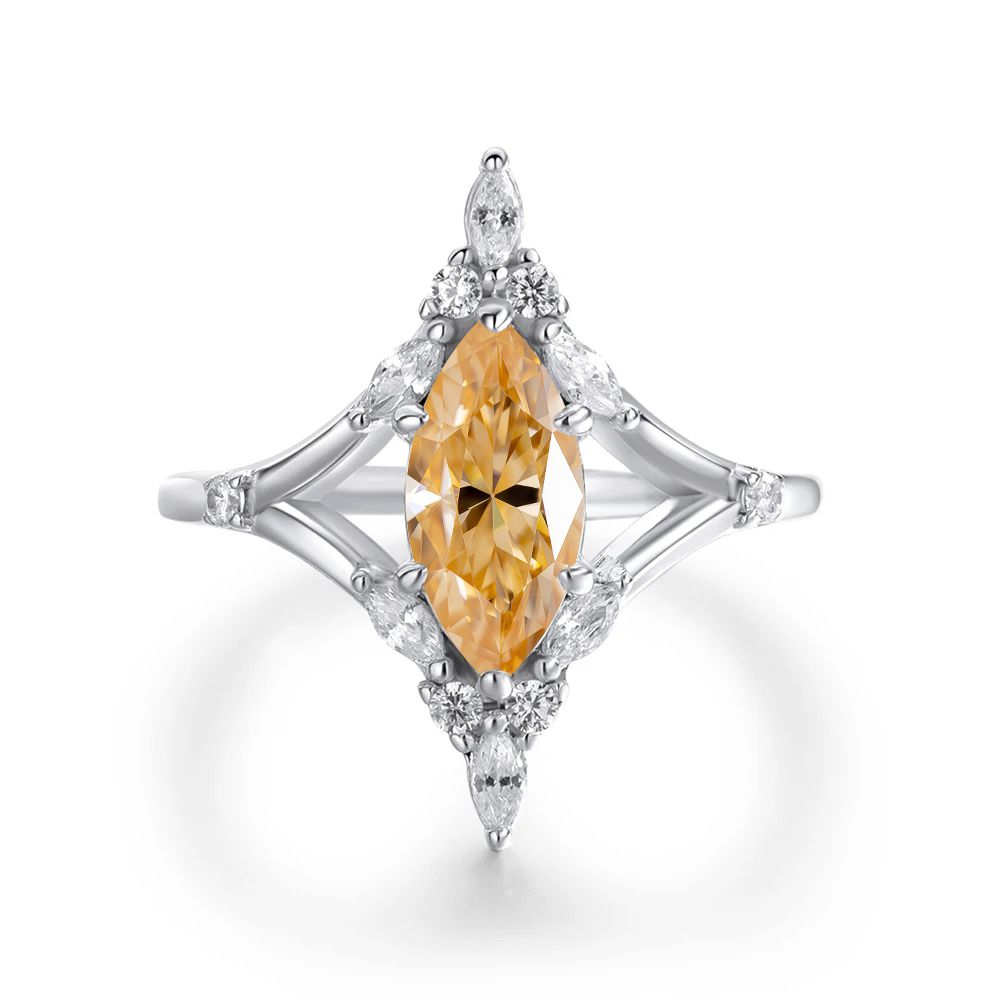
Shape is the first thing clients lock onto and the last thing they should. We usually ask three questions before showing a single stone: how long are the fingers, how large is the hand relative to the wrist, and what does the person do with their hands all day. Those three answers narrow the field faster than any pinterest board.
Short fingers
A short finger with a wide nail bed responds to anything that runs lengthwise. Oval, marquise, pear, emerald cut held vertically. The stone should sit slightly above the finger and never spill wider than the finger itself. Watch the width. A 9x7 oval is 7mm across, which on a finger 14mm wide leaves 3.5mm of skin each side. That reads balanced. A round stone of the same carat weight is 7.5mm across and reads rounder and shorter. Same money, different read.
What not to do: a wide cluster or a stone set east to west. Both cut the finger in half visually.
Long fingers
Long fingers can wear almost anything and this is where clients overthink. A round brilliant looks generous. A three-stone with side stones adds width, which long hands carry well. The one caution is a very narrow marquise on a long finger, because the vertical line repeats the finger line and reads almost too thin. Set it in a halo or add shoulders and the proportion comes back.
Small hands
A hand that measures 15mm to 16mm across the finger should stay under 8mm of stone width for daily wear. We built a 9mm round for a client in Denver last year on a 1.5mm band and she came back after four months saying it caught on everything. We reset the same stone into a lower six-prong head and it has been fine since. Height matters as much as width. Keep the head under 6mm off the finger and life gets easier.
Active jobs
A nurse, a pastry chef, a climbing instructor, a vet tech. These clients need stone protection over stone size.
| Shape | Risks | Better choice |
|---|---|---|
| Marquise | Two sharp points, chips easily on impact | Oval with a bezel |
| Emerald cut | Four clipped corners are the weak spots | Emerald cut in a full bezel |
| Pear | The point catches gloves and pockets | Round or oval, or pear with a V-prong |
| Round | Low risk, sits tall if poorly set | Round in a low six-prong or half-bezel |
Our setter keeps a running argument with clients about marquise stones for anyone who works with their hands. He has reset four chipped marquise stones this year. A bezel or half-bezel around the point solves most of it, but some clients will not accept the look, and that is their call once they have heard the number.
The shape that suits the setting
Shape and setting are one decision, not two. A pear wants a V-prong at the tip so the point is not hanging in open air. A marquise wants prongs at both tips. An emerald cut wants corner prongs, because a corner chip on a step cut is very visible. An oval needs four prongs minimum, and a thin girdle needs six. Tell your jeweler what the stone will be doing all day and the setting follows from that, rather than from a catalogue photo.
If you are stuck between two shapes, ask to hold both in wax on your own hand. We keep unset wax copies of common shapes on the bench for exactly this. Ten minutes of that answers more than a week of browsing.