Wholesale vs Retail: Understanding Jewelry Markups
Bench notes · The Journal
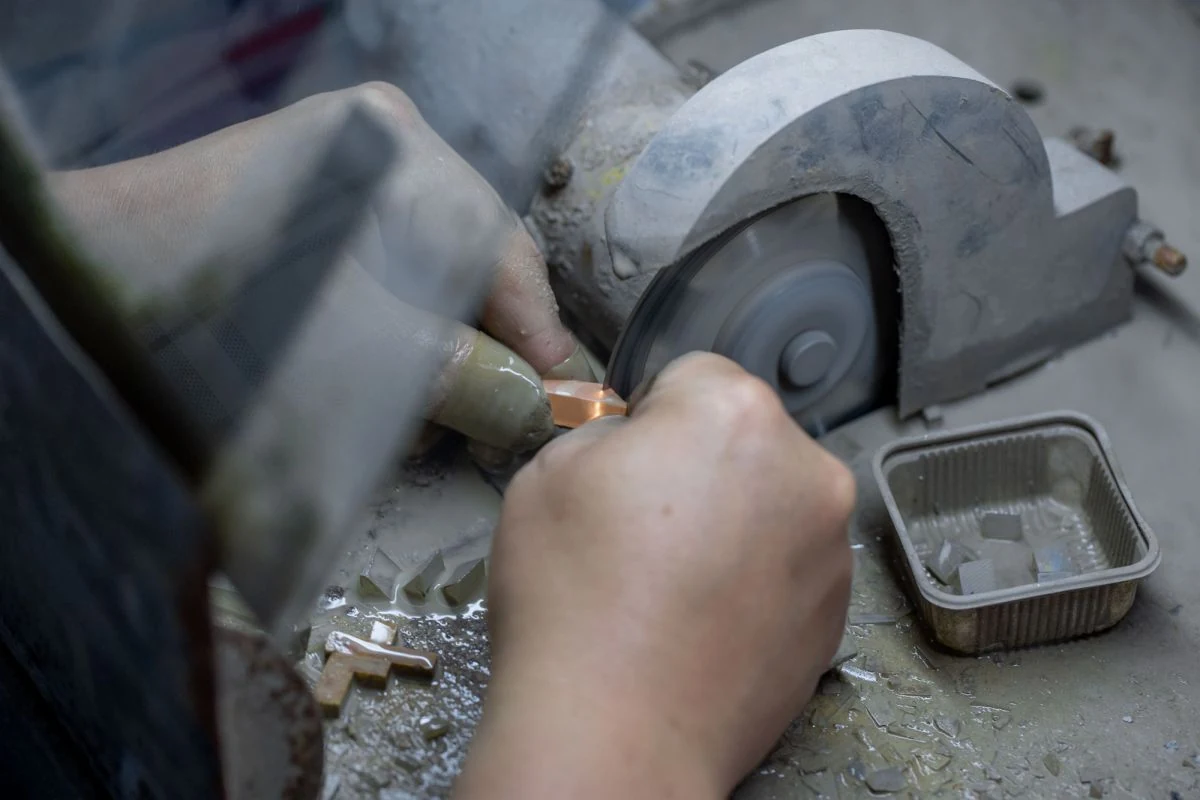
People sometimes ask us, half-accusingly, "what is the markup on jewelry?" They expect a number like "50 percent" or "double." The honest answer is that it depends entirely on which step of the chain you are looking at. A ring that sells in a mall store for $6,000 might have cost the retailer $2,200, which means it cost the workshop $1,200 to build. Each step adds a margin, and by the time it reaches your finger, the original number is unrecognizable.
I want to walk through that chain the way I see it from the bench, because understanding it changes how you shop. It is not about calling anyone a crook. It is about knowing which margins you are choosing to pay, and which ones you can skip.
01The chain, step by step
Let us take a typical engagement ring and follow it from rough rock to your hand:
So a ring that cost $1,200 to build, with a stone that cost the store $1,500, lands on the shelf around $5,500 to $7,000. That is the markup people sense but cannot name. None of the steps are fraudulent - each business has costs to cover - but you are paying for a lot of layers you never see, and each layer adds nothing to the ring on your finger.
02What this means when you buy
If you buy that ring from a mall store, you are paying for the stone, the setting, three middleman margins, and the store's overhead. If you buy the same ring factory direct, you are paying for the stone (at roughly the same cost) and the workshop's labor and margin. The difference is often 30 to 50 percent, and the physical ring on your hand is the same thing.
This is exactly why we recommend people understand the channel before they compare prices. Our piece on factory direct versus retail lays out the model clearly, and our breakdown of what a custom ring costs to build shows the line items at the workshop level.
03The honest caveat
I want to be fair to retail stores. They provide something: you can touch the ring, walk out with it that day, and have a physical place to return to. For some people that convenience is worth the markup. If you value the in-store experience and the immediate handoff, paying retail is a legitimate choice. Just know what you are paying for, and that it is convenience, not extra diamond quality.
04Why branded jewelry carries an even bigger markup
If the ring has a famous brand name on it, the markup goes up again, and up, and up. A branded engagement ring can be two to three times the price of an unbranded ring with the exact same diamond and the same setting quality. You are not paying for a better stone. You are paying for the logo, the box, the advertising budget, and the social signal. There is nothing wrong with wanting that signal, but go in knowing that most of what you are paying for is not in the ring itself.
At the workshop level, the stone and the setting are the stone and the setting. A GIA 1-carat diamond from a reputable source is the same diamond whether it sits in a branded store window or on our bench. The difference is everything around it. Once you see that, the branded premium becomes a choice about how you want to buy, not about what you are buying.
The markup is not a secret conspiracy. It is a chain of businesses, each earning a margin for the work they do. The smart move is not to resent it. It is to decide, ring by ring, which parts of the chain you actually want to pay for. If you want the immediate store experience, great. If you want the same piece for less and you are comfortable working remotely, cutting out the middle layers is where the savings live, and the ring on your finger is physically identical to the one in the case.
The history and conventions of engagement rings are outlined in the Wikipedia entry on engagement rings.
05Frequently Asked Questions
How do I verify a factory before placing a bulk order?
Request a production video, business license, export records and a paid sample run. A factory that accepts a 50-piece test order is usually a real manufacturer.
What payment terms do you offer?
30% T/T deposit with the balance against the bill of lading. This protects both sides on first orders and can move to net terms after a track record.
What is your normal reject rate?
3–5% under 10x loupe inspection for cast and set pieces. Defective units are replaced free in the next shipment.
Where is the factory located?
Wuzhou, Guangxi, China—the core lab-grown and moissanite manufacturing cluster. Shipments go via Guangzhou or Shenzhen ports.
Related reading: Wholesale Custom Moissanite Jewelry: GRA-Certified Bulk Sourcing That , Custom Jewelry Wholesale for Boutiques: MOQs, Margins and Lead Times, Custom Jewelry Wholesale for Bridal Boutiques: A Bespoke Program That .
Send a sketch or a photo — our setter will answer with stone options and a price band.
Talk to the atelier


