Wedding Bands Wholesale: sizing & durability
Bench notes · The Journal
01Wedding Bands for Wholesale Buyers: Sizing, Settings, and Durability Decisions
Wedding bands succeed in the wholesale market when buyers get three decisions right early: the sizing range they will stock, the setting style that matches their customer base, and the durability profile of the metal and stones they commit to. A distributor or retailer who plans these factors before ordering avoids dead inventory, excessive resizing claims, and returns.
This article walks through the practical choices involved in sourcing wedding bands for the US market, from ring size strategy to metal selection to quality control expectations, with details you can verify against any supplier's terms.
Why sizing strategy shapes your inventory plan
Wedding bands are one of the few jewelry categories where a single style must be offered in a full run of sizes. Unlike fashion rings, a band sold for a wedding cannot be substituted with a different design if the size is out of stock. Wholesale buyers typically carry US sizes 4 through 13, with the heaviest sell-through between 5 and 10. Deciding whether to stock the full range or a core range affects both cash flow and customer satisfaction.
Custom work allows you to order less-common sizes on demand. The trade-off is time: sampling takes 7 to 10 days and bulk production runs 15 to 25 days after approval, so a custom size order needs to be planned around your store's sales cycle. Stock styles carry a minimum order quantity of 1 piece, which makes it practical to fill gaps in a size run without committing to a large buy.
Width and profile: the decisions that drive fit comfort
Width affects both comfort and perceived value. Most wedding bands for men fall between 4mm and 8mm wide; women's bands typically range from 2mm to 4mm. A wider band fits more snugly than a narrow one at the same ring size, so many jewelers recommend sizing up a quarter or half size for widths above 6mm. If your catalog spans multiple widths, note this on your product pages to reduce exchanges.
Profile, the cross-section shape of the band, matters for daily wear. Comfort-fit bands have a rounded interior that slides over the knuckle more easily and suits customers who work with their hands. Flat profiles read as more contemporary and are common in minimalist designs. Court profiles offer a middle ground. Stocking two or three profiles across your core width range gives customers a real choice without multiplying your SKU count beyond what your budget supports.
Setting styles and their durability trade-offs
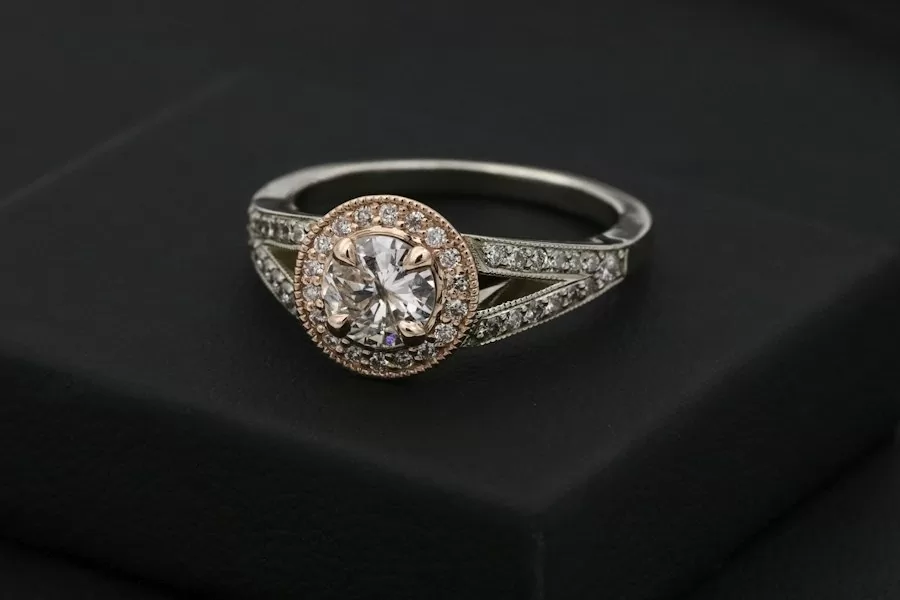
Setting choice determines how much maintenance a band will need and how well it survives daily wear. Channel-set and bezel-set stones sit protected within metal, which suits customers who want a low-maintenance ring. Pavé and shared-prong settings expose more of each stone and deliver more sparkle, but prongs can catch on fabric and require periodic tightening.
Eternity bands, where stones circle the full band, cannot be resized easily because metal continuity is interrupted; a sizing strategy built around eternity styles depends on accurate initial sizing or on suppliers who offer custom sizing at the 30-piece minimum.
Many wholesale buyers now pair wedding bands with moissanite stones. Moissanite is a lab-created diamond alternative with hardness around 9.25 on the Mohs scale, which holds up well to daily wear at a price point that broadens your customer base. Graded moissanite comes with GRA papers, and larger stones may carry IGI papers, giving your customers documented quality.
When marketing these pieces, describe moissanite accurately as a lab-created diamond alternative rather than as a natural diamond; clear labeling protects your store's reputation and complies with FTC guidance.
02Metal Selection for Wedding Bands
Metal choice is the single biggest driver of both durability and wholesale cost. Name the metal accurately in every listing: 925 sterling silver, 10K, 14K, or 18K solid gold, gold vermeil, or gold plated finishes. Vermeil and plated pieces deliver the look of gold at accessible prices, but they wear differently than solid gold and should be marketed with honest finish descriptions. Mislabeling a plated band as solid gold creates warranty exposure and legal risk.
Durability expectations by metal
10K gold contains more alloyed metal than 18K, which makes it harder and more resistant to scratches, though slightly less rich in color. 14K gold balances durability and color and is the most common choice for US wedding bands. 18K gold offers a deeper gold tone but scratches more readily. Sterling silver is soft relative to gold alloys and develops patina over time; rhodium-plated silver slows this but requires eventual re-plating.
Platinum-class metals aside, the practical question for a wholesale buyer is matching metal hardness to the customer's lifestyle rather than chasing the highest karat.
Sizing hardware and resizable designs
Some band designs accommodate future sizing better than others. Solid shank bands with no stones or with stones set only across part of the band can be sized up or down by a jeweler. Tension-set designs and full eternity settings cannot. If you stock adjustable or resizable-friendly styles, document which designs in your catalog a local jeweler can resize and which they cannot, and share this with your retail partners.
It reduces disputes and helps stores recommend the right style to customers with weight-change expectations.
03Production, Sampling, and QC: What to Verify Before You Order
Before committing to a wedding band program, order samples. Sampling takes 7 to 10 days, which is fast enough to inspect fit, finish, and stone setting quality in hand before a bulk commitment. Check the interior finish for smoothness, confirm the stamped metal hallmark, and inspect stone seating under magnification. For stone-set bands, request the applicable GRA or IGI papers so your retail documentation matches the goods.
A supplier's quality control process tells you a lot about defect rates you will see after delivery. A three-stage QC structure covers incoming material inspection, in-process checks during production, and a pre-ship AQL inspection. Ask which AQL level the pre-ship inspection targets and whether you can receive the inspection report with your shipment.
For bands, dimensional consistency across a size run matters as much as surface finish; a size 8 and a size 9 of the same design should have identical width and thickness.
Payment and delivery terms for a band program
Standard wholesale terms for this category are T/T payment with a 30 percent deposit and the 70 percent balance before shipment, with PayPal accepted for sample orders. That structure lets you validate quality with a small PayPal-funded sample order before moving into deposit-based bulk production. For delivery, DDP shipping to the US takes 5 to 8 days, meaning the supplier handles duties and your landed cost is predictable at the moment you approve the invoice.
Pricing is quoted per piece for finished bands and per carat for loose stones, so clarify which basis applies to any item containing loose stones.
04Building a Wedding Band Catalog That Sells Through
A focused catalog outperforms a sprawling one. Start with a core of stock styles: two or three widths, two profiles, and your strongest-selling metal, carried in a full size run. Add custom capacity through your supplier's 30-piece minimum for custom work to serve special requests such as mixed widths, engraving, or uncommon sizes. Loose stones sold by the carat let you offer stone upgrade options on certain band styles without pre-setting inventory.
The table below summarizes the core decisions and their practical implications for a wholesale buyer.
| Decision | Common Options | Durability Impact | Inventory Impact |
|---|---|---|---|
| Width | 2mm to 8mm | Wider bands scratch more visibly | More widths expand size runs |
| Profile | Comfort, flat, court | Comfort fit suits active wearers | Two profiles cover most demand |
| Setting | Bezel, channel, pavé, prong | Bezel and channel protect stones | Eternity styles resist resizing |
| Metal | Silver, vermeil, 10K to 18K gold | Lower karat is harder | Solid gold raises unit cost |
Use this framework as a checklist against any supplier's line sheet. Each row is verifiable: measure widths, confirm hallmarks, request setting specifications, and compare quoted prices per piece against the metal named in the specification.
05Order Terms for Wholesale Buyers
MOQ is 1 piece for stock styles and 30 pieces for custom work, and loose stones are sold by the carat. Sampling takes 7 to 10 days, and bulk production runs 15 to 25 days after the sample is approved. Pricing is quoted per piece or per carat depending on the item. Payment is T/T with a 30% deposit and the 70% balance before shipment, and PayPal is accepted for sample orders.
06Frequently Asked Questions
What ring sizes should a wholesale buyer stock for wedding bands?
Most US retailers stock sizes 4 through 13, with concentration between 5 and 10 for women and 8 through 12 for men. Stock styles carry a minimum order of 1 piece, so you can fill less-common sizes incrementally. Custom sizing runs through the 30-piece custom minimum with 15 to 25 days of production after approval.
Can moissanite wedding bands be resized?
Bands with stones set around the full circumference, such as eternity styles, generally cannot be resized without disturbing the setting. Partial-set and plain shank designs resize normally. Plan your size coverage carefully for eternity styles and confirm sizing options with your supplier before ordering.
How should I describe moissanite in my product listings?
Describe moissanite as a lab-created diamond alternative. Graded stones arrive with GRA papers, and some larger stones carry IGI papers, which you can reference in your documentation. Avoid any wording that implies the stone is a natural diamond.
What is the usual payment structure for bulk wedding band orders?
Bulk orders are paid by T/T with a 30 percent deposit and the 70 percent balance due before shipment. Sample orders can be paid through PayPal. DDP delivery to the US takes 5 to 8 days after production completes.
How long does sampling and production take?
Sampling takes 7 to 10 days, giving you time to inspect width, finish, and stone setting before committing. Bulk production runs 15 to 25 days after you approve the sample. Build both windows into your launch calendar.
07Start Your Wedding Band Program
Sizing coverage, honest setting and metal descriptions, and a supplier with verifiable QC are the foundation of a wedding band category that sells through with minimal returns. Browse available stock and custom-ready designs in our wedding bands product catalog, read sourcing and product guides in our jewelry wholesale journal, or request samples and a quote through our wholesale contact page.
Sources: Grading references: GIA gem education and GIA laboratory information.
Send a sketch or a photo — our setter will answer with stone options and a price band.
Talk to the atelier