Wax Carving vs 3D Printing: How We Actually Choose
Bench notes · The Journal
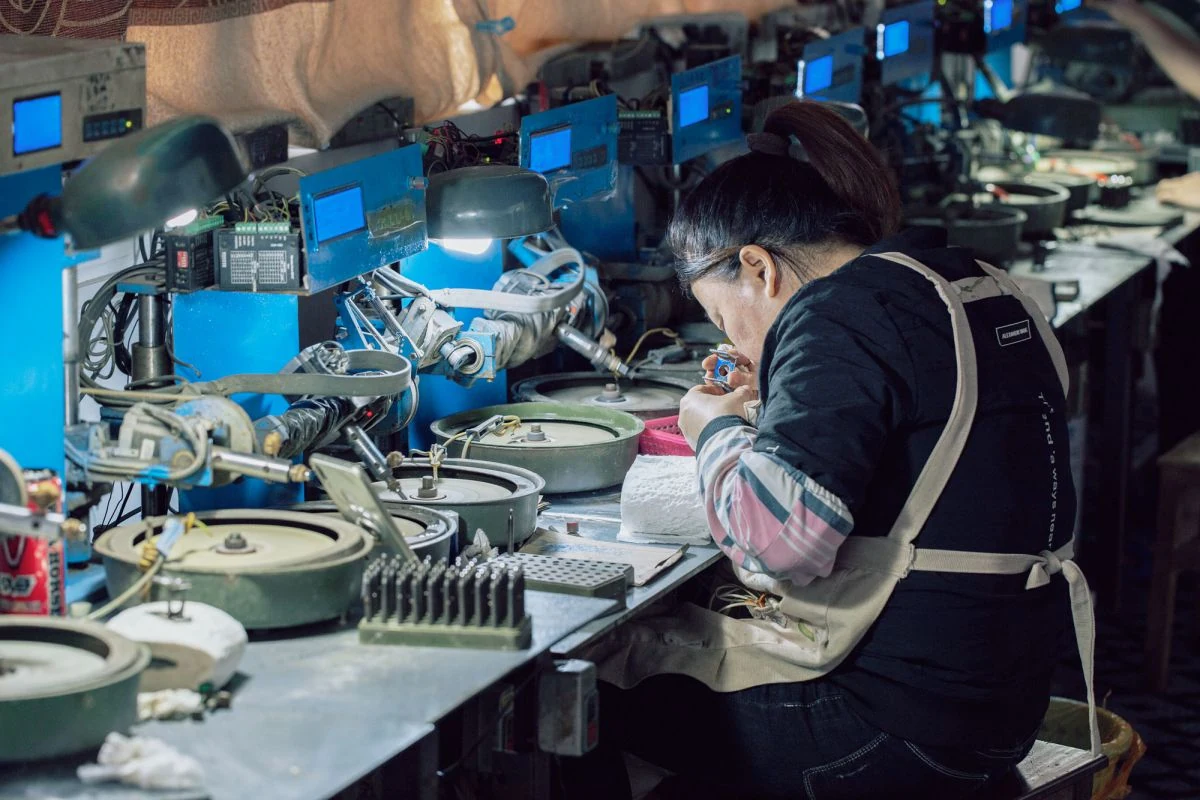
Customers see "3D printed" on a modern jewelry shop and assume wax carving is obsolete. They are wrong. I still carve wax by hand regularly, and I also run a 3D printer. The two methods are not rivals - they are tools, and the design decides which one we reach for.
01What the two methods have in common
Here is the thing that makes the comparison make sense. Both wax carving and 3D printing produce a wax model that goes into the same casting process (lost wax casting, explained in lost wax casting in plain English). The final metal ring from a hand-carved wax and a 3D-printed wax can be identical. The difference is in how we got the wax, and what the wax is good for.
02When we carve wax by hand
Hand carving is subtractive. We start with a block of carving wax and cut, scrape, and shape it. It is slow, physical, and tactile. We carve by hand when the design calls for organic, irregular, or textured surfaces: sculptural rings, nature-inspired forms, anything where a slightly uneven edge is the point.
We also carve when we want to iterate fast in three dimensions without a computer. I can hold a wax in my fingers, feel its weight, and change it in thirty seconds. That speed of physical prototyping is still unmatched by screen-based CAD. For a single, sculptural piece, hand carving often beats designing on a computer.
The downside: hand carving is not precise. Symmetry is approximate, dimensions are eyeballed, and complex geometry (a sixty-stone halo, exact channel settings) is miserable by hand. Those jobs go to the printer.
03When we 3D print
3D printing is additive. We design in CAD (see what CAD can and cannot do) and print a resin or wax model layer by layer. We print when the design needs precision: exact prong placements, matched pairs, stone settings measured to the stone, anything where a fraction of a millimeter matters.
We also print when the customer needs to see and approve the design before casting. A printed model is physical, so you can try it on, feel its weight, and see the profile on your finger in a way a screen never shows. The ability to approve a real model is the reason most engagement rings are printed rather than carved.
The downside: printed models can feel sterile. The surface is mathematically perfect, which some designs want and some designs fight. We often finish a printed model by hand before casting, just to take the computer edge off.
04Hybrids are the secret
Most of the time, we do not choose one or the other - we combine them. We print the precise structural part (the band, the prong basket, the stone seats) in CAD, then carve and add the organic part (a sculpted leaf, a textured surface, a hand-shaped detail) by hand onto the printed model. The result gets the precision of the printer and the warmth of the hand. Customers who think they want a "fully hand-carved" piece usually get a hybrid, and they love it, because the hybrid is the best of both. If a shop talks about choosing between the two as if it were a strict either/or, they are oversimplifying.
05The honest trade-off
3D printing is faster for complex, precise, repeatable work. Hand carving is faster for organic, sculptural, one-off forms. The cost difference is real but smaller than customers expect: a carved piece takes more bench time, but a printed piece takes more design time. The final price often lands in the same neighborhood, and the deciding factor is almost always which method will look better, not which is cheaper.
If a shop tells you they only do one method, that is a red flag. It usually means they own one machine and treat every design as a nail for that hammer. The right answer is "it depends on the design."
06What to ask your maker
If you are commissioning a ring, ask which method they plan to use and why. A good answer sounds like: "Your design is symmetric and stone-heavy, so we will print it. If you wanted the sculptural texture we talked about, we would carve." If they cannot explain the choice, they may not be making it on purpose.
Cost-wise, the difference between the two methods is smaller than people expect. A carved piece spends more bench hours but skips the design software. A printed piece spends more design hours but skips the carving hand work. The material cost of wax and resin is trivial either way. What actually moves the price is whether the design needs the precision of a printer or the warmth of a hand, not which machine the shop happens to own. Asking "which method and why" tells you whether the decision is being made on purpose.
Either way, the ring you wear is cast from metal, finished by hand, and set by hand. The path to the wax is a means, not the end. Read more about the journey in the custom ring week-by-week timeline.
EU-wide limits on nickel, lead and cadmium in jewelry are set by the REACH Regulation (EC) No 1907/2006 on EUR-Lex.
07Frequently Asked Questions
How do I verify a factory before placing a bulk order?
Request a production video, business license, export records and a paid sample run. A factory that accepts a 50-piece test order is usually a real manufacturer.
What payment terms do you offer?
30% T/T deposit with the balance against the bill of lading. This protects both sides on first orders and can move to net terms after a track record.
What is your normal reject rate?
3–5% under 10x loupe inspection for cast and set pieces. Defective units are replaced free in the next shipment.
Where is the factory located?
Wuzhou, Guangxi, China—the core lab-grown and moissanite manufacturing cluster. Shipments go via Guangzhou or Shenzhen ports.
Related reading: How to Choose an Engagement Ring Setting That Actually Lasts, 3D Printing vs Hand-Carved Wax: Which Model Method Wins for Custom Jew, Where Your Custom Ring Money Actually Goes.
Send a sketch or a photo — our setter will answer with stone options and a price band.
Talk to the atelier


