Remounting Your Own Diamond or Gem Into a Custom Setting
Bench notes · The Journal
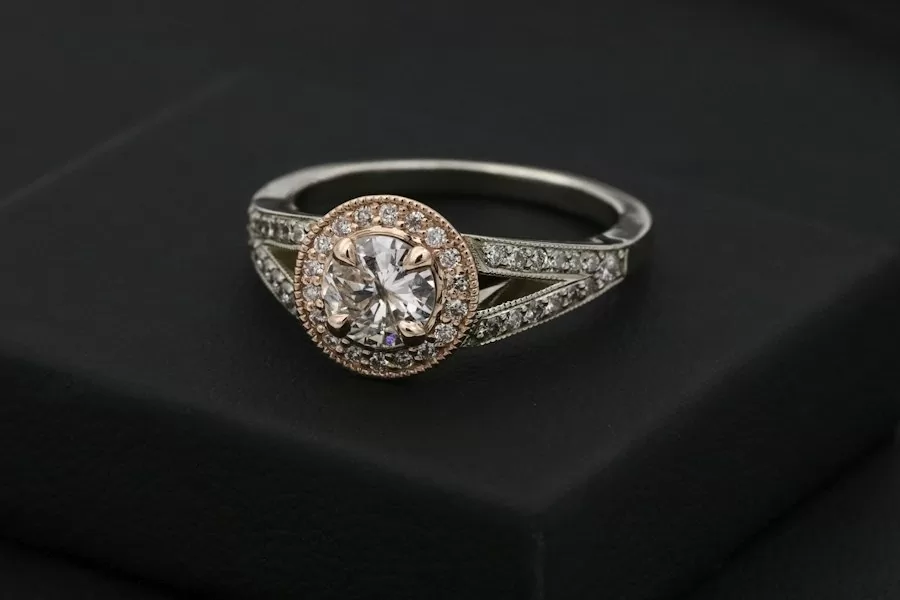
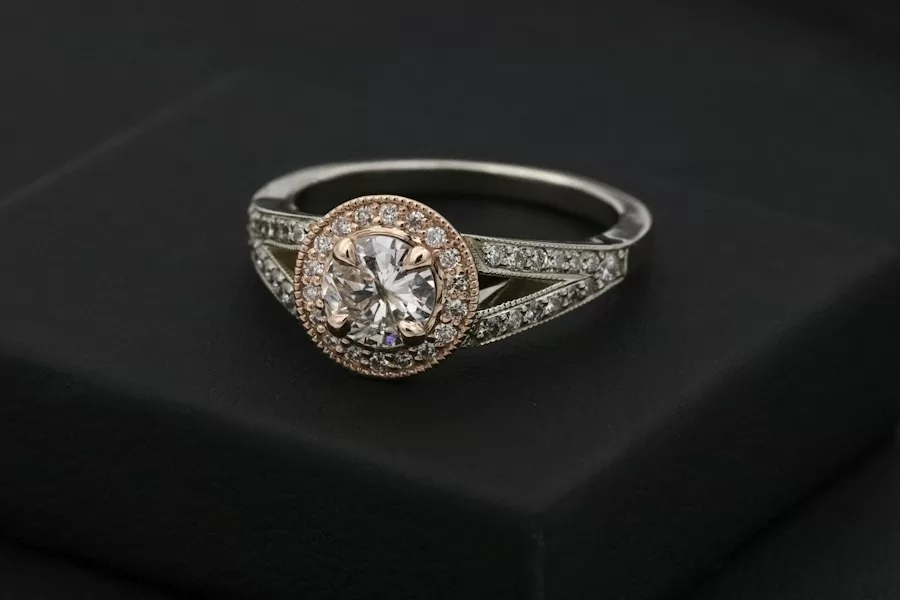
Sometimes the stone is perfect and the setting is just tired. A diamond your grandmother wore, a loose center stone you bought years ago, or an engagement ring you love but hate the mounting of—all of these can be reset into something that finally fits your taste. Remounting, also called resetting, lets you keep the gem that matters and rebuild everything around it. At a factory-direct shop like ours, this is one of the most common custom jobs we take on, because it skips the single biggest cost: buying a new center stone.
01Why remount instead of buying a new ring
A new engagement ring usually spends most of its budget on the center diamond. If you already have a stone you're attached to, that money can go toward the metal, the setting design, and the side stones instead. Resetting also solves problems a retail store won't touch: a setting you find dated, a shank worn thin, a head sized for a stone shape you no longer like, or a ring that simply doesn't suit your hand. We cover the budget side of this in our guide to how a custom ring budget breaks down, and a remount is usually the cheapest route into a fully custom piece.
02What happens to your stone first
Before any design work begins, your stone comes off the old mounting. This is the step where a careful factory earns its keep. We examine it under magnification for chips, abrasions, and old claw marks, measure the girdle diameter and depth with digital calipers, and note anything that could affect how it should be held. A stone with a feather or a chipped girdle may need a bezel rather than prongs. An old European-cut diamond with a thick girdle sits differently than a modern round brilliant. These measurements drive the entire CAD model, because a setting that is even a fraction of a millimeter off will either leave the stone loose or crack it when prongs are closed.
We also document the stone. You should receive confirmation of its size and condition when it arrives, and a reputable shop will carry it under its own cargo and handling insurance while it is in the building. If the stone already has a grading report, bring it. If not, we can point you toward an independent appraiser rather than pretending our in-house measurement is a certification.
03Designing the new head around the stone
Unlike starting with an empty design, a remount constrains the build in one good way: the center stone is fixed. Every other decision is free. You can move from a plain solitaire to a halo, switch from a yellow gold head to two-tone, change a cathedral shoulder to a split shank, or add side stones. The stone dictates the seat, and we build the rest to your taste. You can see how that tradeoff works in our walkthrough of turning a sketch into a finished ring—a remount follows the same CAD and casting path, just with a measured stone dropping into the top.
Durability matters more here, because the stone may have sentimental value you can't replace. We usually recommend slightly beefier prongs or a half-bezel for stones that will be worn daily, and we steer people away from tension-style holds for antique or inclusion-heavy gems. If you wear the ring with an active lifestyle, that conversation moves toward settings that won't catch on doorframes.
04What kind of stones reset well
Round, princess, and oval diamonds are straightforward. Cushion, emerald, and asscher cuts need wider seats and careful corner support. Rose-cut and old-mine cuts, with their tall crowns and flat backs, often require custom seats because they sit lower and have no thin girdle to grip. Colored stones behave differently again: sapphires and rubies are tough, but softer gems like opals, emeralds, and pearls should not be reset into settings that take daily knocks. Our custom sapphire work runs into these questions constantly, and the answer is usually a more enclosed setting rather than an exposed one.
05Cost and timeline
A remount is generally cheaper than a from-scratch ring because the center stone is already yours. The bill reflects the new mounting metal, any side stones, labor to remove and reset, and a refinish. Timelines run shorter than a full custom build, often inside a few weeks, because the longest variable—selecting and sourcing a center stone—is already done. If you're on a deadline, compare that against our notes on the week-by-week custom ring process.
The result is a ring that carries the stone you meant to keep, in a setting you actually chose. That combination is hard to find on a retail shelf, and it's why resetting stays one of the most satisfying jobs a custom workshop takes on.
The history and conventions of engagement rings are outlined in the Wikipedia entry on engagement rings.
06Related Reading
07Frequently Asked Questions
Is moissanite a good diamond alternative for retail buyers?
Yes for price-sensitive customers who want brilliance and hardness. Moissanite ranks 9.25 on the Mohs scale, holds up to daily wear and costs a fraction of a natural diamond of the same size, so it resells fast in bridal and fashion lines.
What is the minimum order for wholesale moissanite?
MOQ starts at 50 pieces per design for stock items. Custom cuts and private-label settings usually start at 100–300 pieces depending on the mold.
Do you provide certificates with moissanite stones?
Yes. Every parcel ships with GRA or IGI documentation listing carat weight, color grade and cut. We recommend passing the certificate to your end customer for trust.
How long does sample and bulk production take?
Samples ship in 3–5 days. Bulk runs take 15–20 days under 500 pieces, and 25–30 days for custom work.
Send a sketch or a photo — our setter will answer with stone options and a price band.
Talk to the atelier


