Stone Sourcing for a Custom Jewelry Commission
Bench notes · The Journal
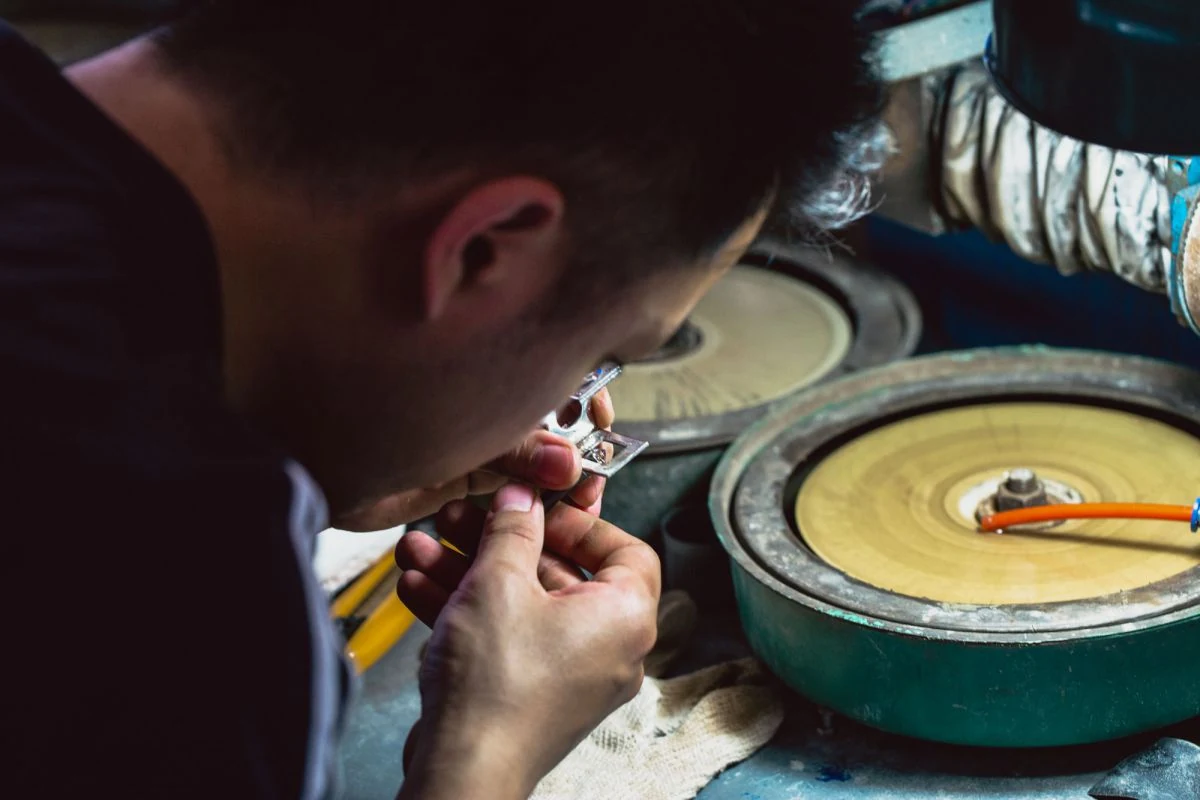
A boutique in Vancouver came to us with a customer who wanted a 1.2 ct emerald-cut center in a yellow gold bezel. The boutique already owned the stone from a loose-stone dealer, and asked us to set it. We did, but we also walked them through what would have been different if they had let us source it. Here is the sourcing decision, and the paper trail that has to follow either way.
01Three sourcing routes
Route one: we source the stone. We work with three loose-stone suppliers and buy to your spec (shape, mm, color, clarity, price cap). The stone ships with its certificate (GIA, IGI or equivalent) and the invoice matches the certificate number. This is the fastest route and the one most boutiques choose for repeat work, because the factory holds liability if the stone on arrival does not match the spec.
Route two: you supply the stone. You send the customer's stone (family heirloom, purchased elsewhere). We set it to the measured mm. We do not certify it; we confirm it sets safely. This route needs a signed stone-intake form noting what arrived, because once we cut a seat we cannot un-cut it.
Route three: we source a matching side-stone set. Side stones are a separate headache. A center stone with four mismatched side stones reads cheap. We source matched side sets in 1.0-3.0 mm, color-banded, so the shoulders read even. Grading standards for natural stones are explained at GIA's 4Cs guide, and lab-grown context at the lab-grown diamond Wikipedia entry.
02The certificate paper trail
Every stone over 0.3 ct should travel with a certificate number that matches the invoice. We copy that number onto the packing list and the QC report. If a customer later asks an appraiser to verify, the trail goes: our packing list, certificate, stone inscription where laser-inscribed. For moissanite we note the GRA or equivalent report number. For colored stones we ask for the origin treatment disclosure (heated vs unheated) in writing, because that is a jewelry-trade disclosure point, summarized at the FTC guides for the jewelry trade.
03When to choose which route
Use route one when the customer has no stone and wants the easiest path. Use route two when the customer has an emotional attachment to an heirloom. Use route three for side stones even when the center is supplied, because matching side sets are time-consuming to source retail. Our guide to designing jewelry around a family stone covers route two in depth, and designing a ring around a colored gemstone covers the bezel and prong choices for non-round centers. The setting side is at moissanite prong tip setting.
The intake form for customer-supplied stones is shorter than boutiques expect: we log the stone's mm, weight in carats, certificate number (if any), a top-down and side-on photo, and a signature from the person shipping it. We do not open the parcel on the bench; we open it at the QC desk in front of the intake photos. If the stone that arrives does not match the intake, we stop and take it up with the sender before any seat is cut. That process feels heavy the first time, but it is the reason we have never had a disputed stone on a commission.
For side stones, the matching set is usually the bigger headache than the center. A center stone is bought once, by the customer, and documented. Side stones have to be matched for size, color and cut across four or eight pieces, and they have to match the center stone's color temperature. A white center stone with warm side stones reads wrong. We source side sets in color bands (G-H, I-J, or the moissanite equivalent) so the shoulders read even, and we photograph the set against the center before setting. If the temperature clashes, we swap the side stones before the piece moves to polishing.
The economics matter too. Sourcing through us usually costs boutiques 10-15 percent less than buying loose retail, because we buy from three suppliers on weekly cycles and pass the volume pricing through. The tradeoff is choice: you pick from our current stock, not from a global broker's inventory. For most commissions that is fine, because the customer cares about the final piece, not about which broker sold the stone. For rare colored stones, we still recommend the boutique buys the stone retail and supplies it to us.
FAQs
Can you source a stone to a price cap?
Yes. Tell us shape, size range and budget, and we will send 2-3 options with photos and certificates within 5 working days.
What happens if my supplied stone does not fit the design?
We measure on arrival and flag it before any seat is cut. If the stone is smaller or deeper than expected, we revise the CAD and get your approval before casting.
Do you guarantee the stone you source?
We guarantee the stone matches the certificate on arrival and that it sets safely. We do not re-grade it; the certificate stands.
Are treatment disclosures required on the invoice?
Yes under jewelry trade guides. We note heating, fracture filling and clarity enhancement on the packing list so your retail paperwork matches.
Pair your next commission with our sourcing desk. Send the design and your stone spec; we return matched stone options with certificates and a setting quote in one package.
04Frequently Asked Questions
How do I verify a factory before placing a bulk order?
Request a production video, business license, export records and a paid sample run. A factory that accepts a 50-piece test order is usually a real manufacturer.
What payment terms do you offer?
30% T/T deposit with the balance against the bill of lading. This protects both sides on first orders and can move to net terms after a track record.
What is your normal reject rate?
3–5% under 10x loupe inspection for cast and set pieces. Defective units are replaced free in the next shipment.
Where is the factory located?
Wuzhou, Guangxi, China—the core lab-grown and moissanite manufacturing cluster. Shipments go via Guangzhou or Shenzhen ports.
Send a sketch or a photo — our setter will answer with stone options and a price band.
Talk to the atelier


