Solitaire vs Halo Engagement Rings: A Bench-Level
Bench notes · The Journal
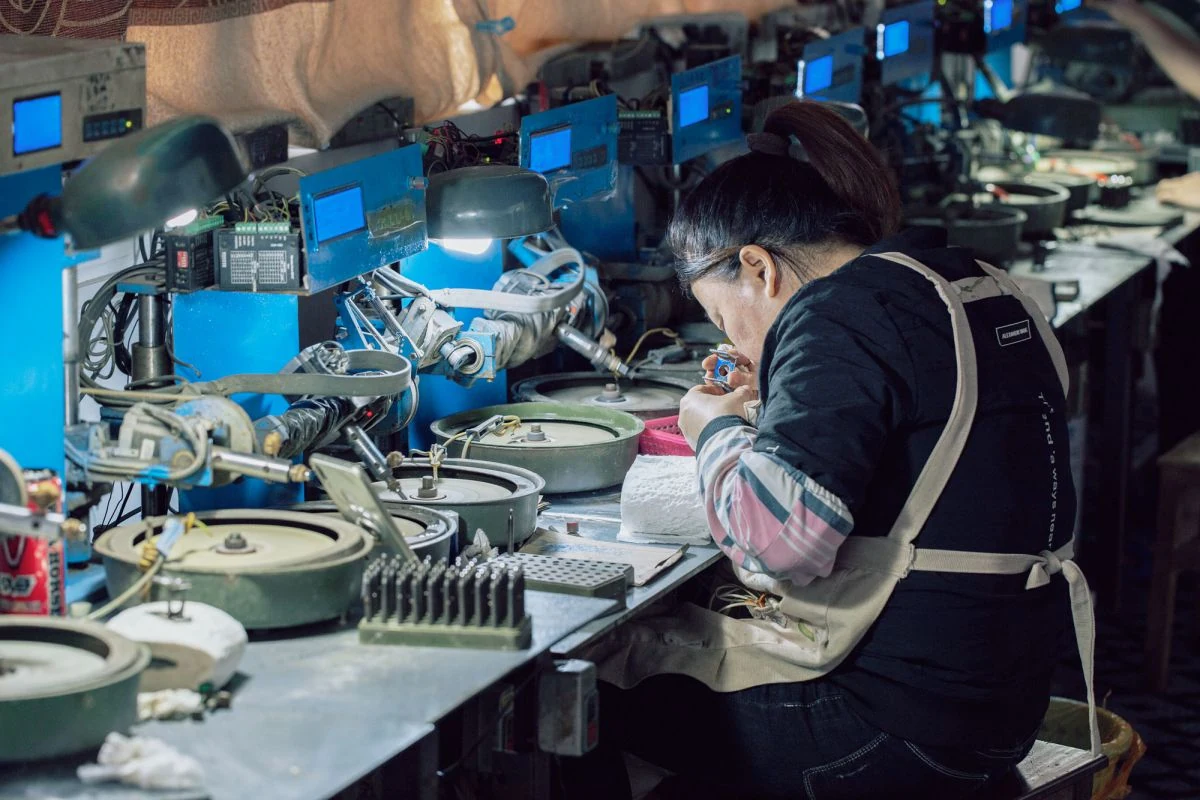
We get asked this at least twice a week: "Should I go solitaire or halo?" Both are gorgeous. Both are built on the same bench. But they are different products, and we think you should choose them with your eyes open rather than because a photo looked bigger.
A solitaire is one center stone, held by prongs or a bezel, nothing around it. A halo is a center stone circled by a rim of smaller stones. The halo makes the center look larger and adds sparkle from every angle. The solitaire makes the center stone itself do all the work.
01What a halo actually buys you
A halo's real job is optical. A 1ct center in a double halo reads visually as a 1.5 to 1.75ct stone from across the room. That matters if your budget has a hard ceiling. You spend less on the center carat and borrow size from the surrounding melee.
The trade-off is mechanical. Every extra stone in the setting is another prong that can open, another place a diamond can fall out, and another layer of metal that catches on fabric. On our bench, a halo head retipped and cleaned roughly twice as often as a plain solitaire head.
02What a solitaire actually buys you
A solitaire is honest. What you see is the stone. It photographs less dramatically than a halo in some lighting, but it ages better. There are no side stones to lose, no pave rim to snag on knits, and the head is one clean solder joint that we can rebuild in an hour if it ever bends.
The solitaire also lets the stone itself breathe. Light enters from the side, the fire reads cleaner, and over decades the ring never looks dated. Halo styles drift in and out of fashion; a well-cut solitaire does not.
03Cost: where the money goes
Let us be blunt about the numbers. A halo with a 1ct center and a full rim of good melee uses roughly 0.25 to 0.5ct of side stones. Those side stones are not free, and because small diamonds are sold by piece with a higher per-carat markup, they cost more per carat than the center. A halo often costs 25 to 40 percent more to build than a solitaire head of the same center.
So the halo is not the "cheap way to a big look" in pure metal-and-stone cost. It is the way to a bigger visual size for a given center. If your priority is maximum total diamond on a budget, a solitaire with a bigger center usually wins per dollar. If your priority is maximum sparkle per millimeter, the halo wins.
04Wear and maintenance
If you are rough on jewelry, the solitaire is forgiving. If you love sparkle and will stop in for a yearly checkup, the halo is worth it.
05Who we steer to which
We build solitaire for the client who wants one stone to be the entire conversation, who plans to wear the ring daily for decades, or who already invested in a center stone they do not want to compete with.
We build halo for the client who loves a lively, glamorous look, who wants visual size beyond their center budget, or who likes the way the ring reads in candlelight and photos.
Neither is "better." But if you are choosing a halo mainly because the solitaire looked small on your finger, first read our note on center stone shape for your hand. Sometimes the shape and setting profile fix the size illusion without adding a halo at all.
06The middle option nobody asks about
You can build a solitaire with a thin rim of micro-pave around the head that reads as sparkle without reading as a full halo. It is the compromise we reach for when a client wants solitaire honesty but a little more life. It also avoids the dated double-halo look that will feel like a 2014 Pinterest board in ten years.
If you are weighing center stone types, our side-by-side on moissanite vs diamond changes the halo math too, because a brighter stone needs less rim sparkle to look alive.
07How we decide in the showroom
When a client cannot choose, we do not push either way. We put a plain solitaire head and a halo head on the same center stone, on a mandrel at their size, and let them look in a mirror under normal light, not the ring lights. Nine times out of ten, the decision comes from how the ring reads on their hand rather than how it reads in a photo. If they lead a clean life and love sparkle, the halo wins. If they want the stone to be the whole conversation and they value low maintenance, the solitaire wins. We also tell them what the ring will look like in ten years, because that is the test we use on ourselves.
08Bottom line
Pick the solitaire if you want the ring to outlive trends and need it to survive a working hand. Pick the halo if you want maximum presence and will commit to regular checkups. And if you are building custom, ask us to show you both profiles on a sample mandrel before you decide. The ring wears differently than it looks in a CAD render.
Carat weight conventions cited here follow the Wikipedia entry on carat weight.
09Frequently Asked Questions
What ring sizes can you supply in bulk?
US sizes 5–12 including half sizes. Send a size breakdown with your order and we cast to that curve; comfort-fit inner bands reduce resize requests.
Can I order a mixed size run instead of one size?
Yes. Mixed runs are standard for wholesale: specify quantity per size and we pack and label by size at no extra labor cost.
What is the MOQ for custom ring designs?
50 pieces per design for existing molds; 100–300 pieces when a new mold or CAD model is required.
How should I price rings for retail margin?
Most partners use a 3–4x markup on FOB cost for sterling and 2.5–3x for moissanite solos, which keeps landed cost under 30% of retail.
Related reading: Hidden Halo Engagement Rings: What We Tell Clients Before They Commit, Three-Stone Engagement Rings: Meaning, Design, and Trade-offs, East-West Engagement Rings: The Horizontal Stone Trend, Honest Take.
Send a sketch or a photo — our setter will answer with stone options and a price band.
Talk to the atelier


