Small-Run Jewelry Production: MOQ, Sampling and Tooling
Bench notes · The Journal
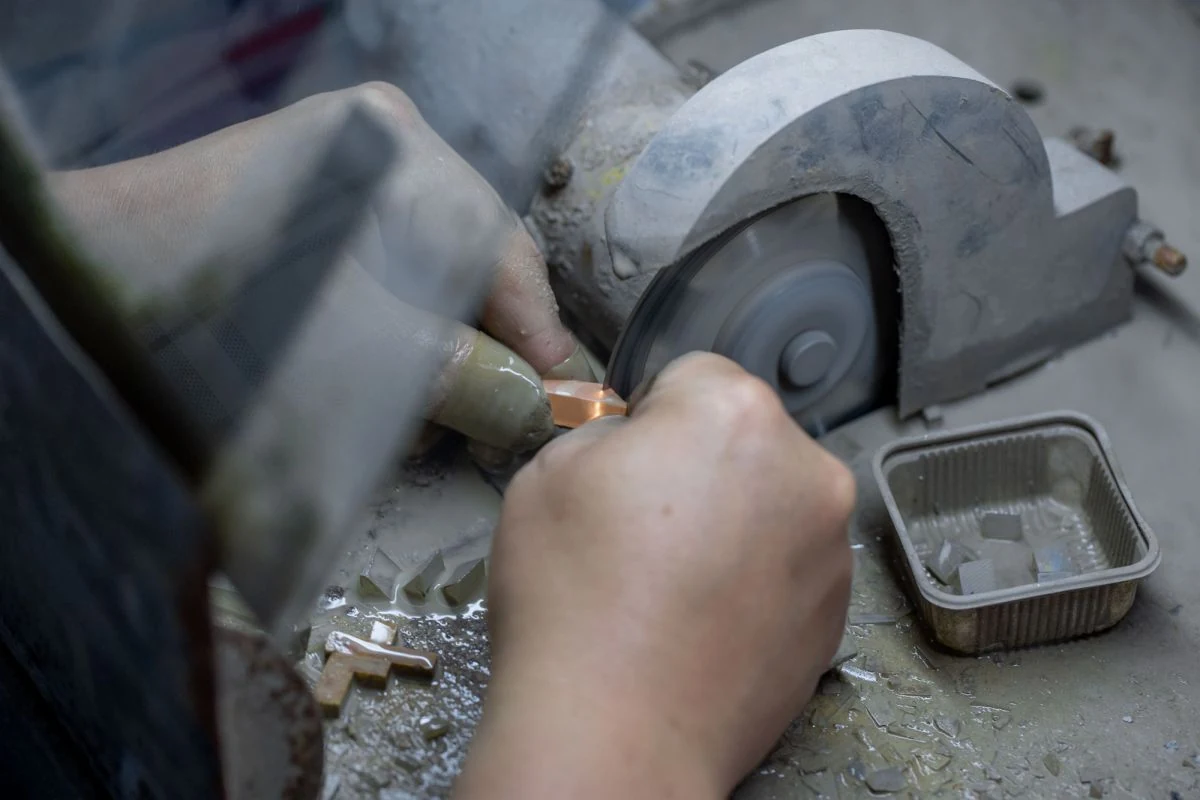
A new direct-to-consumer brand came to us with a design for a 2 mm plain stacking ring. They wanted 50 pieces for a launch, then 200 a quarter if it sold. We quoted the launch at a sample fee plus 50 units, and walked them through which costs would disappear on the reorder. Here is how small-run custom production actually prices.
01Realistic MOQs by product type
"No minimum" marketing usually means they will cast one piece at retail pricing. For a workable wholesale run, our minimums are: 5 pieces for one-of-a-kind commissions, 10 pieces for simple bands, 30 pieces for set rings with stones, and 50 pieces for cast earrings or pendants that need matched pairs. Below those numbers, the setup labor (CAD, sprue tree, polish setup) is amortized over so few units that the per-piece price doubles. We explain the reorder economics in custom jewelry manufacturing minimum order and OEM small-batch production.
| Run size | Setup cost | Per-piece labor | Reorder price step |
|---|---|---|---|
| 5-9 pcs | Full CAD + sample | 1.6x baseline | Sample fee refunded at 50+ |
| 10-29 pcs | CAD, no resample | 1.2x baseline | Drops to baseline at 100 |
| 30-99 pcs | Same tooling held | Baseline | Drops 8-12% at 200 |
| 100+ pcs | Reuse, no new tooling | 0.9x baseline | Volume alloy pricing |
02Sampling: what you get and what it costs
We charge a one-off sample fee that covers CAD, one resin print, and one cast-and-finished sample in the customer's chosen metal. The sample ships for approval. Once the bulk order hits 50 pieces, the sample fee is credited. If the design changes after the sample, a modest re-modeling fee applies. Brands that skip the cast sample and approve only a render usually pay for it later: renders cannot show how the shank sits on a finger or how the polish reads in daylight.
03Tooling that survives reorders
Tooling for lost-wax is not a hard mold; it is the CAD file, the .stl, and the sprue tree recipe. We archive all three for 18 months after an order so reorders print and cast identically. If you come back at 6 months for 200 more, there is no new CAD fee. The thing that does not survive reorders is stone sizes: if you switched from a 6.0 mm to a 6.5 mm stone on the reorder, the seat has to be recut. We flag that at order entry. The brand-side choice between running a private label and a fully custom line is covered in private label vs fully custom for your brand, and the manufacturing line itself at CAD to casting workflow.
The sample fee is the most-misunderstood line on a first quote. It is not a design fee and it is not a markup; it covers the resin print, the cast-and-finished metal sample, and the shipping to your door. We credit it back when the bulk order reaches 50 pieces, which means the effective cost of the first sample is zero for brands that launch at the MOQ. Brands that launch at 10 pieces pay the sample fee for real, but they also avoid committing 50 pieces of cash to a design their customers have not yet seen.
Tooling retention is the other half of the economics. Because lost-wax tooling lives as a CAD file and a sprue recipe, not as a steel die, we can re-run a design at any time without new tooling cost. That is why small-run custom jewelry prices differently from, say, injected plastic parts, where a mold costs thousands of dollars and has to be amortized over thousands of units. We hold the CAD and sprue recipe for 18 months; if you come back inside that window, the reorder starts from the existing file. Precious-metal alloy standards themselves are noted at the karat reference on Wikipedia, so you can quote alloy grades to your customers with confidence.
For a brand launching three SKUs at once, the smart move is to sample all three before committing to bulk. We price the three samples at a combined fee and credit the whole thing once the combined reorder hits 100 pieces. That lets a boutique test three silhouettes without paying three separate sample fees, and it means the launch order can be sized to whichever sample actually got the best pre-orders.
FAQs
What is the smallest order you will produce?
5 pieces for simple cast pieces. Below that we treat it as a one-off commission at retail-style pricing.
Is the sample fee really refunded?
Yes, credited against the bulk invoice once the order reaches 50 pieces in the same SKU and metal.
How long is tooling held?
18 months from last shipment. After that we archive the CAD but may need a fresh sprue recipe.
Can I split a small run across two metals?
Yes, but each metal variation counts as its own SKU for MOQ purposes. A 10-piece run split into 5 yellow and 5 white is fine; a 10-piece split into 4 metals is not.
Launch your first small run with our manufacturing desk. Send a design or reference photo; we will return a sample quote, an MOQ ladder and a reorder price step within 48 hours.
04Frequently Asked Questions
How do I verify a factory before placing a bulk order?
Request a production video, business license, export records and a paid sample run. A factory that accepts a 50-piece test order is usually a real manufacturer.
What payment terms do you offer?
30% T/T deposit with the balance against the bill of lading. This protects both sides on first orders and can move to net terms after a track record.
What is your normal reject rate?
3–5% under 10x loupe inspection for cast and set pieces. Defective units are replaced free in the next shipment.
Where is the factory located?
Wuzhou, Guangxi, China—the core lab-grown and moissanite manufacturing cluster. Shipments go via Guangzhou or Shenzhen ports.
Send a sketch or a photo — our setter will answer with stone options and a price band.
Talk to the atelier


