Small-Batch Jewelry Production and MOQs, Explained
Bench notes · The Journal
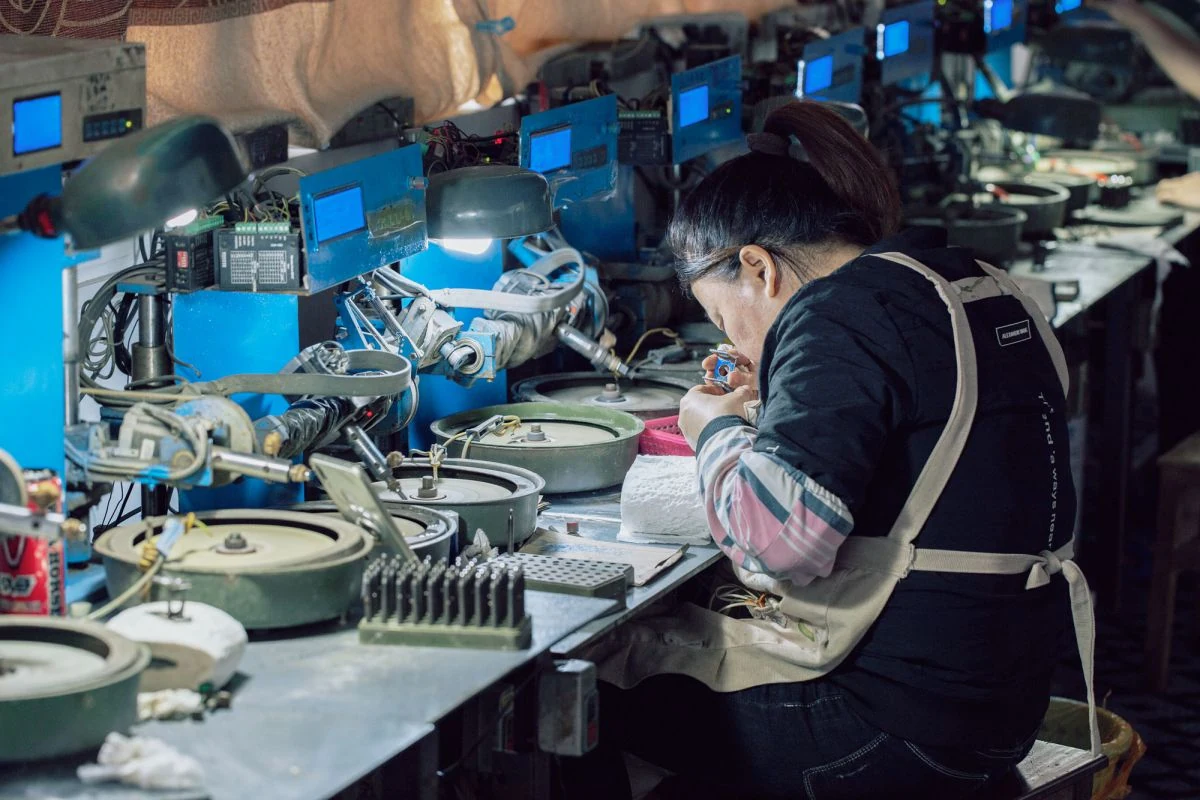
If you have ever asked a jewelry factory for 25 pieces of a design and been quoted a price that looks high, you have met the minimum order quantity—the MOQ. MOQs are not a sales tactic. They exist because jewelry manufacturing is a batch process, and the batch setup costs money regardless of whether the tree holds one piece or fifty. Understanding how that works lets you plan a small collection without either overordering inventory or paying a premium that surprises you.
01Why jewelry is made in batches
The lost-wax casting process groups many wax models onto a single tree, which is then invested in plaster, burned out, and filled with molten metal. The setup—building the tree, investing, burnout, casting, quenching—costs roughly the same whether the tree holds one ring or twelve. The marginal cost of adding one more wax to an existing tree is small.
That is the reason factories prefer batches. A tree run for one piece wastes the setup on a single item. A tree run for eight pieces spreads that setup across eight. The per-piece cost drops sharply as the tree fills.
02What a typical small batch looks like
For a small brand, the practical breakpoints are usually: 1 to 5 pieces (prototype/sample pricing), 10 to 25 pieces (first production run), 50+ pieces (meaningful per-piece savings). At 1 to 5, you are paying mostly setup and finishing labor. At 25, the casting tree fills and polishing time per piece drops. At 50, ordering stones in quantity and plating a full rack both become efficient.
The jump between 5 and 25 pieces is where most first-time founders underestimate. A 5-piece run is essentially a sample run with production pricing on top. A 25-piece run is a real first collection.
03Cast versus fabricated pieces
Not every piece goes through casting. A piece made from wire, sheet, and solder—fabricated—scales differently. Fabricated work is labor-heavy and piece-rate: each additional piece costs nearly the same as the first. There is no batch discount for fabrication.
Casting is where batch discounts live. If you want the batch economics, design for casting. If the piece is handmade wirework, accept that small-batch pricing is what it is. Our guide to lost wax casting explains the mechanics in detail.
04Stones, settings, and finishing
Stones are often the second reason for MOQs. Sourcing (FTC jewelry industry guides) one matched sapphire is expensive; sourcing 25 matched sapphires in the same color grade is easier and cheaper per carat. Setting small stones in pavé is also more efficient when done across a run, because the setter stays in rhythm.
Finishing and polishing follow the same logic. A polisher working on one piece stops and restarts constantly. A polisher working on 20 similar pieces builds a rhythm. That rhythm is where the cost savings come from.
05How to start without overordering
The practical path for a new brand: order one prototype, approve it, then place a first run of 10 to 25 pieces per design. Do not commit to 50 on day one. Sell the first run, learn which designs move, and place the second run on the winners. Our note on private label production walks through how brands structure that first order.
If a factory quotes you a much higher price on a 5-piece run than on a 25-piece run, that is normal. It means they are being honest about batch economics, not gouging. The opposite—the factory that happily quotes the same price for 5 pieces as for 25—is usually padding the small order enough to cover it, which is fine, just different.
06Lead time in a small batch
Small batches also carry scheduling risk. A factory running a 500-piece production line cannot pause it for your 15-piece order without losing more time than your order is worth. That is why small-batch clients often wait weeks rather than days. The trade-off is real, and it is honest: you get flexibility and low commitment, and you accept a longer queue. If timing matters, ask up front which slot your batch will run in.
Prototype pieces are priced separately from production. A prototype covers CAD, one wax, one cast, one set, and one finish—it is the fee you pay to see the piece before committing. Many factories apply part of that prototype fee to the first production order, which is a common and fair practice. Ask whether the prototype is credited. It usually is, but not always.
07What to watch in the quote
Ask whether the quote includes: the design/CAD fee, the sample piece, stone sourcing, plating, finishing, and packaging. A quote that says “$X per piece” without listing those components is not telling you much. The real comparison is total cost per deliverable piece, not the headline number.
MOQs are a feature of the process, not a barrier. Plan around them and they work for you. Ignore them and you will be surprised twice: once at the sample price, once at the inventory you cannot sell.
Carat weight conventions cited here follow the Wikipedia entry on carat weight.
08Related Reading
09Frequently Asked Questions
How do I verify a factory before placing a bulk order?
Request a production video, business license, export records and a paid sample run. A factory that accepts a 50-piece test order is usually a real manufacturer.
What payment terms do you offer?
30% T/T deposit with the balance against the bill of lading. This protects both sides on first orders and can move to net terms after a track record.
What is your normal reject rate?
3–5% under 10x loupe inspection for cast and set pieces. Defective units are replaced free in the next shipment.
Where is the factory located?
Wuzhou, Guangxi, China—the core lab-grown and moissanite manufacturing cluster. Shipments go via Guangzhou or Shenzhen ports.
Send a sketch or a photo — our setter will answer with stone options and a price band.
Talk to the atelier


