Shared Prong Settings: How Durable Are They, Really?
Bench notes · The Journal
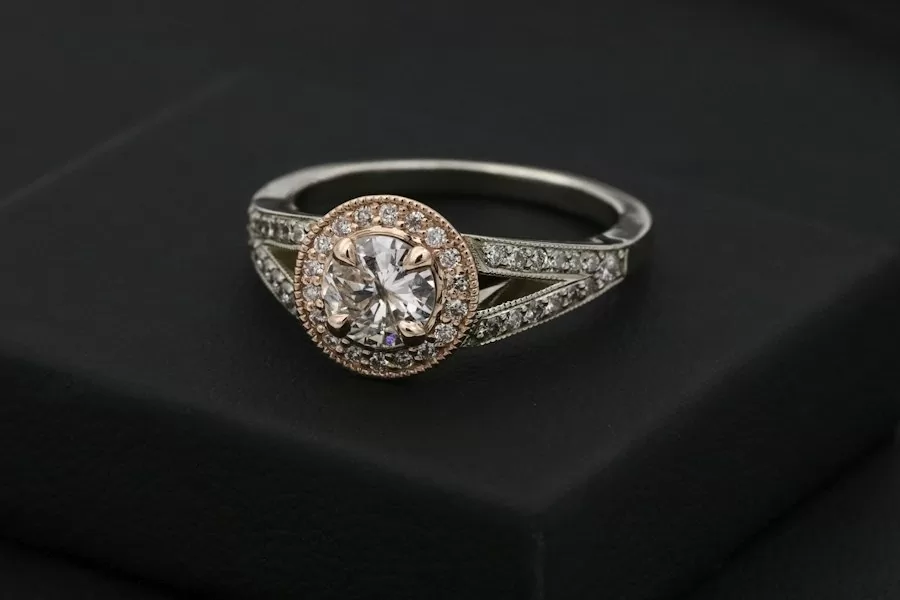
A shared prong setting lines up two rows of stones so that neighboring stones share the prong between them instead of each stone having its own. The result is a clean, low-profile look with less metal between stones, and it has become a favorite for eternity bands and multi-stone settings. It also wears in a way that surprises people who expected it to behave like a solitaire.
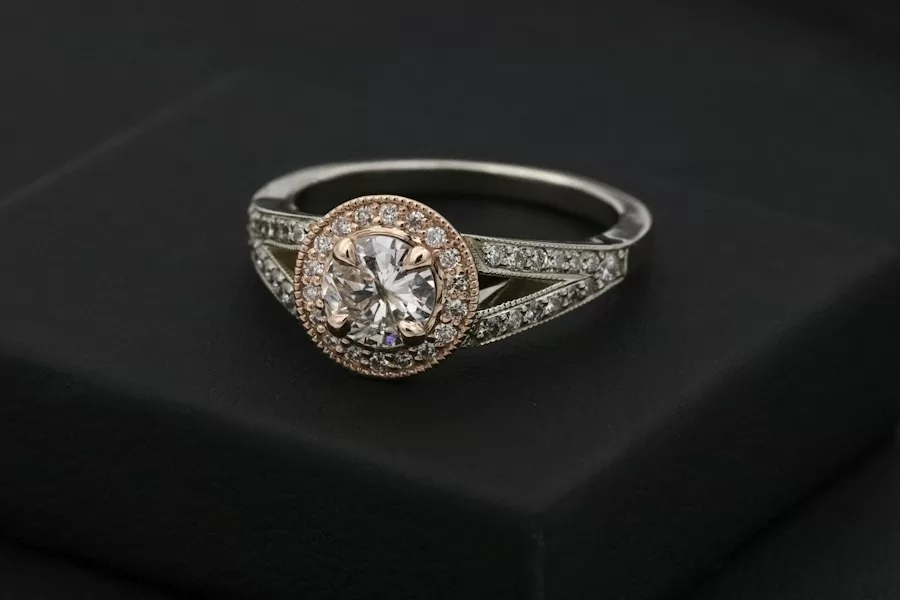
Before choosing one, it helps to understand exactly what is holding each stone, because that geometry decides how the setting fails and how it gets repaired.
01How a shared prong actually holds the stone
In an individual prong setting, each stone has its own four (or six) prongs, and the metal work is isolated per stone. If one prong weakens, only that stone is at risk. In a shared prong row, the prong between two stones does double duty: it holds the corner of the stone on the left and the corner of the stone on the right. That means a single weakening prong is responsible for two stones at once.
This is not a design flaw. It is the tradeoff for the clean look. Because there is less metal between stones, the setting sits lower and catches less on clothing. It also uses less gold, which keeps the price down. But the shared geometry means wear concentrates in one place rather than spreading out.
02How shared prongs wear over time
The typical wear pattern on a shared prong band is gradual thinning of the shared beads on the high-contact edge, usually the outside of the band that contacts desks and doorframes. The beads wear down until they no longer fold over the stone corner. At that point, one stone can shift, and because the same bead holds the neighbor, the neighbor can shift with it.
This is why we recommend an annual prong inspection on shared prong bands, sooner than on solitaires. The signs are the same ones we describe in prong wear warning signs: a prong that looks shorter than its neighbors, a stone that tilts slightly, or a tiny bright flash when the band turns, which is light entering under a loosened stone. Catching these early is a ten-minute re-tip. Catching them after a stone falls out is a reset plus a replacement stone.
03Repairing shared prongs is different
Re-tipping a shared prong is more delicate than re-tipping an individual prong, because the jeweler has to build up the bead without soldering across and sticking the neighboring stone. The repair usually involves carefully adding metal to the worn bead and re-foldering it over both stones. It is doable, and it is routine for a shop that sets a lot of eternity bands, but it is not a casual touch-up.
If a stone is already lost from a shared prong row, the repair also needs to account for the empty seat. Leaving an empty seat changes the pressure on the neighboring prongs, and we often see people wear an empty eternity band for months, which then accelerates the wear on the adjacent stones. See how this connects to pave set ring durability more broadly.
04Who should (and should not) choose shared prongs
Shared prong works well for someone who treats jewelry as a daily wear piece but has a desk-and-commute lifestyle. The low profile catches less, and the annual inspection is a reasonable routine. It also works well as a wedding band that stacks flush against an engagement ring, because the low profile does not bump the center stone.
It is a poor choice for someone doing heavy hand work, lifting, or gym training, where the outside edge of the band takes constant impact. In that lifestyle, individual prongs or a bezel-set band absorb wear in a way that shared prongs cannot. If you do choose shared prongs for an active lifestyle, pair it with a routine of loose stone checks every six months rather than annually.
05What to ask before ordering
When comparing a shared prong quote, ask how the prongs are sized: whether they are built to a minimum bead diameter and whether the row has a tension rail behind the stones. A well-built shared prong band has a backing rail that supports the stones from behind, so even if a front bead wears, the stone is not free to tilt out. That rail is the difference between a band that wears for ten years and one that needs a reset by year three. It is also one of the details that separates a factory-direct build from a mass-produced one.
Cleaning-wise, shared prong rows collect lotion and soap in the gaps between beads, so a soft brush in warm soapy water twice a month is reasonable. Ultrasonic cleaning is generally safe on well-set shared prongs, but if you have any bead that looks suspect, skip the ultrasonic and let a jeweler inspect it first, because the machine can work a loose stone free.
The International Gem Society moissanite guide explains how moissanite performs in daily wear compared with diamond.
06Authoritative References
For buyers who need to verify the technical and regulatory basis of this guide, the following independent institutions publish authoritative reference data:
07Related Reading
08Frequently Asked Questions
How do I verify a factory before placing a bulk order?
Request a production video, business license, export records and a paid sample run. A factory that accepts a 50-piece test order is usually a real manufacturer.
What payment terms do you offer?
30% T/T deposit with the balance against the bill of lading. This protects both sides on first orders and can move to net terms after a track record.
What is your normal reject rate?
3–5% under 10x loupe inspection for cast and set pieces. Defective units are replaced free in the next shipment.
Where is the factory located?
Wuzhou, Guangxi, China—the core lab-grown and moissanite manufacturing cluster. Shipments go via Guangzhou or Shenzhen ports.
Send a sketch or a photo — our setter will answer with stone options and a price band.
Talk to the atelier


