Turning a Ring Into a Necklace: When It Makes Sense
Bench notes · The Journal
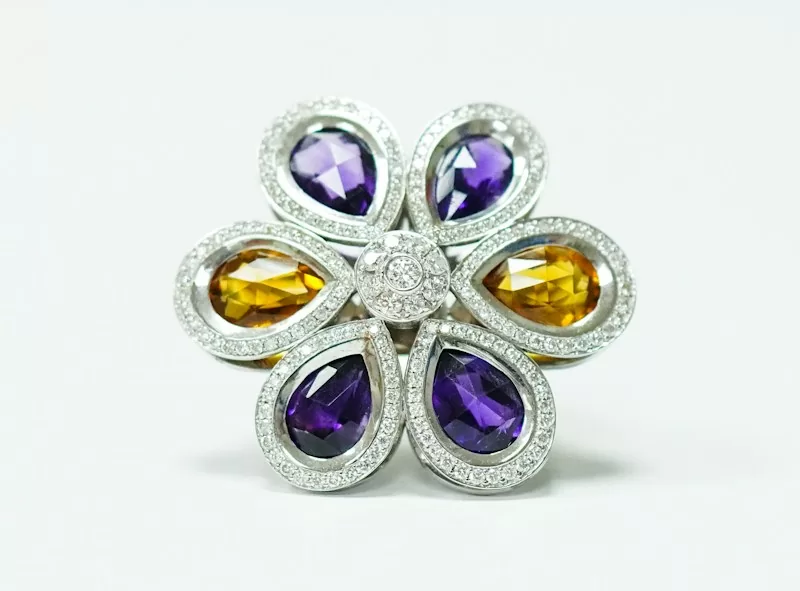
Every few months, someone brings in a ring that is too small, too delicate, or simply not their style, and says "I wish I could wear this." The answer is often yes - by turning the ring into a pendant. It is one of the most satisfying transformations in the shop, and it is also one of the most misunderstood. Here is when it works and when it does not.
01Why people do it
The reasons are almost always sentimental. A grandmother's ring that does not fit. An engagement ring from a past chapter that the owner wants to keep close but no longer wear. A ring that is too fragile for daily hand wear but too meaningful to leave in a drawer. In every case, the goal is the same: keep the piece present in daily life, rather than locked away.
This is the core argument for transformation over storage. A heirloom in a box honors nobody. A pendant around the neck is seen, touched, and remembered.
02How it actually works
The ring becomes a pendant in one of two ways. The simplest is adding a bail - a loop - to the existing ring, and threading a chain through it. The ring keeps its whole shape. This works when the ring is small enough to sit comfortably on a chain and structurally sound.
The second way is taking the ring apart: lifting the center stone or center detail, and setting it into a new pendant mounting. We do this when the original ring band is bulky, damaged, or simply not something you want hanging around your neck. The meaningful part - usually the stone - becomes the pendant. The band is recycled into the new piece.
03Choosing the bail
The bail is the loop that connects the pendant to the chain, and choosing it is half the job. A fixed bail is soldered on and sits in one direction - clean, but the pendant flips to show the front. A hinged bail opens and lets the pendant hang straight, which is better for rings that are wider than they are tall. A hidden bail sits behind the piece and disappears, which is the most elegant look for delicate rings. For a heavier ring, we use a larger, reinforced bail, because a thin bail on a heavy pendant bends and eventually breaks. Tell us how the pendant will be worn - on a fine chain, a sweater chain, a long chain - and we size the bail to match.
04When it works well
It works beautifully when the ring has a clear focal point: a single center stone, a distinctive setting, or a meaningful shape. A solitaire ring becomes a clean pendant. A ring with a colored stone becomes a colorful necklace. A ring with an engraving on the inside can have that engraving preserved on the back of the pendant, which customers find surprisingly emotional.
It also works well when the ring is too fragile for hand wear. A pendant sits against the body, protected, and does not take the knocks that a ring does. A delicate vintage ring that would chip on a finger can live for decades as a necklace.
05When it does not work
It does not work when the ring is large and heavy. A thick man's signet ring turned into a pendant hangs awkwardly, flips around, and pulls the chain. Those pieces are usually better worn as rings or reset into something smaller.
It also does not work when the ring is already meaningful as a ring. A wedding band, for example, is hard to translate into a pendant without losing its meaning. In those cases, I usually suggest wearing it on a chain as-is, or storing it, rather than rebuilding it.
06The chain question
People forget the chain. A pendant lives or dies by its chain. A heavy pendant needs a heavier chain, or it flips. A fine pendant on a fine chain is elegant but fragile. We match the chain weight to the pendant weight, and we usually recommend a snake chain or a box chain, which sit flat and do not kink.
07What it costs and takes
A simple bail addition is one of the least expensive custom jobs we do, because it is a small addition to an existing piece. A full reset into a new pendant is more, because it involves a new mounting and stone setting. Either way, it is far less than buying a new piece, and it carries the original meaning.
If you are weighing this against other heirloom options, reviving a family heirloom ring lays out the alternatives, and the design process in what happens at a first custom consultation is where we would start. Bring the ring. We will tell you honestly whether a necklace makes it sing or whether it belongs back on a hand.
The history and conventions of engagement rings are outlined in the Wikipedia entry on engagement rings.
08Frequently Asked Questions
What ring sizes can you supply in bulk?
US sizes 5–12 including half sizes. Send a size breakdown with your order and we cast to that curve; comfort-fit inner bands reduce resize requests.
Can I order a mixed size run instead of one size?
Yes. Mixed runs are standard for wholesale: specify quantity per size and we pack and label by size at no extra labor cost.
What is the MOQ for custom ring designs?
50 pieces per design for existing molds; 100–300 pieces when a new mold or CAD model is required.
How should I price rings for retail margin?
Most partners use a 3–4x markup on FOB cost for sterling and 2.5–3x for moissanite solos, which keeps landed cost under 30% of retail.
Related reading: Turning Heirloom Jewelry Into a Brand-New Ring, How to Turn a Napkin Sketch Into a Custom Ring, When a Ring Can't Be Fixed: Our Honest Assessment.
Send a sketch or a photo — our setter will answer with stone options and a price band.
Talk to the atelier


