The Inside of a Ring Tells You More Than the Outside
Bench notes · The Journal
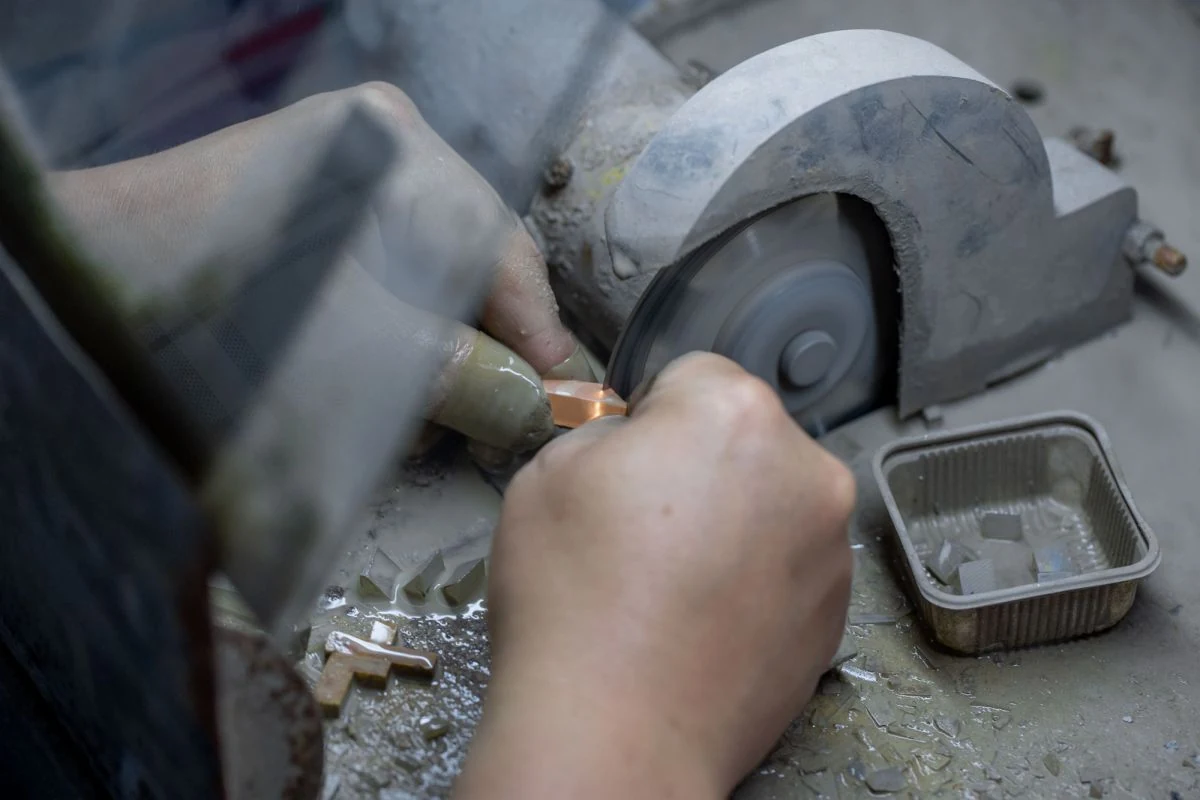
When most people inspect a ring, they look at the top: the stone, the setting, the polish on the face. They turn it over, glance at the inside, and move on. The inside of a ring is the most honest surface on the piece, because it is not polished for a customer. It is finished the way the builder actually works, and it tells you whether the piece was built to be worn or built to be sold.
01What the inside is for
The inside of the ring is the surface that contacts your finger for eight to twelve hours a day. It needs to be smooth, rounded, and free of sharp edges. A poorly finished inside is not just uncomfortable. It can catch on the skin, wear unevenly, and over time cause the ring to spin or bind. The interior finish is part of the comfort story, which is why the comfort fit versus standard band conversation starts on the inside rather than the outside. A band that feels good on the finger from day one is a band whose builder paid attention to the surface no one photographs.
02The tells on a lazy interior
Run a finger around the inside of a new ring. A well-finished interior feels uniformly smooth, with no ridges, no pits, and no leftover tool marks. A rushed interior shows several specific problems. There may be a sharp line where the band ends meet at the cast seam, because the builder filed the outside but not the inside. There may be small pits from casting that were never pickled out. There may be a flat spot or a rough patch near the hallmark, where the maker's mark was stamped and the surrounding metal was not re-polished.
Turn the ring so the inside faces a bright light. Look for tiny radial lines left by a grinding wheel that was not followed by polishing. Those lines feel smooth at first but catch lotion and dead skin, and they show up as dark lines within weeks. A builder who cares about the interior follows grinding with polishing and then with a high-gloss buff, even though no one will see the work in a showroom.
03The hallmark as a craftsmanship marker
The inside of a ring carries the maker's mark, the karat stamp, and sometimes a serial number. These are stamped into the soft gold before final polishing. On a well-built ring, the stamp is clean and legible, and the surrounding metal has been re-polished so the stamp sits flush. On a rushed ring, the stamp is crooked, shallow, or pressed into a surface that was never finished afterward, leaving a rough edge around the letters.
The location of the stamp also matters. A stamp placed directly under a high-wear point will wear away over years. A stamp placed on the lower inner curve, where it contacts the finger least, lasts for decades. That placement decision is a small tell about whether the builder thinks about long-term wear or about the photo on the day of delivery.
04Why this matters for resizing and repairs
The interior is also where resizing happens. When a ring is cut and shut to change size, the new seam is on the inside. A builder who does not finish interiors well will also do a sloppy resizing, because the same care that finishes the exterior is the care that has to finish the new interior joint. A poorly resized ring leaves an interior ridge that the finger feels immediately, and that ridge catches on the skin forever unless it is re-finished.
This is one of the reasons we recommend checking the interior before you commission a resize on a piece built elsewhere: the existing interior quality tells you what to expect from the repair, and it connects to the logic behind resizing a ring too many times. Each resize adds a new interior joint, and each one needs finishing.
05What to ask for on a custom build
If you are commissioning a custom ring, ask the builder to finish the interior to the same standard as the exterior. It is a small request and costs nothing in production, but it signals that you know what to look at. A builder who already does this will not even need to think about it. A builder who pushes back, saying the interior does not matter because no one sees it, has told you everything you need to know about the rest of the build.
The ring you wear is the ring whose interior touches your skin. The outside photograph is for other people. The inside is for you, every single day, for the life of the piece. Finishing that surface well is the quietest marker of a custom build done right, and it is the detail that keeps a ring comfortable long after the new-jewelry shine has worn off.
Carat weight conventions cited here follow the Wikipedia entry on carat weight.
06Related Reading
07Frequently Asked Questions
What ring sizes can you supply in bulk?
US sizes 5–12 including half sizes. Send a size breakdown with your order and we cast to that curve; comfort-fit inner bands reduce resize requests.
Can I order a mixed size run instead of one size?
Yes. Mixed runs are standard for wholesale: specify quantity per size and we pack and label by size at no extra labor cost.
What is the MOQ for custom ring designs?
50 pieces per design for existing molds; 100–300 pieces when a new mold or CAD model is required.
How should I price rings for retail margin?
Most partners use a 3–4x markup on FOB cost for sterling and 2.5–3x for moissanite solos, which keeps landed cost under 30% of retail.
Send a sketch or a photo — our setter will answer with stone options and a price band.
Talk to the atelier


