White Gold Rhodium Plating: When to Re-Dip and How Long It
Bench notes · The Journal
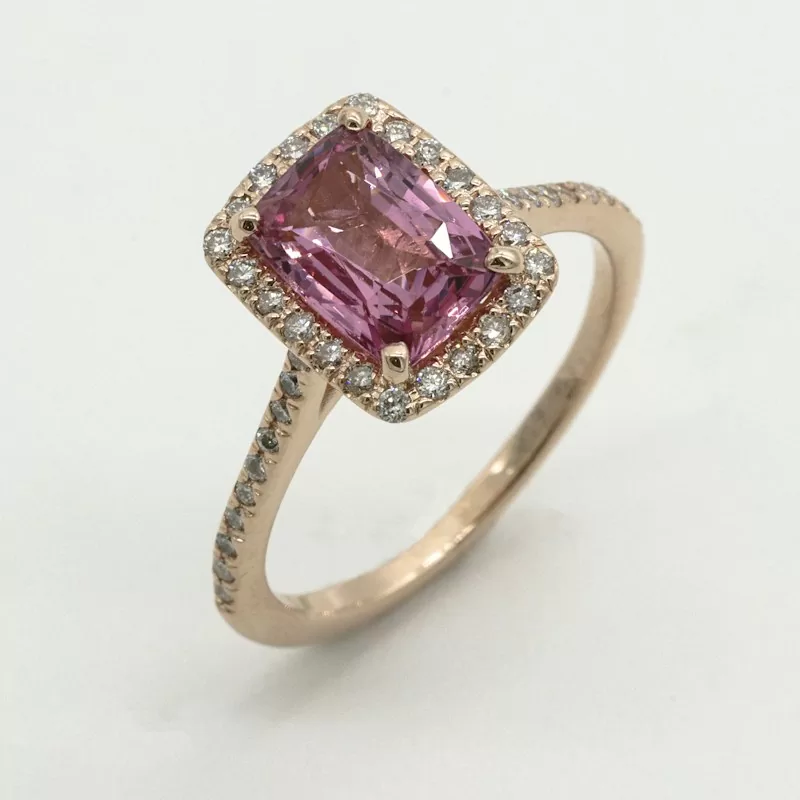
If you own a white gold ring, you own a plated ring. This surprises people. White gold is not a naturally white metal. It is yellow gold alloyed with whitening metals, and then electroplated with a thin layer of rhodium (EU ECHA nickel safety regulations) to give it that bright, mirror-white finish. That rhodium layer is wearing off every day you put the ring on. Knowing when to refresh it keeps your ring looking the way you bought it.
01How thick is the rhodium, really?
A typical rhodium flash is between 0.5 and 1.0 microns thick. To put that in perspective, a human hair is about 70 microns. You are wearing a coating roughly one seventieth the thickness of a hair. It looks permanent because it is mirror-bright, but it is a film. Under that film is the alloy underneath, and traditional nickel white gold has a slightly warm, gray-yellow tone once the rhodium is gone. That warm tone is not damage. It is the real color of the metal.
02How long does it last?
It depends almost entirely on how you wear the ring. Daily wear on the dominant hand lasts six months to a year before you notice yellowing on the edges. Occasional wear on the right hand, evenings only, lasts eighteen months to two years. A ring stored in a box and rarely worn lasts three to five years, because plating fails mostly by abrasion, not by aging.
The first sign is almost always the same. The shank edges and shoulders start to look slightly warm or dirty while the top of the setting stays bright. That is because the high points wear first. It is not staining. It is the base alloy showing through a thin film.
03When should you re-dip?
Honestly, when it bugs you. There is no structural reason to re-plate on a schedule. If the yellowing does not bother you, you can wear a white gold ring for years with its natural alloy tone. Some people actually prefer the softer look. Most customers come in once a year, right before a big event, a vacation, or a family photo. A re-dip also doubles as a chance for us to inspect the prongs and tighten stones, which is why we bundle it with the regular check. We cover the maintenance rhythm in the daily ring care routine.
04What it costs and what we do
A standard re-dip at our bench runs roughly forty to seventy dollars, depending on ring size and how much prep it needs. The process is a clean, a light polish, a copper strike layer, then the rhodium plate. The whole job is usually twenty-four to forty-eight hours because the plating baths need to build up properly. Rushed plating looks good for a week and then flakes, so we do not rush it.
One honest caveat. Polishing before plating removes a tiny bit of metal. Re-dip a ring every year for ten years and you have polished the shank thinner. If the ring already has a thin or worn shank, we often skip the polish and just clean and plate. Plating over a clean surface looks almost as good and costs you nothing in metal. We explain that trade-off, and when plating is worth it at all, in gold color and plating.
05Platinum does not solve this
People often ask if platinum avoids the problem. Yes. Platinum is naturally white, never needs plating, and its patina is a finish, not a defect. The trade-off is price. Platinum runs two to three times the cost of the same ring in white gold, and it is heavier on the finger. If you hate the idea of re-dipping forever, platinum is the honest answer. If you like a bright white at a lower entry cost, white gold with a yearly re-dip is perfectly reasonable. We help people weigh that choice in choosing the right engagement ring metal.
06What happens if you never re-dip
Nothing breaks, and nothing falls out. The ring simply looks less white as the base alloy shows through. Some customers actually prefer this, because the warm gray tone reads softer and less like a showroom piece. The only real downside is cosmetic, and the only time it matters is when the plating wears through on the inside of the shank and the base alloy starts touching your skin, which is the moment a nickel-sensitive person notices irritation. If you are not sensitive, you can wear a white gold ring for years with its natural tone and re-plate only for events. If you are sensitive, treat the annual re-dip as a health measure rather than a beauty treatment, because the plating is the only thing standing between your skin and the nickel underneath.
The cost comparison is worth stating plainly. Over ten years, a yearly re-dip adds roughly four to seven hundred dollars on top of the ring, which is still far less than the difference between a white gold ring and the same ring in platinum. Platinum avoids the re-dip forever, but you pay the premium up front. Both paths are honest. Pick based on whether you would rather spend a little each year or a lot on day one.
07Frequently Asked Questions
What gold purities and platings do you offer?
Solid 10K, 14K and 18K, plus gold-filled and vermeil. Plated fashion lines use 1–2 micron PVD over brass or 316L.
How do I avoid mislabeling gold products?
Label by construction: solid, gold-filled, vermeil or plated. Mislabeling plated as vermeil is the most common compliance complaint in this category.
Can you stamp karat marks?
Yes. Every solid-gold and vermeil piece is stamped with karat and maker marks, which supports customs and resale claims.
What is the MOQ for gold lines?
50 pieces per design for stock settings; custom CAD work starts at 100 pieces.
Related reading: Black Rhodium Plating: How Long It Lasts and How It Ages, K Gold Rhodium Plating for White Gold, Moissanite Ring Plating Options Rhodium Gold.
Send a sketch or a photo — our setter will answer with stone options and a price band.
Talk to the atelier


