Reproducing a Lost Custom Ring: OEM Reverse-Engineering
Bench notes · The Journal
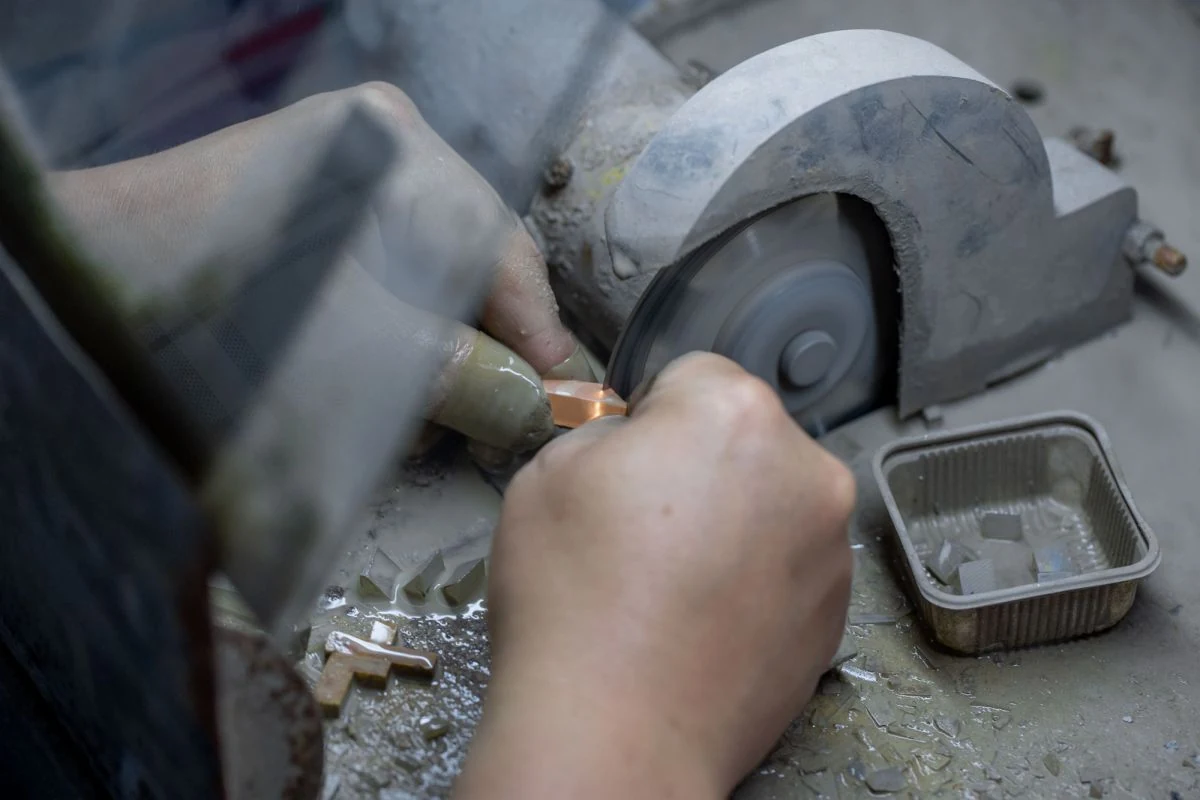
A woman in Chicago reached us with two photographs of her late mother's wedding ring, snapped years apart at a family dinner. The ring itself had been lost on a beach trip, with no certificate, no record of the maker, and no trace of the original size. She wanted it back, not as a similar ring, but as the same ring. Reproducing a lost custom ring from photographs is a real atelier service, not a fantasy reconstruction. This is the reverse-engineering workflow we used, and the photo checklist clients need to know before they send anything.
01What makes a faithful reproduction possible
A ring can be rebuilt only when the references carry enough information. Two blurry selfies are not enough; a set of close, well-lit photos against a ruler can be. The goal is to recover the geometry: stone shape and size, setting type, band width, profile, and any engraving or detail. We treat the photos as engineering drawings and scale everything against a known reference, like a coin or ruler held beside the ring.
| Reference quality | Result | What we can recover |
|---|---|---|
| Two blurry photos | Approximation | General style only |
| 4-6 close photos + ruler | Faithful replica | Stone, setting, width, profile |
| Photo + original size known | Exact remake | Full geometry and fit |
| Photo + engraving visible | Full replica | Including text and handwriting |
02The reverse-engineering workflow
- Reference intake: we ask for four to six close photos: top, side, angle, and a detail of the setting, each with a ruler or coin for scale. Even an old scan from a family album works.
- Measurement scaling: the CAD designer scales the ring against the reference object, recovering stone dimensions, band width, and setting height.
- CAD reconstruction: the ring is modeled to the recovered geometry, then rendered back against the original photos so the client can confirm the match before casting.
- Material selection: we choose a matching karat and finish. If the original was white gold, we apply a 0.5um rhodium plate to match the bright look.
- Casting and fitting: lost-wax casting, then sizing to the client's current finger. We set a matching GRA-certified moissanite or equivalent stone.
- Comparison check: the finished ring is photographed beside the original photo for a final side-by-side sign-off.
Our structural rebuild runs about 20% above the original's likely wear tolerance: where the old ring may have thinned over decades, the remake is built to our 1.3mm shank and pull-test standard, so it lasts another lifetime rather than repeating the original's weak points.
03How to guide different reproduction requests
Client with limited photos: set expectations honestly. We can reproduce the design language and most proportions, but call it a faithful remake rather than an exact duplicate until the render comparison is approved.
Client who knows the size or metal: that detail sharpens the rebuild dramatically. Even a remembered size or a known gold color removes guesswork.
Retailers offering the service: we supply a photo-intake kit with a ruler template and a checklist, so your staff can gather the references correctly on the first pass.
04Frequently Asked Questions
Can you reproduce a ring from just photographs?
Often, yes. We need four to six close photos with a ruler or coin for scale, covering the top, sides, and setting detail. The CAD is then scaled against that reference and approved against the original photos before any casting.
How close will the remake be to the original?
With good reference photos, the remake matches the stone shape, setting, band width, and profile. Where the original had worn thin over decades, we build the remake to our durable shank standard, so it is faithful in design but stronger in structure.
What if I only have one old photo?
One photo is enough to begin, but the result will be an approximation of the style rather than an exact geometry. We will tell you honestly what we can and cannot recover before quoting, and we only ask for payment once the render comparison is approved.
Can you match the original stone type?
Yes. If the stone was a diamond and the size can be recovered, we set a matching IGI-certified stone; for colorless solitaires, a GRA-certified moissanite is a value option that matches the look. We present both choices.
How long does a ring reproduction take?
From approved references to finished ring, the process takes 4 to 6 weeks, including the CAD render comparison and casting. Rush casting is available for tight deadlines.
05Bottom line
Send us your photos: we return a feasibility read and a quote within 5 days. See how we handle heirloom resetting, review the bespoke process, or reach us via here.
Rhodium plating, which gives white gold jewelry its bright finish, is covered in the Wikipedia article on rhodium.
06Related Reading
Send a sketch or a photo — our setter will answer with stone options and a price band.
Talk to the atelier


