Recycled Gold and Sourced Metals in a Custom Atelier
Bench notes · The Journal
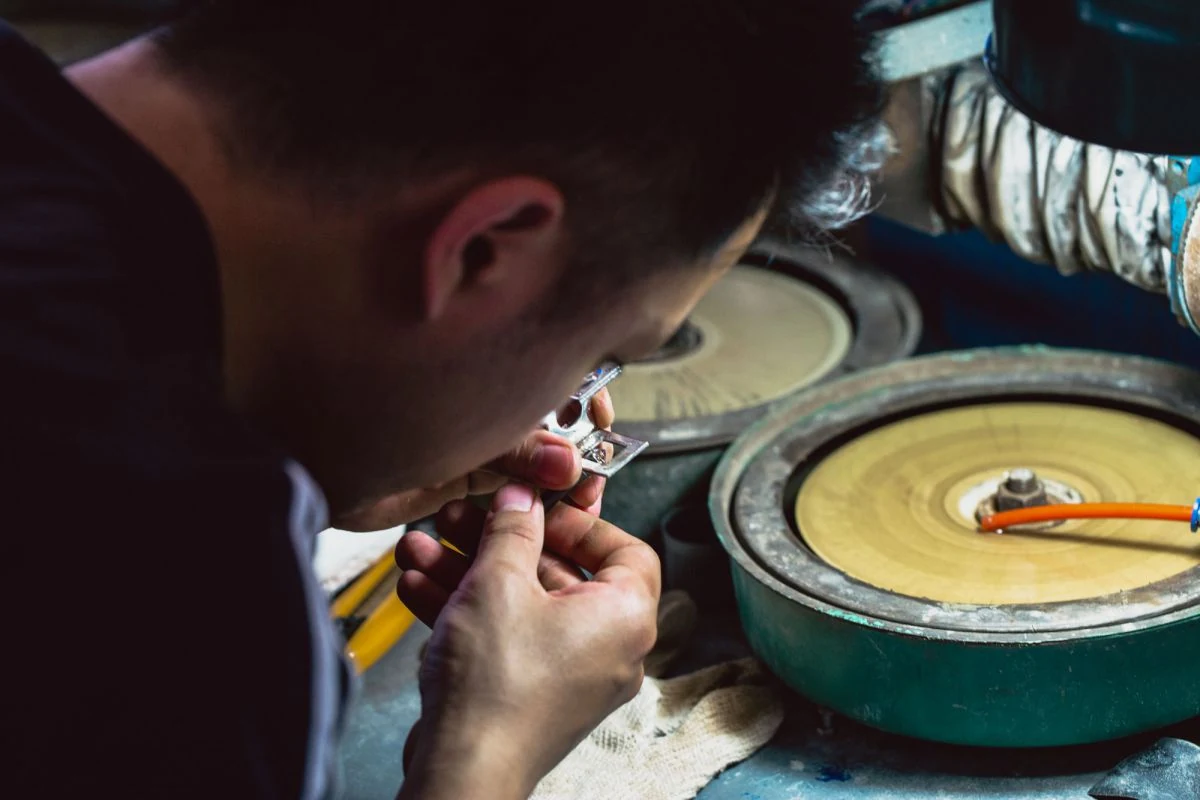
"Recycled gold" appears on a lot of marketing pages. In a custom atelier, it means something specific: the metal going into the mold has a verifiable origin, whether that is a refiner's recycled bar or the client's own old jewelry. Understanding what recycled actually entails separates a meaningful ethical choice from a sticker, and it protects the client from a casting that comes out brittle or discolored.
01The two kinds of recycled gold
Most jewelry on the market today uses recycled gold from refiners who melt down scrap from the whole supply chain. The metal is assayed, alloyed to a standard karat, and sold in bars. It is genuinely recycled, but its chain of custody goes back to a refinery, not to a mine or to a specific previous owner. For most clients, this is enough: it avoids newly mined gold, it is traceable through the refiner, and it prices the same as conventional stock.
The second kind is client-supplied gold. A family ring, a broken chain, an old bracelet goes into a crucible, is refined, and comes back as the new piece. This is the version clients usually mean when they ask for "their gold" in a redesign. It carries emotional continuity, but it also carries alloy risk that the atelier has to manage before casting.
02Why melting old jewelry is not a one-step job
An old 14k ring is not pure 14k. It may have been repaired, soldered, or re-plated over decades. It may contain hidden copper inlays, nickel in the solder, or stones still set. Melting it without refining returns an alloy of unknown composition. The cast piece that comes out may be brittler, may discolor, or may not plate evenly. On a custom piece where the client expected their grandmother's ring to live on, a failed casting is a double loss.
A proper atelier sends client metal out for assay and refining before alloying it to the target karat. That takes a few extra days and a small lab fee, but it is the difference between a piece that holds up and one that cracks a year later. The assay report also tells the client exactly what came back, which matters for the story of the piece.
03Platinum and silver side notes
Platinum recycled from old rings is usually high purity and refines cleanly. Silver, especially sterling silver from pieces with solder joints, can carry impurities that cause firescale during casting, which is the reddish patina that shows up on the inside of a silver piece. Both metals need the same assay step as gold. Palladium-white gold, which replaces nickel in the alloy, is often chosen alongside recycled gold for clients who also want to avoid nickel exposure or skin sensitivity.
04What traceability actually proves
A responsible refiner supplies a chain-of-custody document: the bar number, the assay result, and the date. Some refiners publish recycled content percentages. For a client who wants documented provenance, ask for that paper, not a verbal assurance. The documentation is what supports the ethical claim if the piece is ever resold or appraised. Without it, the "recycled" claim is unverifiable.
05Cost and lead time reality
Using certified recycled metal rarely costs more than using conventionally sourced metal at a production atelier; the refiner prices are similar. The lead time change comes from client-supplied metal, which adds refining days. The price change comes from the assay step itself. Ask for both up front. A client who is told the old ring can be melted directly, with no refining step, is walking into a quality gamble.
06Mixing client metal with new stock
Sometimes the client's old jewelry does not yield enough metal for the new piece. A thin ring cannot supply the gold for a wide band. The atelier then mixes the refined client metal with new stock metal of the same alloy. That dilution is normal, but it should be disclosed. The client should know what percentage of the new ring came from the old piece, and what percentage is new. For a sentimental redesign, even a partial transfer of the old metal carries the continuity the client wanted, but the story of the piece should match the reality.
Mixing also affects color. An old rose gold piece refined and alloyed to 14k yellow will not look the same as a stock 14k yellow, because the residual copper content shifts. The atelier can adjust the alloy to match, but that adjustment adds steps. If the color of the new piece matters, discuss it before refining the old metal.
07What to ask before the torch is lit
When a redesign involves old family pieces, we walk through the refining step explicitly. The process is covered in our redesign service notes.
On responsible sourcing of minerals, the OECD Due Diligence Guidance for Responsible Supply Chains of Minerals is the international reference framework.
08Authoritative References
For buyers who need to verify the technical and regulatory basis of this guide, the following independent institutions publish authoritative reference data:
09Related Reading
10Frequently Asked Questions
What gold purities and platings do you offer?
Solid 10K, 14K and 18K, plus gold-filled and vermeil. Plated fashion lines use 1–2 micron PVD over brass or 316L.
How do I avoid mislabeling gold products?
Label by construction: solid, gold-filled, vermeil or plated. Mislabeling plated as vermeil is the most common compliance complaint in this category.
Can you stamp karat marks?
Yes. Every solid-gold and vermeil piece is stamped with karat and maker marks, which supports customs and resale claims.
What is the MOQ for gold lines?
50 pieces per design for stock settings; custom CAD work starts at 100 pieces.
Send a sketch or a photo — our setter will answer with stone options and a price band.
Talk to the atelier


