Prong Tip Styles: Ball, Claw, and Pointed Explained
Bench notes · The Journal
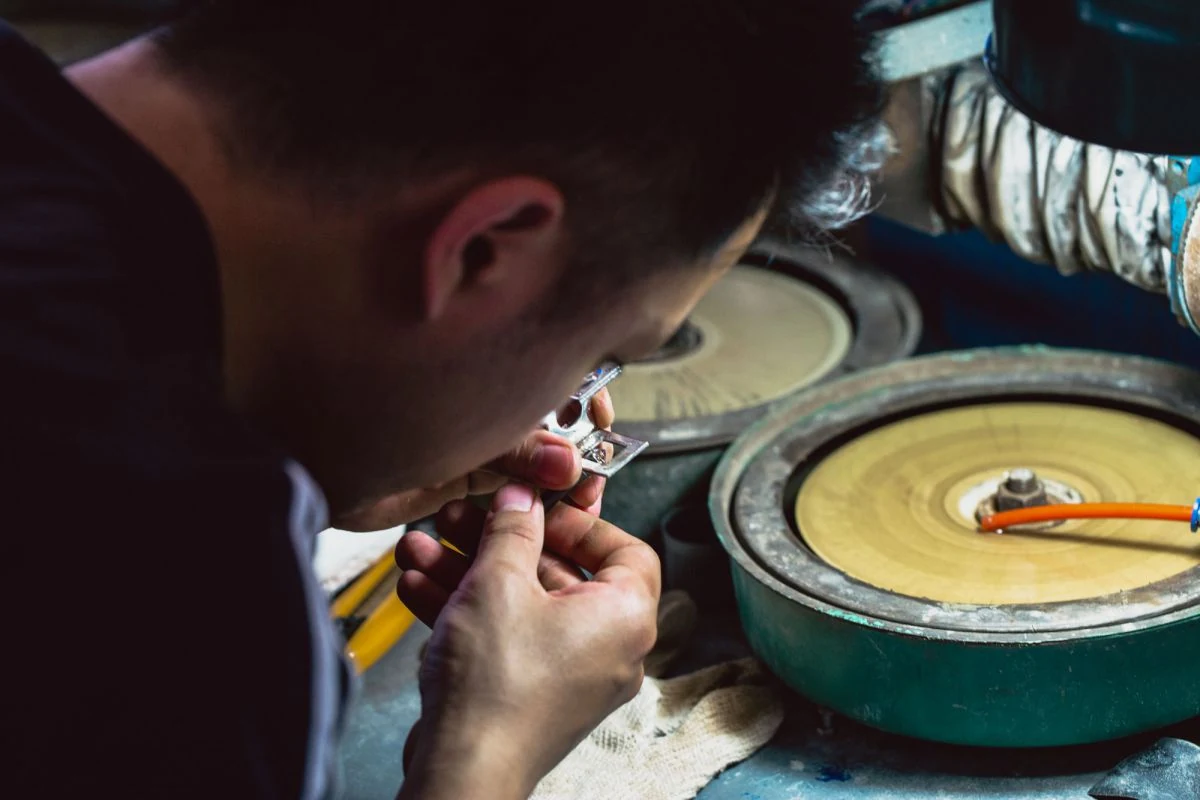
When clients design a ring with us, we walk through stone shape, metal, band width, and setting style. Almost no one asks about prong tips. The tips are the tiny tops of the prongs that curl over the crown of the stone, and they are one of the most consequential choices on the whole ring. A prong tip that is too pointy snags sweaters. A prong tip that is too round hides sparkle. A prong tip that is the wrong shape for your stone can actually chip the girdle over time. Here is how the bench thinks about them.
01What a prong tip actually does
A prong has two jobs. The shoulder grips the stone at the girdle, holding it in the seat. The tip bends over the crown, covering the top edge of the pavilion so the stone cannot lift out of the seat. The amount of tip that covers the crown matters: too little and the stone can work loose; too much and you cover facet and kill sparkle. The shape of that tip is a design choice, not a default.
02The ball tip
A ball tip, also called a round or bead tip, ends in a small rounded ball of metal sitting on the crown. It is the most common tip you see on solitaire engagement rings, and for good reason. It is gentle on the stone, it does not snag fabric, and it is easy to re-tip when it wears. The ball distributes pressure over a wider area, so it is the safest choice for soft stones like emerald or opal, and for any stone with a thin girdle.
The downside is that the ball covers a small patch of facet, which costs a tiny amount of sparkle. On a high-clarity diamond or moissanite, no one notices. On a very small stone, the ball can look oversized and cartoonish. Ball tips are also the easiest to grab for a jeweler doing a re-tip, which is part of why they are the industry default.
03The claw tip
A claw tip is sharpened to a fine point that hooks over the crown. It is the classic eagle claw look, and it is the favorite for solitaire rings that want maximum visible stone. Because the tip comes to a point, it covers almost no facet, so the stone reads larger and brighter. Claw tips are also very secure when done right, because the point digs into the crown edge slightly.
The catch is that claw tips snag. A sharp point will catch on knits, hair, and seatbelts. Clients who work with their hands, who sleep in their ring, or who wear gloves constantly come back with bent claw tips within a year. Claw tips are also harder to re-tip cleanly, because you have to rebuild the point under magnification. We love them for statement rings and evening wear; we hesitate on everyday bands.
04The flat or peg tip
A flat tip, sometimes called a peg tip, ends in a flat pad sitting on the crown. It is common on vintage-style rings and on channel-side settings. It is extremely secure and does not snag, but it covers more surface than either a ball or a claw, which dulls sparkle slightly. You see flat tips on older estate rings, where the gold was thicker and the fashion was for heavier metal.
05The cathedral and hidden tips
On some rings, the prongs split near the top, and a smaller secondary tip hooks under the girdle. These are decorative and show up most often on antique-inspired designs. They are not load-bearing, but they add visual weight to the setting. They also catch dirt like crazy, so they need more frequent cleaning.
06How we choose for you
When we set a stone, we match the tip to the stone and the wearer. Thin girdles and soft stones get ball tips. Hard, high-sparkle stones on a ring worn for special occasions get claw tips. Everyday rings on active hands get ball or flat tips, always. We also match tip size to stone size: a small stone gets a tip that looks proportional, not one lifted from a two-carat setting.
There is also a metal factor. In white gold, ball tips blend in because the rounded bead catches light the same way the surrounding polished metal does. In rose or yellow gold, claw tips read as a more deliberate design choice, because the warm metal against a clear stone makes the points visible. On platinum, tips of any shape hold their edge longer, so claw tips that would bend on a daily 14k band can last years in platinum. We take all of that into account before we bend a single prong over your stone.
If you already own a ring and the prongs have been bothering you, snagging your sweaters, feeling sharp, we can reshape the tips in minutes, no stone removal needed. It is one of the cheapest, most satisfying adjustments we do.
For third-party reference, the Wikipedia article on moissanite details moissanite’s discovery, optical properties and use in jewelry.
07Related Reading
08Frequently Asked Questions
How do I verify a factory before placing a bulk order?
Request a production video, business license, export records and a paid sample run. A factory that accepts a 50-piece test order is usually a real manufacturer.
What payment terms do you offer?
30% T/T deposit with the balance against the bill of lading. This protects both sides on first orders and can move to net terms after a track record.
What is your normal reject rate?
3–5% under 10x loupe inspection for cast and set pieces. Defective units are replaced free in the next shipment.
Where is the factory located?
Wuzhou, Guangxi, China—the core lab-grown and moissanite manufacturing cluster. Shipments go via Guangzhou or Shenzhen ports.
Related reading: Cathedral, Bezel, and Prong Settings Explained by a Bench Jeweler, When a Prong Wears Thin: Warning Signs and Fixes, Oval Moissanite: Bow-Tie Effect and Elongation, Explained Simply.
Send a sketch or a photo — our setter will answer with stone options and a price band.
Talk to the atelier


