Pave-Set Ring Durability: What Actually Wears
Bench notes · The Journal
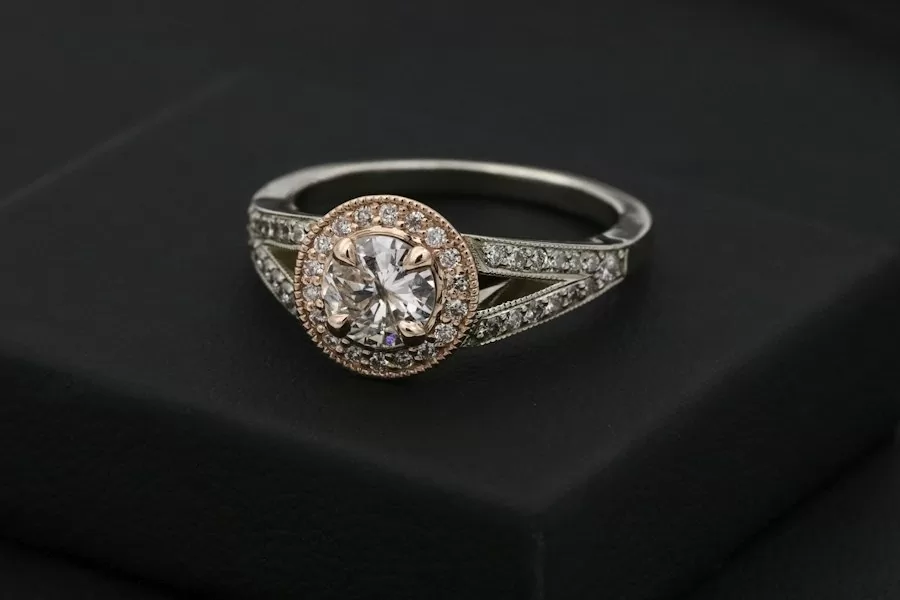
Walk into any jewelry store and the pave-set rings look weightless. Tiny stones dot the band like frosting, and the metal disappears behind them. Customers fall for the look, then call us a year later asking why one of the little diamonds went missing. Pave is not fragile by accident. It is fragile by construction, and most of what wears out is predictable.
01How a pave setting actually holds stones
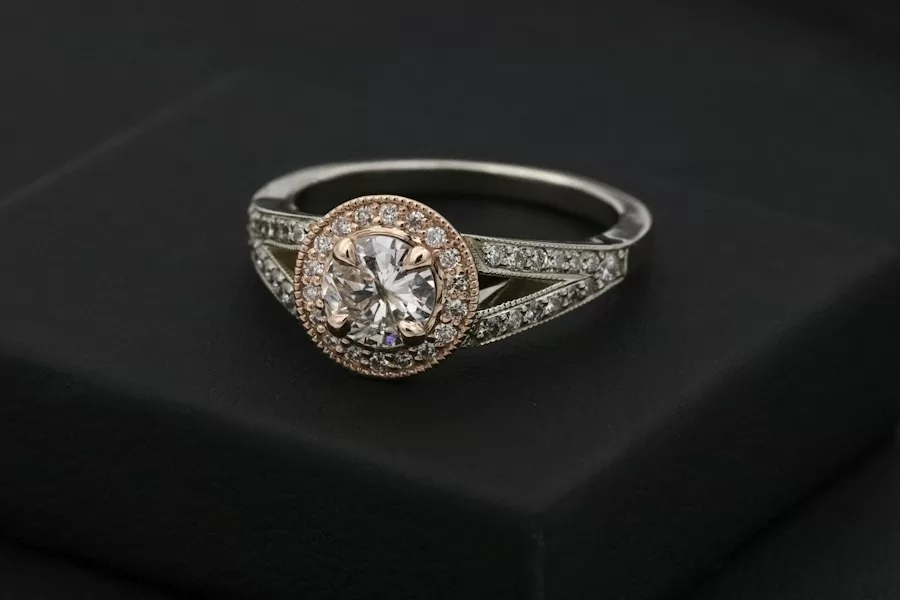
In a micro-pave setting, the small stones are not gripped by one big prong. Each stone sits in a drilled seat, and two tiny beads of metal are rolled over its crown to lock it in. Those beads are the whole retention system. A bead the size of a pinhead is all that stands between a $30 side stone and your kitchen drain.
This is why build quality matters more than the look on day one. A well-made pave setting uses slightly larger beads, drilled seats that match the stone diameter, and a gallery rail underneath so the stones are not cantilevered over empty air. A rushed setting skips the rail, glues stones in, or beads them too lightly to save time.
02The metals that survive pave better
Pave needs metal that can be pushed around and stay put. Platinum 950 is the workbench favorite: it is ductile, it work-hardens, and the beads do not snap off the way they can in harder alloys. 14k yellow gold is the practical runner-up. 18k gold is softer and beads flatten faster. White gold is workable, but remember it is rhodium plated, and plating wears thin on high-friction pave edges first.
We generally steer active customers away from pave in 10k white gold. The higher alloy content makes the metal brittle enough that micro beads chip instead of bend, and we see more stone loss from that combination than any other.
03What actually fails in the wild
When a pave ring comes back, the diagnosis is almost always one of three things. First, worn beads from daily friction against desks, walls, and other hands. Second, a bent or crushed gallery rail, usually from an impact, which lifts a whole row of stones at once. Third, a loose center-prong shoulder that lets the ring flex, which then rocks every pave stone on the band.
Customers often blame the small diamonds. They are rarely the problem. Moissanite, diamond, and sapphire side stones all sit in the same seats, and the seats fail identically. The stone material does not rescue a bad setting.
04How we build pave to last
On a custom order, we make three deliberate choices. We thicken the shank slightly under the pave row so the band does not flex. We use a closed or semi-closed gallery rail rather than an open one. And we size the beads for the stone: a 1.3 mm stone gets a bead proportioned to it, not a generic micro tool run at whatever pressure the bench hand prefers.
We also tell customers the honest maintenance schedule. A pave ring worn daily wants a professional check every six months, not every two years. At that check, we inspect the beads, tighten anything that wiggles, and re-seat stones before they walk. This is the same logic behind watching for worn prongs on a solitaire, except the failure mode is smaller and easier to miss.
05If you already own a pave ring
You do not have to baby it, but you do have to notice it. If you feel a rough edge on the band with your fingertip, that is a bead that has lifted. If you see a dark dot where a stone used to be, stop wearing the ring and bring it in. A missing seat left open catches on everything and bends the neighboring beads. For routine upkeep, how often a ring should be inspected depends on setting type, and pave sits at the frequent end of that range.
06Who should think twice before pave
Pave is the wrong choice for a small group of buyers, and we would rather say so up front. If you work with your hands as part of your job, if you play sports in your ring, or if you simply know you are someone who never brings jewelry in for servicing, a full-pave band will cost you more in lost stones than it costs upfront. A channel-set row or a shared-prong band holds small stones far better in rough hands, and we will steer you there when the lifestyle calls for it.
Cleaning also matters. Pave traps lotion and skin oil in the gaps between beads, and that grime dulls the row faster than any single worn bead. A soft toothbrush with warm soapy water once a week keeps the sparkle honest. Skip the ultrasonic on pave unless a bench person has told you your specific setting can handle it; we cover that boundary in what the ultrasonic can and cannot do.
Pave is a legitimate design choice, not a mistake. It just rewards customers who understand what they bought. Build it in the right metal, inspect it on schedule, and it will hold its sparkle for a very long time.
Rhodium plating, which gives white gold jewelry its bright finish, is covered in the Wikipedia article on rhodium.
07Related Reading
08Frequently Asked Questions
What ring sizes can you supply in bulk?
US sizes 5–12 including half sizes. Send a size breakdown with your order and we cast to that curve; comfort-fit inner bands reduce resize requests.
Can I order a mixed size run instead of one size?
Yes. Mixed runs are standard for wholesale: specify quantity per size and we pack and label by size at no extra labor cost.
What is the MOQ for custom ring designs?
50 pieces per design for existing molds; 100–300 pieces when a new mold or CAD model is required.
How should I price rings for retail margin?
Most partners use a 3–4x markup on FOB cost for sterling and 2.5–3x for moissanite solos, which keeps landed cost under 30% of retail.
Send a sketch or a photo — our setter will answer with stone options and a price band.
Talk to the atelier


