A lot of clients arrive at our bench already half-convinced. They have read online that lab-grown diamonds are "real diamonds" and that moissanite is a cheap imitation, or the reverse, that moissanite is the ethical, budget-savvy choice and lab diamonds are a marketing invention. Both takes are oversimplified. After setting both stones in hundreds of rings and seeing how they look after a decade on a hand, I can tell you the honest version: each has a real home, and picking the wrong one for your lifestyle is the most expensive mistake in this whole decision.
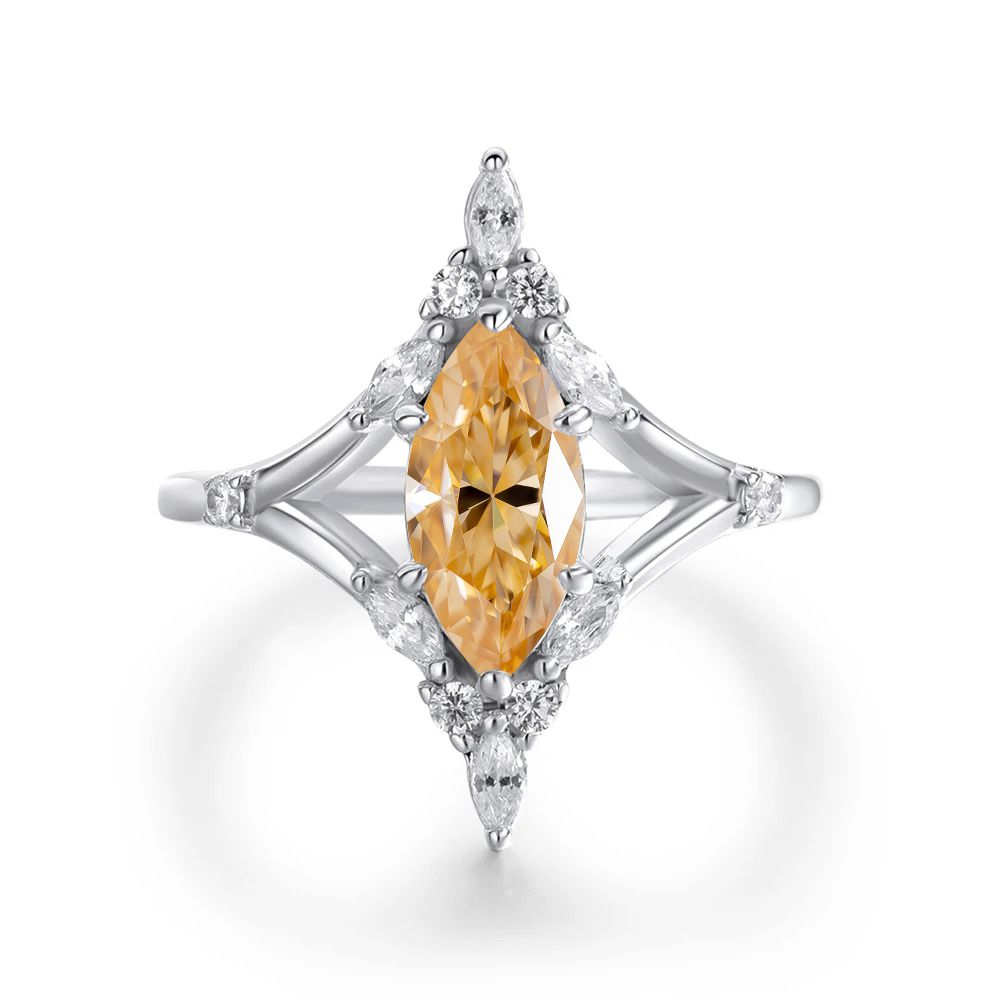
This is not the moissanite-versus-natural-diamond argument you have probably read. That conversation is mostly about price and ethics. This one is narrower and more useful: if you are choosing between a moissanite center stone and a lab-grown diamond center stone, what should actually drive the decision? Let me walk you through how the two stones behave once they leave the bench.
What each stone actually is
Moissanite is a rare mineral discovered in a meteor crater, and the version you see in jewelry today is grown in a laboratory. Chemically it is silicon carbide, not carbon like diamond. It is exceptionally hard, scoring around 9.25 on the Mohs scale, which means it is nearly as tough as a diamond and far harder than sapphire, ruby, or any gemstone you might be considering.
A lab-grown diamond, by contrast, is chemically, optically, and physically identical to a mined diamond. It is pure carbon crystallized in a high-pressure, high-temperature chamber or a plasma reactor. To the naked eye, and even under a jeweler's loupe, a well-cut lab diamond is indistinguishable from a mined one. The difference is provenance and price, not substance.
So the first correction: moissanite is not a "fake" diamond, and a lab-grown diamond is not a "fake" either. They are two different materials, chosen for different reasons.
Look and fire: the biggest visual difference
If you put a round moissanite and a round lab diamond of the same size side by side under normal indoor light, most people cannot tell them apart. Under direct sunlight or a bright spotlight, the difference jumps out. Moissanite has a higher refractive index than diamond, which means it bends light more sharply and throws off more "fire," the rainbow flashes you see as the stone moves. It is, in a word, sparklier. Some clients love this. Others find it too much, almost like a cubic zirconia caught in direct sun.
Lab diamonds behave more subtly. Their brilliance is white and steady, with less obvious rainbow flash. They read as quiet and confident. If you have always imagined a ring that glows rather than flashes, a lab diamond is the safer emotional bet. If you want the stone to announce itself the moment you move your hand, moissanite delivers that in spades.
Color tint you should know about
Here is a detail most online guides skip. Near-colorless moissanite, especially in larger sizes, can show a faint grayish or greenish tint in certain light. Modern moissanite has improved enormously, and the better grades are nearly colorless, but at two carats and above the tint can become noticeable to a trained eye. Lab-grown diamonds can also be graded for color, and you can buy one that is genuinely D-F colorless with no gray or green cast at all. If colorlessness is non-negotiable and you are going above two carats, a lab diamond removes a variable that moissanite leaves on the table.
Hardness, scratches, and daily life
Both stones are tough enough for an everyday ring, and that is worth saying clearly. You are not compromising on durability by choosing either. But they are not identical in how they wear.
Diamond, whether mined or lab-grown, is the hardest known natural material. It scratches nothing except another diamond, and nothing scratches it. A diamond ring can sit next to keys in a purse for years and emerge unscathed. Moissanite at 9.25 is nearly as hard, and in practice it also shrugs off everyday scuffs. The difference shows up at the edges: moissanite can be scratched by a diamond, and over decades a moissanite stone may develop micro-scratches that dull its face slightly. Most clients will never notice. People who keep their ring on for absolutely everything might, after ten years, bring it back for a polish or a refresh.
The practical takeaway: both are fine for daily wear. Do not choose moissanite over a diamond because you think it is softer. It is not, in any way that matters for a normal life.
Price and what that buys you
This is where the decision usually tips. A one-carat, well-cut, near-colorless lab-grown diamond costs a fraction of a mined diamond of the same grade. A one-carat moissanite costs a fraction of that lab diamond. The price gap is large enough to change the ring: with the same budget you can go up a full carat or two in moissanite, or put the savings into a more intricate setting, or simply leave yourself more room for the wedding.
But price is not the whole story because the two stones hold value differently. Lab-grown diamonds, like mined diamonds, do not resell well. The market for used lab diamonds is thin, and you should not expect to recoup much of what you paid. Moissanite resells for even less, effectively as a costume gemstone. Neither is an investment. If you are buying a ring to wear and love, that is fine. If you secretly hope it will be worth something someday, you are better off with the metal weight and the craftsmanship, not the stone.
Ethics and origin
Clients often raise ethics, and it matters to them, so let me be straight. Moissanite is lab-grown, so it carries no mining footprint at all. Lab-grown diamonds are also ethically clean, with no conflict-mining history and a far lower environmental footprint than mined stones, though the energy used to grow them has improved dramatically with renewable-powered facilities. If ethical sourcing is your priority, both options clear that bar. You do not need a mined stone for peace of mind, and you do not need to pay a premium for a certification that exists mostly to reassure you.
Setting and prong considerations at the bench
Here is where my bench perspective actually changes the advice. Moissanite is slightly less hard than diamond, so we set it a touch more gently, but the prong settings are identical. The bigger difference is in how people size up. Because moissanite is so much cheaper per carat, clients routinely choose a 2.5 or 3-carat stone in moissanite where they would have bought a 1-carat diamond. A 3-carat stone needs a sturdier setting, wider prongs, and a stronger band to support it. We account for that. The point is that choosing a larger moissanite is not just about a bigger rock. It changes the whole engineering of the ring, and we build for that rather than shrink the setting to fit a price.
How to actually choose
When clients ask me which to pick, I ask four questions.
- How big do you want the stone? If a 2+ carat look matters to you on a realistic budget, moissanite is the honest answer.
- Do you want quiet sparkle or a show? Subtle and classic points to a lab diamond. Playful and eye-catching points to moissanite.
- Does it matter that the stone is "a diamond" to other people? Lab diamonds carry that cultural meaning. Moissanite does not, and some clients care deeply about that.
- Do you want the most colorless stone possible above two carats? That nudges you toward a lab diamond.
There is no wrong answer among them, only the answer that matches the person wearing the ring. We have set both in wedding bands that go out every week, and the clients who are happiest are the ones who chose the stone for their own hand, not for what an article told them was the smartest buy.
How each stone holds up over a decade
We get rings back for cleaning and polishing that were set five, ten, even fifteen years ago, and the difference between the two materials starts to show. A lab-grown diamond, like a mined one, comes back looking almost exactly the day it left the bench. Diamonds do not dull. Their only enemies are a hard knock that chips the girdle, or a prong that loosens and lets the stone turn. The metal around them wears, but the stone itself is essentially immortal.
A moissanite, after a decade of daily wear, may come back with a slightly duller face. Micro-scratches build up on the crown, and the rainbow fire softens. We can re-polish the stone to bring it back, but it is a step a diamond never needs. For most clients this difference is invisible. For someone who keeps the ring on through absolutely everything, and who would notice a faint dullness, it is a reason to lean diamond. If you take the ring off at night and for exercise, you will never see it.
Certification and resale, told honestly
A lab-grown diamond usually comes with a grading report, just as a mined diamond does. That paper tells you the carat, cut, color, and clarity, and it gives the stone a documented identity. Clients like this because it feels official. Moissanite does not come with the same kind of diamond grading report, because it is not a diamond. It is sold by size and quality grade, but the paperwork is simpler.
Here is the part nobody online tells you: neither stone is an investment. Lab-grown diamonds have a thin resale market, and you will not recoup what you paid. Moissanite resells for even less. If you are buying a ring to wear, this is irrelevant. If you are secretly hoping the stone holds its value, the honest answer is that the gold and the craftsmanship are what hold value, not the center stone. Buy the stone because you love it on the hand, not because you think it will appreciate.
Sizing up: why a bigger moissanite changes the whole ring
Because moissanite is so much less expensive per carat, clients routinely choose a stone that would have been out of reach in a diamond. A 2.5 or 3-carat equivalent looks spectacular, but it also changes the engineering of the ring. A larger stone needs a wider seat, stronger prongs, and a band that can carry the visual weight without looking flimsy. We build for that. We will not set a 3-carat moissanite on a 1.5mm band just because the stone was cheap. The setting has to match the stone, or the ring looks top-heavy and unsafe.
This is a useful thing to know before you fall in love with a size. The bigger stone is not free. It changes the band width, the prong count, and often the overall cost of the setting. We price the whole ring as a system, not just the stone.
Frequently asked questions
Can a jeweler tell the difference?
A trained jeweler with a loupe and a tester can. To everyone else, including you, they look and feel almost identical in normal light. The stone is not deceiving anyone. It is just a different material chosen on purpose.
Does moissanite look fake?
No. Modern moissanite is a serious gemstone. The "looks fake" complaint usually comes from people who confuse it with cubic zirconia, which is a cheap lookalike. Moissanite is in a different league. The only tell, under bright sun, is that it may sparkle a little harder than a diamond.
Which one should I pick if I can afford either?
Pick the one that matches your taste. If you want quiet, timeless, and "a diamond" in every sense, a lab-grown diamond. If you want maximum sparkle and size for the money, and you like the idea of a stone that is ethically grown from start to finish, moissanite. There is no wrong winner.
The short version, for the undecided
If you have read this far and still cannot choose, here is the one-paragraph answer. Choose a lab-grown diamond if you want a quiet, classic stone that will not change on your finger over decades, and if the cultural meaning of "a diamond" matters to you. Choose moissanite if you want the largest, sparkliest stone your budget will allow, and you are drawn to its extra fire. Either way, have us set it in a band that matches the size and protects the prongs. You will not be disappointed by the material. You will only be disappointed if you chose for price rather than for how the stone actually looks and lives on your hand.