Moissanite Hardness: Can It Handle Being Worn Every Day?
Bench notes · The Journal
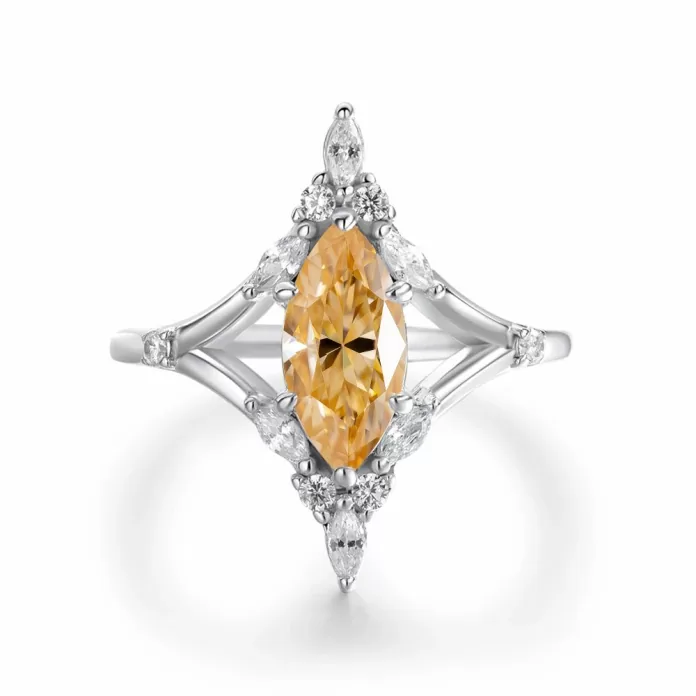
The first thing people ask when they worry about moissanite is "will it scratch?" The short answer is: almost never. The longer answer is more useful, because scratch resistance is only one half of what a daily-wear stone needs to survive.
01Where moissanite sits on the hardness scale
Mohs hardness is a scratch-resistance scale, not a toughness scale. Diamond sits at 10, the hardest known natural material. Moissanite sits at 9.25, which is harder than sapphire and ruby (9) and far harder than anything you will encounter in normal life - steel is around 4.5, glass around 5.5, and the dust on your countertop (quartz) is 7.
What that means practically: the only common material that can scratch moissanite is diamond itself, and occasionally another moissanite. Your keys, your phone, your jewelry box liner, your kitchen surfaces? None of them will scratch it. After years of daily wear, the surface will still be smooth. This is why moissanite is a legitimate engagement ring stone, not a costume piece.
02The thing hardness does not measure: toughness
Hardness is scratch resistance. Toughness is chip and fracture resistance. These are different properties, and they matter because a stone can be hard but brittle. Moissanite is harder than sapphire, but sapphire is, in many cases, tougher in the way that matters at the edge.
The vulnerable points on a moissanite are the same as on any faceted stone: the girdle edge, the culet, and the corners of fancy shapes. A sharp knock against a hard surface - a tile floor, a granite counter, a doorframe - can chip an unprotected edge. This is not a reason to avoid moissanite. It is a reason to set it properly, with covered girdles and protected corners, especially on shapes like emerald cuts that have sharp corners.
03What actually wears out first
Here is the honest secret: after ten years of daily wear, the moissanite stone will still look nearly new. The thing that will show age is the metal. Prongs thin out. The plating on white gold wears. The rhodium finish dulls. Polishing a ring every few years removes a tiny amount of gold, and over decades, thin prongs need to be rebuilt.
This is true for every precious stone, including diamond. The stone is the permanent part. The setting is the wearable part that needs servicing. Budget for a prong check every two to three years and a replating if you wear white gold.
04How it compares to other simulants
People sometimes compare moissanite to cubic zirconia, and the difference is exactly here. CZ scores around 8 to 8.5 on Mohs, and within a year of daily wear it gets scratched, cloudy, and dull. Moissanite at 9.25 does not. This is the reason moissanite commands real money while CZ stays cheap: it actually survives. If you have ever owned a CZ ring that looked dead after six months, the fear you felt is valid, and it is the fear that moissanite specifically answers. You are not buying CZ. You are buying a stone that behaves like a precious one.
05What moissanite resists better than diamond
There is one area where moissanite is genuinely better than diamond for daily wear: it is not sensitive to heat or temperature swings the way some people assume. It also does not have diamond's cleavage plane, which means an internal feather is less likely to run. On a toughness-per-dollar basis, moissanite is a solid daily-wear choice.
It is also chemically inert. It will not react with soap, lotion, perfume, or cleaning products. None of these will cloud, etch, or discolor the stone. The only thing that builds up on it is grime, which we cover in moissanite cleaning and care.
06When to take the ring off
Even the best stone and setting should come off for certain activities. Lifting weights (bar knurl chips edges). Gardening (dirt and knocks). Dishwashing with rubber gloves (the ring can slip off and vanish down the drain). Swimming (cold fingers shrink, rings slip). Showering is fine - the stone does not care, though soap film dulls the sparkle over time.
I keep my own bench ring on for normal life and take it off for anything involving a hammer, a gym, or a sink drain. That habit has saved more rings than any setting upgrade ever could.
07The bottom line
Moissanite is a daily-wear stone. It will not scratch. It will not cloud. It will not react with your life. What it needs is a well-made setting, protected edges, and the common sense to remove it for activities that would damage any ring. Treat it like a fine watch rather than a keepsake, and it will look new for a decade. If you want the full material comparison, moissanite vs diamond and moissanite vs lab-grown diamond lay out the rest of the trade-offs.
Independent background on moissanite — how its hardness and refractive index compare with diamond — is documented in the Wikipedia article on moissanite.
08Frequently Asked Questions
Is moissanite a good diamond alternative for retail buyers?
Yes for price-sensitive customers who want brilliance and hardness. Moissanite ranks 9.25 on the Mohs scale, holds up to daily wear and costs a fraction of a natural diamond of the same size, so it resells fast in bridal and fashion lines.
What is the minimum order for wholesale moissanite?
MOQ starts at 50 pieces per design for stock items. Custom cuts and private-label settings usually start at 100–300 pieces depending on the mold.
Do you provide certificates with moissanite stones?
Yes. Every parcel ships with GRA or IGI documentation listing carat weight, color grade and cut. We recommend passing the certificate to your end customer for trust.
How long does sample and bulk production take?
Samples ship in 3–5 days. Bulk runs take 15–20 days under 500 pieces, and 25–30 days for custom work.
Related reading: Wholesale Custom Moissanite Jewelry: GRA-Certified Bulk Sourcing That , A GRA-Certified Moissanite Custom Ring Service Boutiques Can Warrant, Moissanite vs Diamond: What We Tell Our Clients.
Send a sketch or a photo — our setter will answer with stone options and a price band.
Talk to the atelier


