Soundwave, Fingerprint and Handwriting Engraving: Modern
Bench notes · The Journal
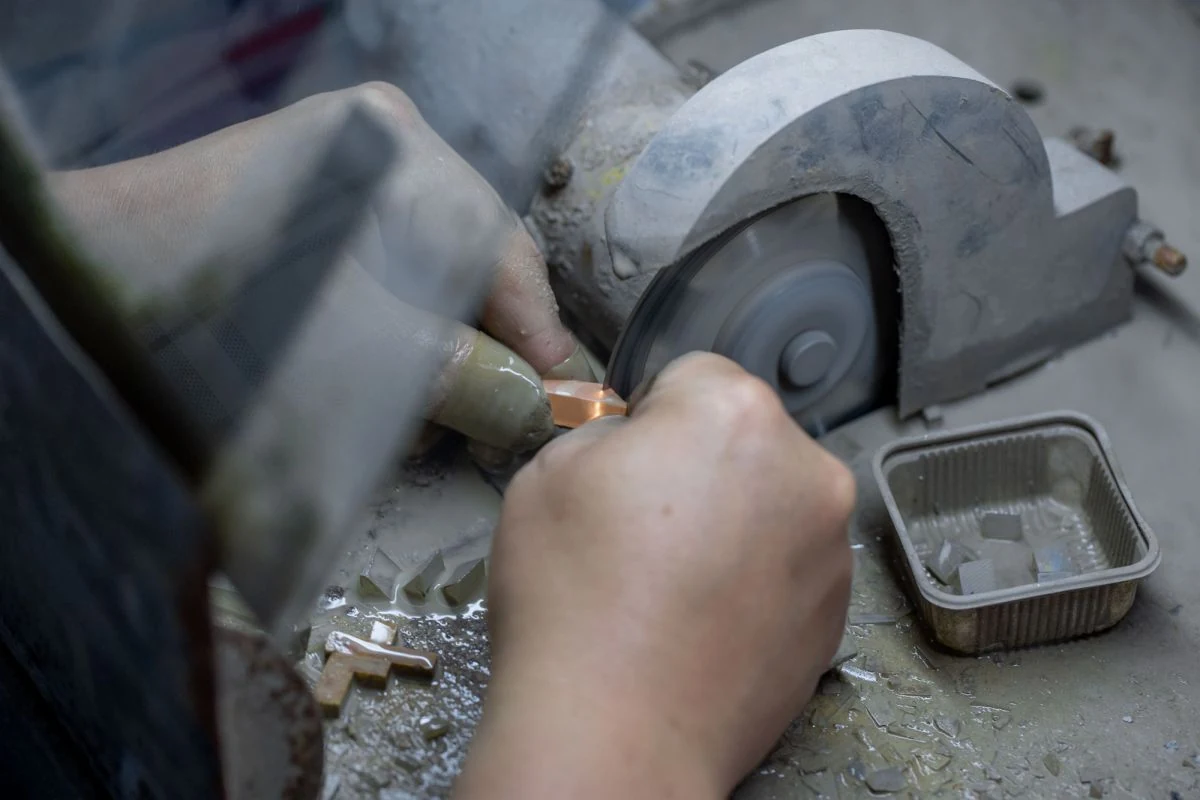
The classic ring engraving is a date and a pair of initials inside the band, and it still works beautifully. But modern custom jewelry lets you go much further: a soundwave from a loved one's voice, a fingerprint taken from an old card, or a handwritten note reduced to the inside of a ring. These techniques turn the band into something only you fully understand. They are not gimmicks if they are done well - and that depends on how the engraving is engineered.
Start with what engraving can realistically hold. The inside of a typical band is a narrow curved surface, and the deeper or more detailed the graphic, the more it can collect wear. Handwriting and short inscriptions age well because they are simple lines. A fingerprint works because the ridges translate into a fine etched pattern that stays legible for years. A soundwave - the visual shape of an audio clip - is a series of vertical lines, which also etch cleanly. The key is keeping the graphic open enough that daily wear does not polish away the detail.
How each is made. A handwriting engraving scans a real signature or line of handwriting, traces it digitally, and etches it into the metal. A fingerprint is captured from a print or a photo, cleaned up, and scaled to fit the band. A soundwave converts a short audio recording into its waveform image and engraves that shape. Because all of these start as digital artwork, they fit naturally into a custom build that already uses CAD design and approval - you see the engraving laid on the ring before it is cut.
Placement is a real decision. Inside the band is private and safe, but it wears against your skin and may fade slowly over decades. An engraving on the outside of a wide band or on a pendant face is more visible but also more exposed to bumps and polishing. For a gift meant to be seen, the outside works; for something private, the inside is right. Our wider guide to which engravings actually last covers the wear trade-offs in detail, and our engraving ideas list helps you choose the right words or graphic.
Metal matters. Engraving shows crispest in a soft, uniform metal like platinum or yellow gold, where the lines fill with shadow and read clearly. White gold may need its rhodium finish to contrast the engraving, and the lines can fade as the finish wears. Darker or filled engraving - where the recess is blackened - adds contrast but wears off over time and can be touched up. Ask how the engraving will look after a few years of wear rather than only on delivery day.
These techniques pair naturally with meaning-driven pieces: a parent's voice on a child's ring, a grandparent's signature, the waveform of a song that matters. The emotional weight is why people commission them, and it is worth getting the source material right. Scan a clear, high-resolution handwriting sample, use a clean ink fingerprint, and give a high-quality audio clip for the soundwave - the final engraving can only be as good as the input.
Cost is modest. Engraving is a small fraction of the overall custom piece because it is a quick laser or hand step, but complex graphics or multiple locations add time. Ask whether the engraving happens after final casting, so it is applied to the finished band rather than into the wax model.
Store the source file. The artwork - the scanned handwriting, the cleaned fingerprint, the waveform - should be kept on file with your maker so it can be re-engraved later if the band is ever rebuilt or the contrast wears off. Without the original digital file, re-creating a soundwave or a detailed fingerprint means starting over from a photo. Keeping the source costs nothing and protects the detail for the life of the piece, which matters most for the engravings that carry the most meaning.
Keep expectations grounded. An engraving is a detail, not the whole piece, and tiny graphics are best viewed close up rather than from across a room. Resist the urge to pack a whole message onto a narrow band; less reads cleaner and lasts longer. If you want both words and a graphic, choose one as the primary element and let the other stay small. Done with restraint, these modern techniques feel intimate rather than busy, and they age into a ring that means more the longer you wear it.
Ask to see a sample of the engraving before it goes on your ring. A test strip in the same metal shows how deep and crisp the lines will read, and it removes the guesswork.
Modern engraving lets a ring carry a memory no one else can see. Keep the graphic simple, choose the right placement, and use a clean source image - and the band will hold that detail for the life of the piece.
The Wikipedia article on rhodium explains why rhodium plating is applied to white gold and silver jewelry.
01Related Reading
02Frequently Asked Questions
How do I verify a factory before placing a bulk order?
Request a production video, business license, export records and a paid sample run. A factory that accepts a 50-piece test order is usually a real manufacturer.
What payment terms do you offer?
30% T/T deposit with the balance against the bill of lading. This protects both sides on first orders and can move to net terms after a track record.
What is your normal reject rate?
3–5% under 10x loupe inspection for cast and set pieces. Defective units are replaced free in the next shipment.
Where is the factory located?
Wuzhou, Guangxi, China—the core lab-grown and moissanite manufacturing cluster. Shipments go via Guangzhou or Shenzhen ports.
Send a sketch or a photo — our setter will answer with stone options and a price band.
Talk to the atelier


