The Loose Moissanite Stones Size Curve - JewelF & Co.
Bench notes · The Journal
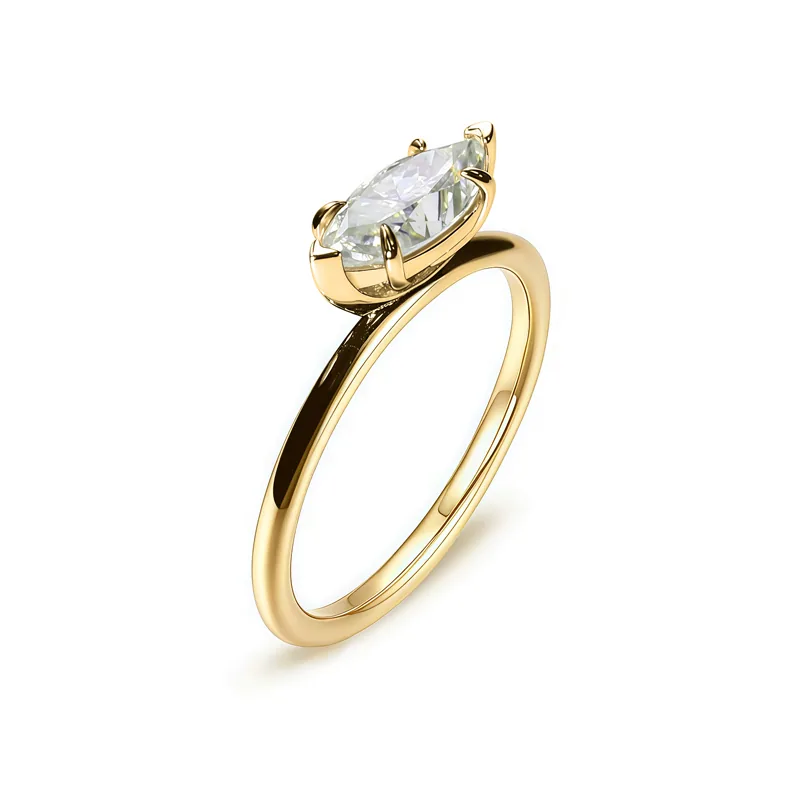
The question that decides a loose moissanite stones order is rarely the one printed in the catalog.
01Sizes are where a range quietly loses money
A Loose Moissanite Stones design that sells in four sizes and stocks in nine carries five dead variants for every winner. The range holds 1784 designs in this category.
The size curve is the cheapest part of the assortment to fix, because it needs no new design, only a decision about which bands to hold.
moissanite accounts for 50% of the designs, so stone sourcing is already settled for most of the range.
Stone coverage is concentrated in moissanite at 50%; anything else is quoted as a separate line.
02Reading the curve before the order
| Band | Hold or quote | Why |
|---|---|---|
| Core band | Hold in stock | Carries most of the sell-through |
| Adjacent band | Hold one design | Covers the size requests |
| Extremes | Quote per order | Too slow to hold, too rare to drop |
Moissanite is the dominant stone at 50%; lab grown diamond makes up 49%.
The figure of 1784 is worth reconciling against your own shortlist before the quote, because it sets how much of the buy can be stock.
03Why resizing is not a substitute for size coverage
Resizing works on a plain band and gets expensive on a set or a full eternity design. A buyer who plans to resize every order is planning to absorb a cost that belongs in the assortment decision.
With 1784 designs on file, the reorder path usually exists before the first order is placed.
04Setting a curve you can actually stock
Reference designs in the range include Loose Moissanite Stone 0001; Loose Moissanite Stone 0002; Loose Moissanite Stone 0003.
05What the curve costs and returns
A tight curve lowers the units at risk and raises the chance the size a customer asks for is on the shelf. The trade-off is a quote on the edges, which is a delay rather than a lost sale if it is stated up front.
06Range snapshot: Loose Moissanite Stones by the numbers
Moissanite is the dominant stone at 50%; lab grown diamond makes up 49%.
| Dimension | Reading | Buying note |
|---|---|---|
| Designs on file | 1784 | Shortlist can come from stock patterns |
| Dominant stone | moissanite (50%) | Sourcing already settled |
Moissanite is the dominant stone at 50%; lab grown diamond makes up 49%. Read the snapshot before the shortlist: a category that is narrow in metal but deep in cut behaves differently from one that is the other way round.
07Frequently Asked Questions
How many sizes should a design carry?
The core band plus one adjacent band is enough for most stores. The rest can be quoted per order.
Is it better to resize or to stock more sizes?
Resize on plain bands, stock on complex settings. The setting type decides which is cheaper.
Do size variants count against MOQ?
Usually they are counted per design per size. Confirm before assuming a size run is a single line.
What is the most common size mistake?
Stocking nine sizes of one design and two sizes of the design that actually sells.
Can the factory hold stock for a size run?
Some can, on stock patterns. Ask which designs are held and which are built to order.
If you want to work from the current range rather than from a catalog PDF, send the two price slots you sell and the size bands you stock. We will reply with the designs that fit, the build on each, and the reorder path. JewelF & Co. keeps the full range in one place.
The checklist below is the short version of everything above, and it is worth running before the quote rather than after the order.
Send a sketch or a photo — our setter will answer with stone options and a price band.
Talk to the atelier


