Laser Engraving vs Hand Engraving on Custom Rings
Bench notes · The Journal
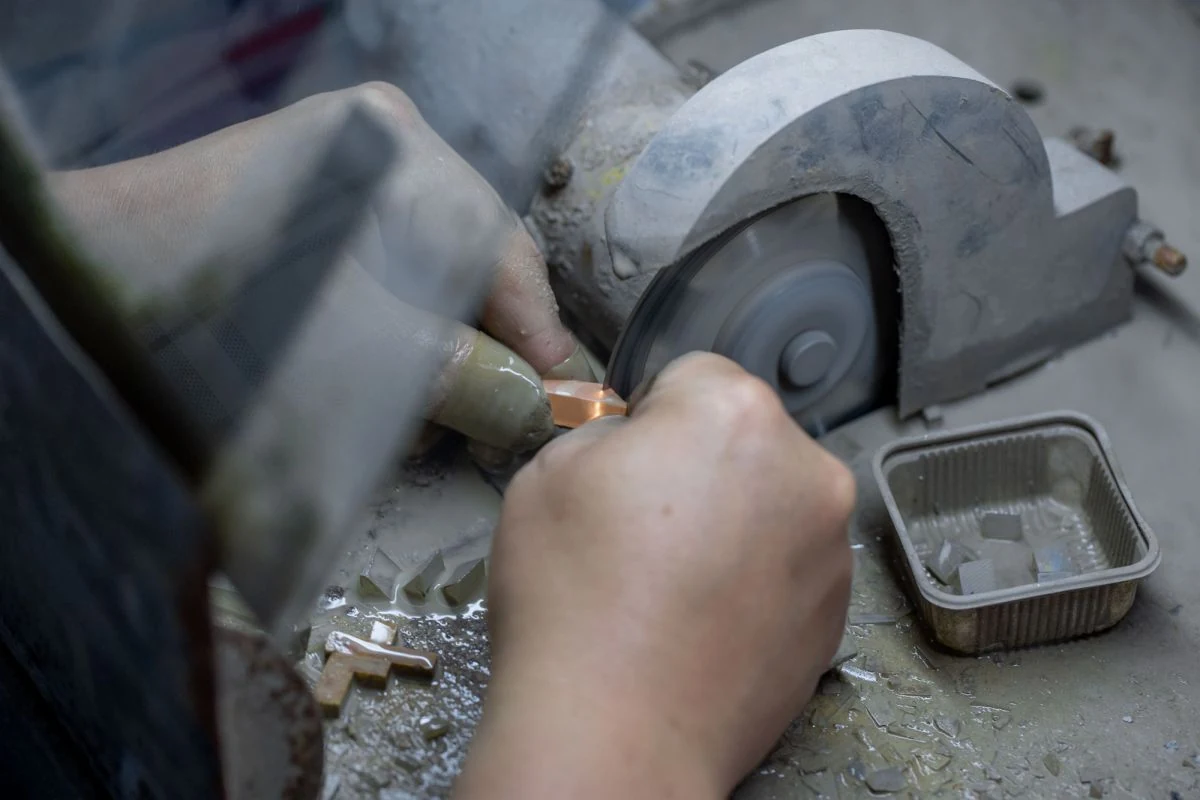
An engraving is the only part of a custom ring that only the wearer and the person they show it to will ever see. That privacy is why the method matters. Laser engraving and hand engraving are not interchangeable upgrades; they are different crafts with different voices, different depths, and different price points. Choosing between them means deciding what the inscription is supposed to feel like decades from now.
01What laser engraving does well
A fiber laser burns a controlled line into the metal. It reproduces fonts at sizes as small as 0.8 mm, copies fingerprints and signatures with high fidelity, and sits evenly on curved surfaces. It is fast, consistent, and affordable. Two rings laser-engraved in the same session will read identically, which matters for matched wedding bands where the inscriptions should mirror.
Laser is the right tool for dates, coordinates, short inscriptions, and signatures. It also works on metals that hand engravers struggle with, including titanium, tungsten, and hardened stainless steels. The laser removes a tiny amount of metal and does not stress the surrounding surface, so it is safe on thin shanks and delicate pavé edges where a hand graver might slip.
02What hand engraving does that a laser cannot
Hand engraving is done with a graver pushed by hand, often under a microscope. The line carries variation: the angle of the cut, the pressure of the hand, the tiny ridges left by the tool. Letterforms acquire a slope and a depth that no vector file reproduces. Scrollwork, acanthus borders, monogram crests, and Old English scripts read as hand-worked because they are. A hand-engraved script has a rhythm that even the best digital font lacks.
Hand engraving also cuts deeper than a laser on soft gold. A deep hand-engraved letter will survive decades of re-polishing; a shallow laser mark can be buffed away if the ring is refinished aggressively. For a piece intended to be worn for a lifetime and passed on, depth is a feature. The next owner can still read the inscription forty years in.
03Where each method fits on a budget
Laser engraving of a short inscription is usually a small fixed add-on. Hand engraving is billed by the letter or by the hour, because the work depends on the letterform complexity. A simple three-letter monogram in hand script is affordable; a full scroll border around the shank is a major line item. Ask for a quote per method before choosing, and ask to see samples of the shop's own hand engraving rather than a generic example.
For a budget-conscious client, a hybrid is common: laser the small internal inscription, hand-engrave the visible exterior monogram. The internal mark is never seen up close, so the laser's precision is enough; the exterior monogram benefits from the hand line.
04Metal and surface interactions
On high-polish platinum, a laser mark reads clean but shallow. On brushed 18k yellow gold, a hand-engraved line catches the light in a way the laser cannot match. Black rhodium or dark-finished rings need the engraving to be cut into the surface and left bright, or filled with enamel. Laser works on dark finishes but tends to leave a matte patch; hand engravers can control the texture of the cut edge. On rose gold, where the metal itself is warm, a hand-cut line reads as a lighter groove; a laser mark can look gray by comparison.
05When you cannot have both
Engraving is normally the last step, set on a finished and sized ring. Engraving a band before sizing means the inscription stretches or cuts apart when the shank is altered. If the size is uncertain, defer the engraving until the wearer has lived with the ring for a few months. Some ateliers will engrave after a resize; others will not, because the inner wall has been re-formed and the surface texture no longer matches. Ask before the resize whether the inscription will survive.
06Filling and patina options
Both methods can be darkened. Traditional engravers use a wax or antiquing compound to darken the grooves, which wears off gradually over years. Laser marks can be darkened the same way, but because the laser cut is shallower, the darkening fades faster. For a long-lasting dark inscription, hand engraving with periodic re-darkening is the more durable choice.
07Font and message length considerations
Laser engraving reproduces almost any font, including scripts and serif faces, at small sizes. Hand engraving works best with letterforms that have a logical stroke order; ornate scripts are harder to cut cleanly by hand than simple block capitals. If the message is long, like a quote or a date plus a name, the laser is the practical choice, because hand-cutting a long inscription pushes the price toward a major line item. If the message is short and iconic, a three-letter monogram or a single date, hand engraving gives it a presence that a laser cannot.
Fingerprint and signature reproductions are a special case. A laser traces the exact image, including every ridge. Hand copying a signature loses the tiny details and becomes an interpretation. For these images, the laser is the honest tool.
Pair engraving choices with the rest of the custom design. Our engraving and personalization service walks through sample letterforms before the bench starts.
Rhodium plating, which gives white gold jewelry its bright finish, is covered in the Wikipedia article on rhodium.
08Related Reading
09Frequently Asked Questions
What ring sizes can you supply in bulk?
US sizes 5–12 including half sizes. Send a size breakdown with your order and we cast to that curve; comfort-fit inner bands reduce resize requests.
Can I order a mixed size run instead of one size?
Yes. Mixed runs are standard for wholesale: specify quantity per size and we pack and label by size at no extra labor cost.
What is the MOQ for custom ring designs?
50 pieces per design for existing molds; 100–300 pieces when a new mold or CAD model is required.
How should I price rings for retail margin?
Most partners use a 3–4x markup on FOB cost for sterling and 2.5–3x for moissanite solos, which keeps landed cost under 30% of retail.
Send a sketch or a photo — our setter will answer with stone options and a price band.
Talk to the atelier


