Wax Injection Molding: How Rubber Patterns Feed a Casting
Bench notes · The Journal
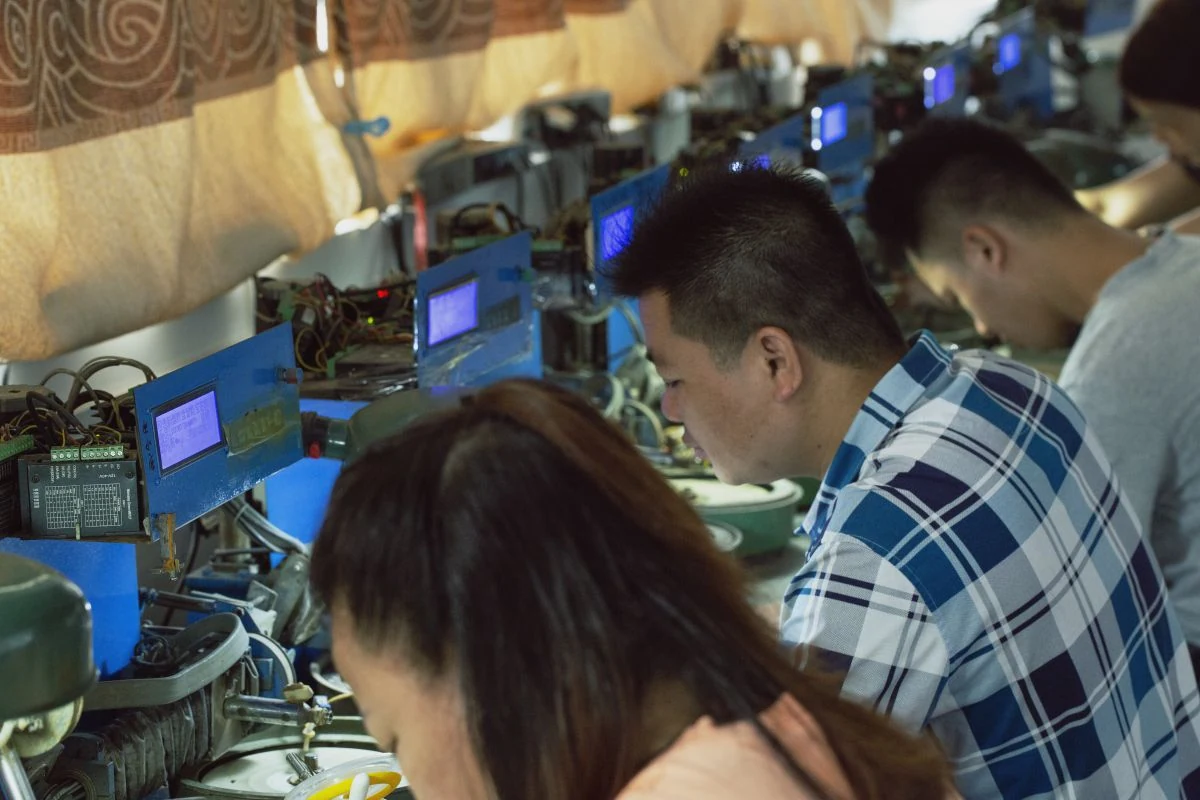
If you have ever wondered how a jewelry shop can offer the same ring in five finger sizes and two metals without hand-building each one, the answer is almost always wax injection molding. It is one of the least glamorous parts of our trade and one of the most important. A carved wax or a 3D print becomes a master model; that model gets encased in rubber; the rubber gets vulcanized; and from that point on, the shop can pump out identical wax copies in minutes. It is the bridge between a one-of-one custom piece and a producible design.
01Why a rubber mold matters
Without a rubber mold, every cast piece starts from scratch: carve a wax, burn it out, cast it. That works for a single custom ring. It does not work if the client wants a matching pair, or if the design is so good we want to keep offering it. A rubber mold lets us reproduce the exact same master shape every time, in any number we need, without rebuilding the wax.
The mold itself is made from vulcanized silicone or rubber. The master model is embedded in raw rubber sheets, and the whole sandwich goes into a vulcanizing press under heat and pressure. The rubber cures around the master, forming a perfect negative. Once cooled, the rubber is cut open in a careful spiral or straight cut, and the master is removed, leaving a cavity that is the exact shape of the original.
02Injecting the wax
A wax injection machine heats special injection wax to a liquid, then pumps it under pressure into the rubber mold. The rubber holds the wax at room temperature, so it solidifies within a minute or two. The mold is opened, and out comes a wax copy of the master, sprues and all if the mold was cut that way. The whole cycle takes a few minutes.
Because the rubber is flexible, you can peel it away from delicate undercuts, filigree, texture, tiny settings, without breaking the wax. That is the reason rubber molds dominate small jewelry production, rather than rigid molds that cannot handle undercuts.
03Where it fits in custom work
Most of the rings we build start from a CAD design that is 3D-printed in wax or resin. For a single piece, we cast that print directly. But if the client comes back six months later wanting a pendant to match, or a ring in the same design in a different metal, we make a rubber mold from the first good casting. From then on, repeats are fast and cheap.
For clients designing a piece they might want multiple of, a wedding band they will later match with an anniversary band, a logo pendant they might produce in silver and gold, we suggest cutting a rubber mold on the first order. It adds a small one-time cost, but every subsequent piece is faster and cheaper because we skip the model-making step.
04Limits and wear
Rubber molds do not last forever. Each injection cycle puts the rubber through heat and pressure, and after a few hundred pulls the mold starts to lose fine detail, textures blur, sharp edges round. A well-made rubber mold usually holds detail for a few hundred pulls, sometimes more. When it wears out, we recut a new mold from the master casting, which is why we always keep the master and never throw it away.
Wax injection also cannot reproduce extremely fine details that are thinner than a human hair; the wax does not flow into those cavities consistently. Those details are better carved by hand into a fresh wax each time.
05The bottom line
When you commission a custom piece, you are paying for the design and the first build. The rubber mold is the small step that turns that design into something we can repeat without rebuilding. If you think you might want more than one of your piece, for a wedding party, for a matching set, for a remake later, ask us to cut the mold. It is one of the most cost-effective choices you can make in a custom order.
06Why this matters for your quote
When we quote a custom ring, the price usually includes one casting. If you later ask for the same design in white gold after seeing it in yellow, the mold is what keeps that second order affordable. Without the mold, we would have to reprint the master, rebuild sprue geometry, and re-set up the whole tree, which adds days and cost. With the mold, we inject a new wax in minutes and send it straight into the casting queue. Clients who plan ahead and cut the mold on day one almost always thank us for it a year later, when they decide they want a pendant to match.
For third-party reference, the Wikipedia article on moissanite details moissanite’s discovery, optical properties and use in jewelry.
07Related Reading
08Frequently Asked Questions
How do I verify a factory before placing a bulk order?
Request a production video, business license, export records and a paid sample run. A factory that accepts a 50-piece test order is usually a real manufacturer.
What payment terms do you offer?
30% T/T deposit with the balance against the bill of lading. This protects both sides on first orders and can move to net terms after a track record.
What is your normal reject rate?
3–5% under 10x loupe inspection for cast and set pieces. Defective units are replaced free in the next shipment.
Where is the factory located?
Wuzhou, Guangxi, China—the core lab-grown and moissanite manufacturing cluster. Shipments go via Guangzhou or Shenzhen ports.
Related reading: Lost Wax Casting: The Process in Plain English, Sandcasting vs Lost Wax: Which Casting Method Fits Your Piece?, Custom Jewelry Casting and Setting: Lost-Wax Factory Capacity That Hol.
Send a sketch or a photo — our setter will answer with stone options and a price band.
Talk to the atelier


