How to Choose an Engagement Ring Setting That Actually
Bench notes · The Journal
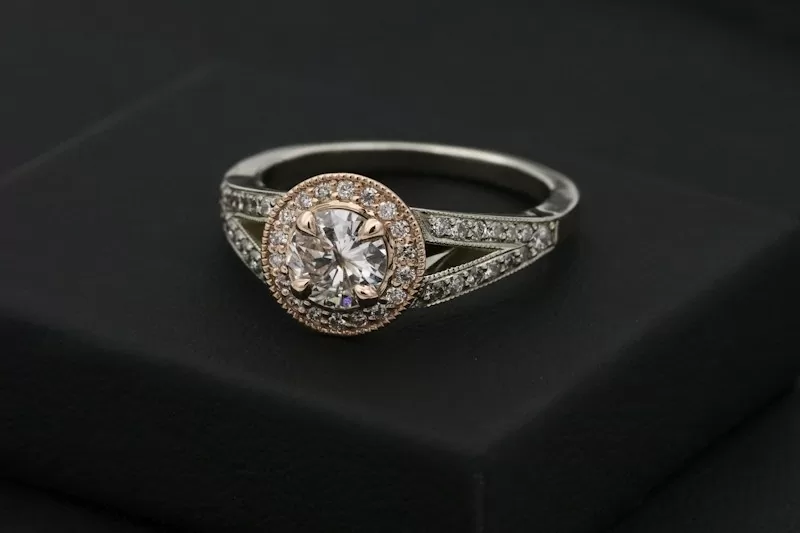
On our bench, a customer will hand us a ring from a box and ask, "Is this a good setting?" Usually the stone is fine. The setting is what fails. Prongs bend, heads twist, thin baskets wear through, and a ring that looked perfect on a pad in a showroom gets caught on sweaters and hair for the next fifty years.
We build custom jewelry every day, so we have a short checklist we run through before we recommend any head or mounting. It has nothing to do with how sparkly the ring looks under the showroom lights. It has everything to do with what survives being worn to work, washed dishes, typed, and slept in.
01Start with the stone, not the style
The setting exists to hold the stone safely and show it at its best. Pick the style after you know what the stone needs. A tall crown and deep pavilion want protection; a shallow stone sits low and hides light. A thin, fragile stone (an old mine cut, a soft sapphire) should never live in a four-prong flying-V head that lets the girdle knock against every surface.
We tell clients: if the stone is under a carat and you lead an active life, lean into six prongs or a bezel. If the stone is larger and you want it to breathe, a sturdy four-prong head with a basket is fine, but ask for 1.5mm prongs minimum, not the wire-thin ones you see on mass-produced mounts.
02The three things that actually wear out
Prong tips. These catch on fabric and get brushed against counters. Thin prongs open. Once one opens, the stone shifts and the rest follow. We look at how the prongs are finished and whether the tips are rounded or sharp. Sharp tips catch; rounded tips glide.
The basket and shank. A thin basket under a head flexes when you bump the ring. Flexion fatigues metal and cracks a solder joint. If the basket looks like it could be bent with two fingers, it can. Ask what the shank width is at the shoulder. Comfortable daily rings usually run 2.0 to 2.5mm wide at the base.
Galettes and openwork. Filigree and open cutouts are pretty, but every hole is a place lotion hides and a place a prong can catch. Openwork also means less metal under the stone head, which makes the whole head more delicate.
03Height is a trade-off, not a feature
A high setting lets light flood the stone and looks dramatic from across a room. It also gets knocked on desks, sinks, and steering wheels. Low-profile settings hug the finger and disappear into daily life. For most people who work with their hands, we recommend a low-to-medium seat. You can always make a stone look larger with the cut and the halo; you cannot un-scratch a tall setting that takes a daily beating.
If you are choosing a stone shape, our note on center stone shape for your hand pairs with this decision, because the shape changes how much protection the head needs.
04Metal choice changes the durability math
White gold needs rhodium and harder prongs that wear faster. Platinum is softer under your finger but denser, so prongs actually hold their shape longer over decades. 14k yellow gold is the honest middle. If you are weighing this, read our breakdown on choosing the metal for an engagement ring before you lock in a design.
05What we ask every client before we build
The last question matters more than people think. A high cathedral setting leaves a gap for a band, but a flat prong head sits flush and lets the wedding band sit tight. We cover the stacking side in our wedding band stacking guide.
06The honest recommendation
If you want one setting that looks good, holds up, and lets you forget you are wearing it, we usually land on a low-profile six-prong or a partial bezel in 14k gold or platinum. It is not the most dramatic ring in the case, but it is the ring you will still be wearing without resizing or retipping twenty years from now.
And if you already own a setting that is starting to feel loose, read our note on prong wear warning signs before you wait one more month. A loose prong is the cheapest fix until it is not.
Rhodium plating, which gives white gold jewelry its bright finish, is covered in the Wikipedia article on rhodium.
07Frequently Asked Questions
What ring sizes can you supply in bulk?
US sizes 5–12 including half sizes. Send a size breakdown with your order and we cast to that curve; comfort-fit inner bands reduce resize requests.
Can I order a mixed size run instead of one size?
Yes. Mixed runs are standard for wholesale: specify quantity per size and we pack and label by size at no extra labor cost.
What is the MOQ for custom ring designs?
50 pieces per design for existing molds; 100–300 pieces when a new mold or CAD model is required.
How should I price rings for retail margin?
Most partners use a 3–4x markup on FOB cost for sterling and 2.5–3x for moissanite solos, which keeps landed cost under 30% of retail.
Related reading: Choosing a Wedding Band That Actually Fits Your Engagement Ring, Engagement Ring Insurance: What It Actually Covers, Engagement Ring Cost-Cutting Mistakes That Backfire.
Send a sketch or a photo — our setter will answer with stone options and a price band.
Talk to the atelier


