Polishing a Custom Piece to a High Shine
Bench notes · The Journal
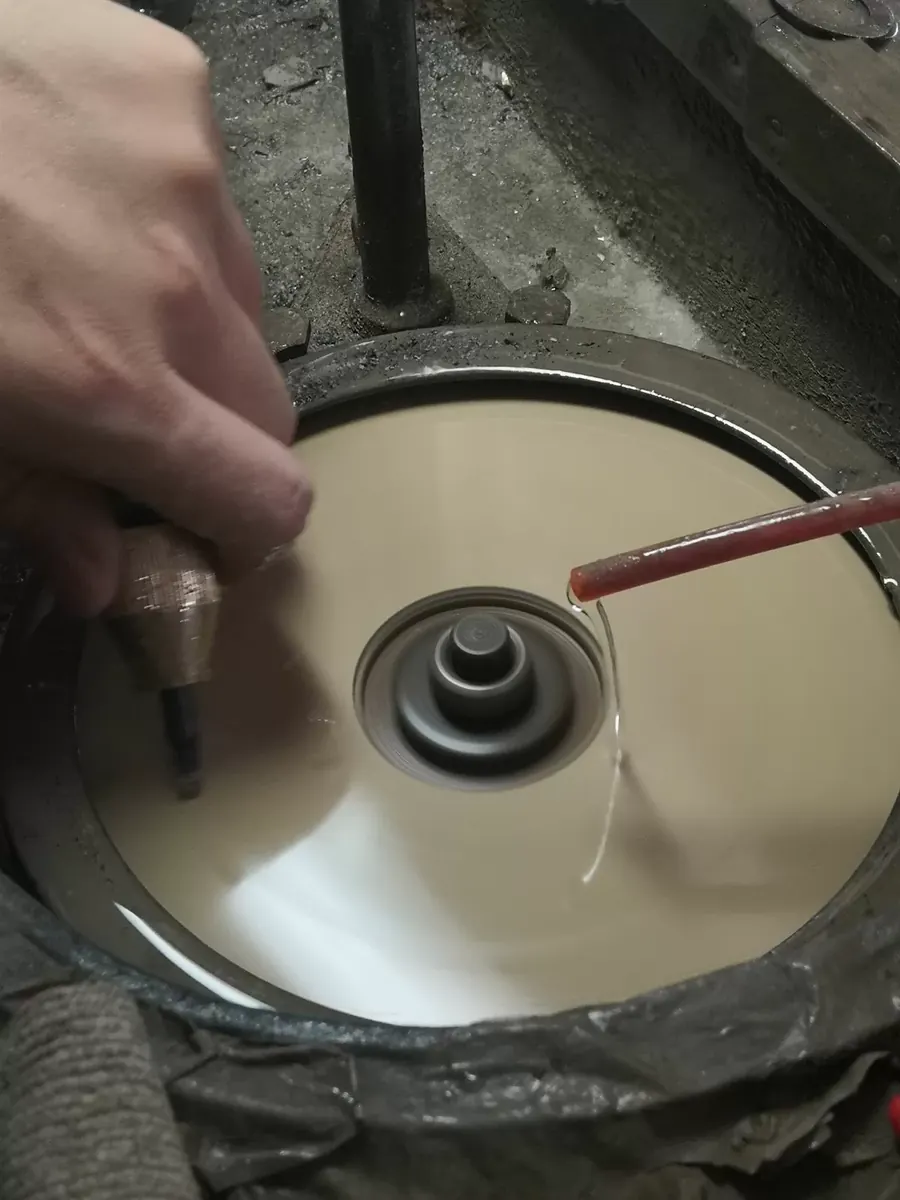
A boutique sent back a ring sample saying it looked dull. On our side the polish measured clean under 600 grit. The problem was that the retail photo light was harsher than our bench light, and the ring needed a higher spec. We moved the whole production line to a three-stage high-shine process and the returns stopped. This is what a true high shine actually takes, and why polished on a quote is not the same as mirror.
01The difference between a production polish and a mirror finish
A standard polish runs through 220 grit, 400 grit, then a tripoli trip on a muslin wheel. It looks clean under bench light but shows micro-scratches under a ring-light photo. A high-shine finish adds two more stages: a 600-grit sanding step to remove the 400-grit haze, then a diamond compound or rouge trip on a clean cotton wheel. The surface reflects like a mirror because every sanding line is smaller than the eye can resolve. We document our own bench standard in bench finishing and polishing standards, and the high-shine tier is a separate line item on the quote because it adds about 25 minutes per ring.
02Why the prep stages matter more than the wheel
Most dull-looking polish is caused by skipping grits, not by a bad wheel. If you jump from 220 grit straight to tripoli, the deep sanding lines stay under the polish and show up under strong light. We work through 220, 320, 400, 600, then two compounds: tripoli to cut, then rouge to color. Each stage removes the scratches of the one before it. We also change wheels between stages; a wheel contaminated with tripoli will never reach a rouge shine. For detailed heads with prongs, we use a burnishing tool to close the prong tips after polishing, because a prong left raw catches light as a dull dot. This is the same stage we detail in prong tip setting and finishing.
03Plating and the last 10 percent
White gold is never bright white on its own. A high-shine white gold ring gets rhodium plated after polishing, because the rhodium layer is what produces the mirror. We plate to about 0.5 micron, then give one final gentle rouge pass to knock off any orange peel from the plating bath. Yellow gold and rose gold do not need plating, but they do need a final steam clean, because polishing compound trapped under prongs looks like a dark smudge in product photos. We photograph every high-shine piece under a ring light before QC, which we cover in pre-shipment QC.
04Telling customers how to keep the shine
A high shine scratches faster than a brushed or satin finish, because every mark is visible. We tell boutiques to set expectations: a polished wedding band will show wear marks within a year, and that is normal. We offer a once-a-year re-polish service, and we explain care basics alongside our repair notes in in-house repair and replating. For pieces that need to stay showroom-bright, we recommend a satin or brushed finish on high-abrasion surfaces and a high shine only on the faces that catch light.
We also run a side-by-side light test before shipping: the finished piece sits next to a known showroom-standard ring under a 5500K ring light. If our piece reads darker or has a visible swirl, it goes back for one more rouge pass. This catches the pieces that look fine under bench fluorescent light but look dull in a customer's window display. The plating chemistry behind the mirror is documented on the rhodium plating reference, and it is why white gold needs that final flash to reach the same reflectivity as polished platinum. We re-check the finish after every 50 pieces because the rouge on the wheel wears down and the shine starts to drop off without anyone noticing.
What is the difference between polish and high shine?
Standard polish stops at 400 grit and tripoli. High shine adds 600 grit and a rouge cut, which removes micro-scratches and gives a mirror reflection under ring-light photos.
Does high shine cost more?
About 25 minutes of bench time per ring, so roughly 8 to 12 percent on the finishing line. We quote it as a separate option so boutiques can choose per SKU.
Will a mirror finish scratch easily?
Yes, faster than a satin finish. Every fine mark shows. We recommend high shine on visible faces and a softer finish on high-abrasion bands.
Do you re-polish pieces after plating?
We give a very light rouge pass after rhodium to remove bath texture, then a final steam clean. Heavy polishing after plating would wear the rhodium off.
We offer a documented high-shine tier with ring-light QC photos on every piece. To add a finish tier to your price book, ask about our private-label custom manufacturing program.
05Frequently Asked Questions
How does the custom OEM process work?
Send a reference, sketch or CAD file. We quote, produce a 3D render, then a wax or resin model for approval before casting. Nothing goes to bulk without written sign-off.
How long does a custom sample take?
About 20 days for a new CAD model, including one revision round. Repeat designs reuse the existing mold and ship in 3–5 days.
What is the custom MOQ?
100–300 pieces per design depending on the mold and stone setting complexity.
Do you sign NDAs for private label?
Yes. Private-label clients get an NDA and exclusive mold use for the agreed term.
Send a sketch or a photo — our setter will answer with stone options and a price band.
Talk to the atelier


