Hand Engraving vs Laser Engraving for Custom Rings
Bench notes · The Journal
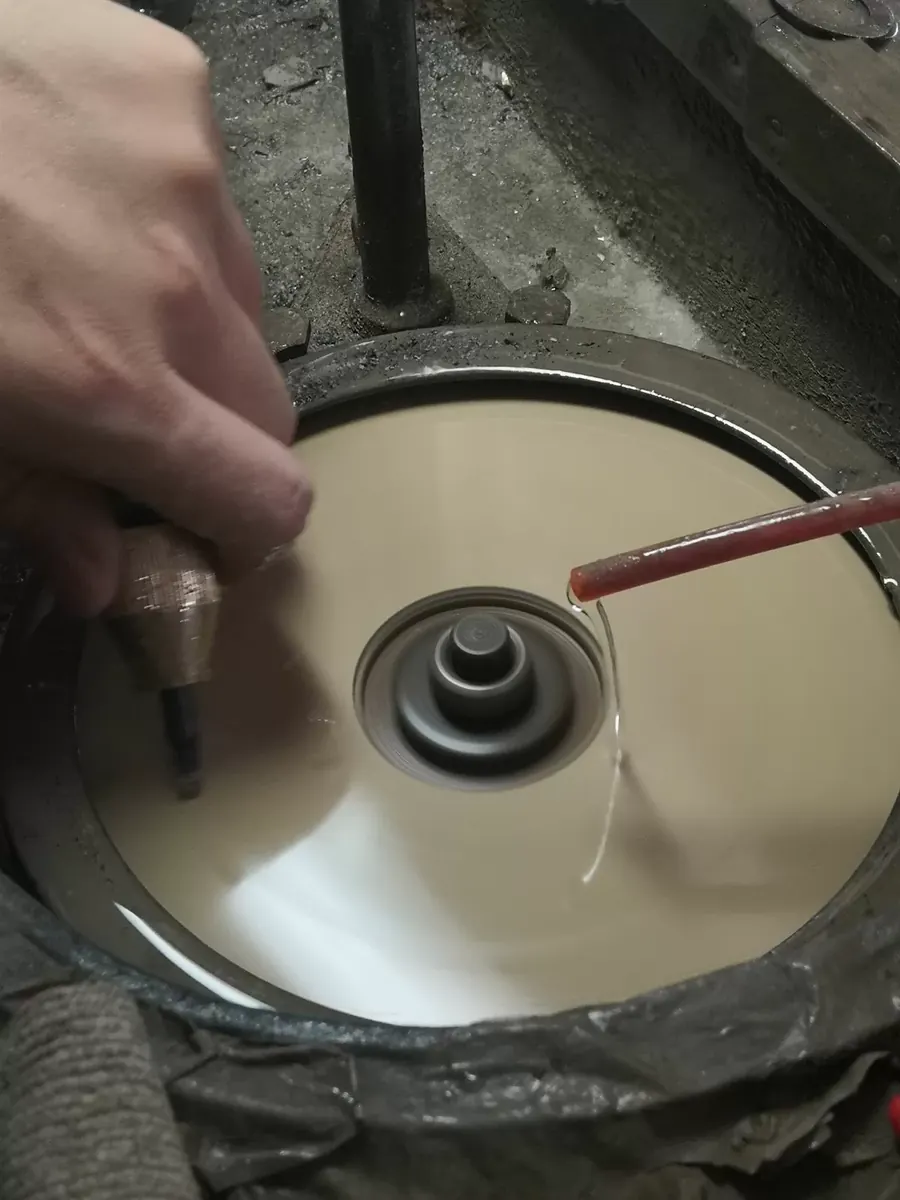
Engraving is the personal detail that turns a manufactured ring into yours. But when a custom order reaches the inscription stage, buyers are often surprised to learn there are two very different ways to put those words inside the shank: hand engraving and laser engraving. The price difference alone can swing a quote, and the visual difference is obvious once you know what to look for. Understanding both methods helps you decide what belongs inside your ring before the bench starts.
01How hand engraving works
Hand engraving uses a sharp hardened steel tool (a graver) pushed by hand through the metal. The engraver swings the tool with controlled pressure, cutting a clean V-shaped groove. On gold and platinum, a skilled engraver can shade letters, taper strokes, and even reproduce script flourishes by hand. The result looks like calligraphy carved into metal, and the edges catch light differently than machine-cut lines.
Good hand engraving is slow. A single ring can take thirty minutes to an hour, and the cost reflects the artisan's time. Because each letter is cut by hand, no two hand-engraved rings are identical, which is exactly why heirloom pieces commissioned a century ago feel personal in a way no machine output quite matches.
02How laser engraving works
Laser engraving uses a focused beam to vaporize tiny amounts of metal along a digital path. The machine follows a font file, so results are perfectly consistent every time. It can fit small text, logos, fingerprints, even a scanned signature or a child's handwriting inside a narrow band. Depth is shallow compared with hand cutting, but the line is razor sharp.
Laser work is fast and affordable, often included free or for a small fee on custom orders. It is also the only practical way to engrave very hard metals like titanium or tungsten, where a hand graver would skip. If you want two lines of tiny text or a graphic, laser is usually the only realistic option.
03Side-by-side comparison
04Which metals suit which method
Soft, dense metals like 14K/18K gold and platinum take hand engraving beautifully. Harder white gold and palladium work for both. Exotic hard metals such as titanium, tungsten carbide, and cobalt are essentially laser-only; hand tools will not hold a line. If you are weighing those options, our guide to titanium and tungsten rings explains why engraving expectations differ there.
05What to put where
A common custom design pairs a laser-engraved inside shank (for the date, initials, or a tiny signature) with optional hand-engraving on the outside edges of the band for decorative scrollwork. You do not have to choose one method for the whole piece. This layered approach is especially popular on vintage-inspired rings, where hand-cut border patterns read as period-correct while the inside inscription stays clean and legible.
06Engraving timing in your order
Order matters. Engraving is almost always the final step, after sizing and polishing. If you think you may resize later, keep the inscription away from the part of the shank that a resize cut would remove. We discuss this trade-off in what engraving lasts. Laser inscriptions can be "topped up" later cheaply if they fade; deep hand engraving usually does not need it.
07Budget and timing for each
In a typical custom order, laser engraving on the inside shank is included or runs $20-60, and it adds a day or two to the schedule at most. Hand engraving, whether inside or on the outside edges, is usually quoted separately at $80-250 depending on letter count and complexity, and it can add a week because the bench has to slot in an artisan rather than a machine. If you are on a tight deadline for a proposal or a wedding, laser is the predictable choice; if the piece is a keepsake you want to look genuinely hand-made, the wait and the premium are part of what you are paying for. We walk through the overall clock in how long a custom ring takes, and engraving method is one of the variables that moves it.
08The bottom line
Choose laser engraving when you need tiny text, a signature, a graphic, or a low-cost fast turnaround. Choose hand engraving when you want heirloom character, deeper cut letters, or classic decorative work. Many custom commissions combine both. Either way, decide before the piece is polished, because adding engraving after final buffing means refinishing the shank afterward.
The Wikipedia article on rhodium explains why rhodium plating is applied to white gold and silver jewelry.
09Related Reading
10Frequently Asked Questions
What ring sizes can you supply in bulk?
US sizes 5–12 including half sizes. Send a size breakdown with your order and we cast to that curve; comfort-fit inner bands reduce resize requests.
Can I order a mixed size run instead of one size?
Yes. Mixed runs are standard for wholesale: specify quantity per size and we pack and label by size at no extra labor cost.
What is the MOQ for custom ring designs?
50 pieces per design for existing molds; 100–300 pieces when a new mold or CAD model is required.
How should I price rings for retail margin?
Most partners use a 3–4x markup on FOB cost for sterling and 2.5–3x for moissanite solos, which keeps landed cost under 30% of retail.
Send a sketch or a photo — our setter will answer with stone options and a price band.
Talk to the atelier


