Gold vs Platinum for a Custom Ring: Choose Before Casting
Bench notes · The Journal
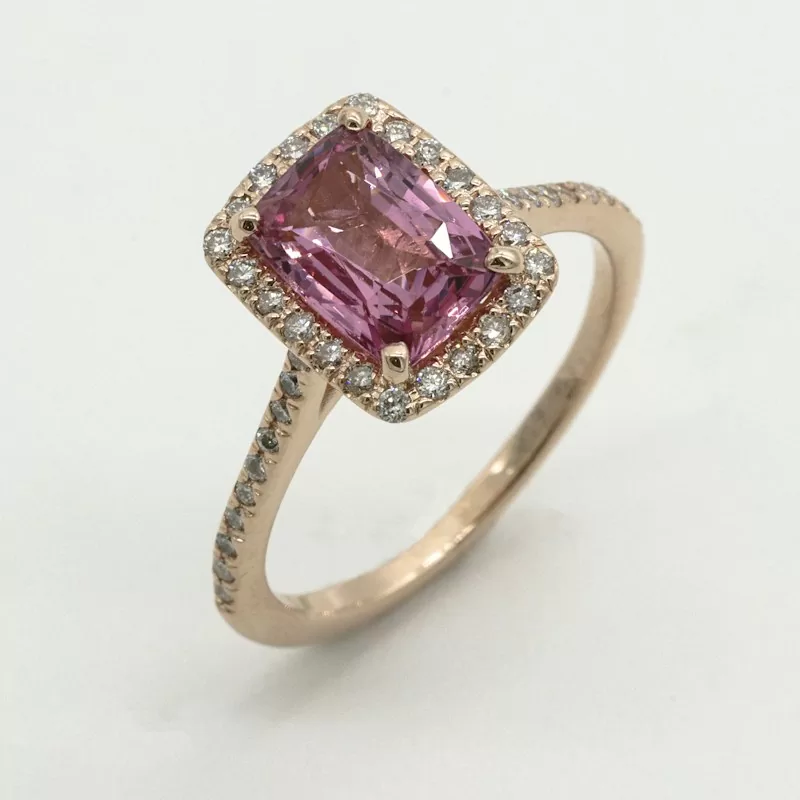
“Should we do it in platinum?” is the question most couples ask at the sketch stage, and it is usually the wrong framing. The better question is what the ring must survive, what the wearer's skin does with metal, and what kind of aging they find attractive. Platinum is not objectively better than gold — it is a different material with a different character.
01What the numbers mean
Platinum sold in fine jewelry is almost always 950 — 95% pure platinum alloyed with a touch of other platinum-group metals. It is dense: the same ring that weighs 5 grams in 14k gold weighs closer to 8 grams in platinum. That density is why platinum feels substantial on the finger and why it costs more even at comparable purity. Gold sold in rings is almost never pure: 24k is too soft for daily wear, so rings run 18k (75% gold) or 14k (58.3% gold), alloyed with copper, silver, palladium, or nickel to harden and to set color.
02How each metal ages
Gold develops fine scratches and holds a polish well. White gold starts life rhodium-plated, and that plating wears off over one to three years, revealing the warmer alloy underneath; re-plating is cheap and standard maintenance. Yellow and rose gold age honestly and need no plating at all.
Platinum does not wear away the way gold does. It develops a matte patina called a milk finish — soft, slightly brushed, prized by many wearers precisely because it looks lived-in. Polishing platinum removes metal, so we advise polishing it rarely and loving the patina in between. If a client wants a forever-bright shine, platinum will disappoint; a polished 18k yellow gold will not.
03Skin and allergy reality
Nickel allergy is the hidden factor. 14k white gold historically used nickel to bleach the gold, and nickel is the most common contact allergen in jewelry. Modern formulas use palladium instead, which is why a reputable jeweler should state explicitly whether their white gold is nickel-allergy safe. Platinum 950 is essentially hypoallergenic — the reason it is the default for sensitive skin and for pieces that never come off, like wedding bands. If the wearer reacts to cheap costume jewelry, test the chosen alloy before the build, not after.
04Weight, sound, and daily feel
Platinum rings sound different when they clink — a deeper, duller tone — and they sit heavier on the finger. Some wearers love that weight as a sense of permanence; others notice it constantly during the first month. Gold rings are lighter and quieter, and they resize more forgivingly across wider size ranges. For a ring worn through gym work, typing, or manual labor, the lighter alloy is often the more comfortable long-term choice. Compare the pair on a mandrel in our metal guide before deciding.
05Cost, reframed
Platinum costs more upfront, but it does not need rhodium re-plating. White gold is cheaper upfront but carries a recurring maintenance line. Yellow 18k sits between them in price and needs no plating. The honest comparison is five-year cost, not ticket price. A ring that is replated every two years for a decade is not free, even if the first invoice looked smaller.
There is also the question of longevity. Gold is recyclable into the next piece almost indefinitely; platinum carries a higher refining cost but holds its density value. Both outlast fast-fashion metals by decades, and both can be remade rather than discarded when a design no longer suits the wearer.
06Resizing reality by metal
Resizing works differently in each. 14k and 18k yellow gold cut, stretch, and solder cleanly across a wide range, and a half-size to full-size change is routine. White gold resizes the same way, but the area that was soldered needs re-plating to match. Platinum resizes well but needs higher-temperature welding, and some inlaid or heavily textured platinum bands cannot be resized at all. If a first-year resize is likely — a surprise gift, a growing hand — pick a metal that tolerates it.
07Allergies beyond nickel
Cobalt and chromium, used in some stainless and white-gold alloys, also cause reactions in a smaller group. If the wearer has ever had a ring turn their finger green or red, that is usually copper in low-karat silver or brass leaching into damp skin. A 14k gold with at least half gold content rarely reacts, and platinum 950 essentially never does. When in doubt, start with a small test piece in the chosen alloy before committing to the ring.
08What we recommend, in plain terms
Sensitive skin or a wedding band never taken off: go platinum. Warm skin tone, classic look, budget awareness: 18k yellow gold. Want white metal without the platinum premium and okay with re-plating every few years: palladium-white 14k gold. Pick on those grounds and the ring will suit the hand rather than the catalog.
If you still cannot decide, start with a plain band in your first choice metal and keep the option open: the mounting can be recast in the other alloy later, and the decision costs far less than a ring worn in a metal that never felt right.
For the legal text behind our material compliance, see the REACH Regulation (EC) No 1907/2006 on EUR-Lex.
09Related Reading
10Frequently Asked Questions
What ring sizes can you supply in bulk?
US sizes 5–12 including half sizes. Send a size breakdown with your order and we cast to that curve; comfort-fit inner bands reduce resize requests.
Can I order a mixed size run instead of one size?
Yes. Mixed runs are standard for wholesale: specify quantity per size and we pack and label by size at no extra labor cost.
What is the MOQ for custom ring designs?
50 pieces per design for existing molds; 100–300 pieces when a new mold or CAD model is required.
How should I price rings for retail margin?
Most partners use a 3–4x markup on FOB cost for sterling and 2.5–3x for moissanite solos, which keeps landed cost under 30% of retail.
Send a sketch or a photo — our setter will answer with stone options and a price band.
Talk to the atelier


