Walk into a jewelry store in a shopping mall and you will see the same few designs, polished under bright lights, sold by a salesperson who works on commission. Walk into a workshop like ours and you will see a bench, a goldsmith, and a shelf of waxes. The two places both sell rings, but the relationship between you and the piece is completely different. Clients often ask us what the actual difference is between buying custom jewelry directly from the factory and buying from a retail store. The honest answer is that each has real advantages, and each gives something up. Let me lay it out plainly, the way we explain it to clients who are deciding.
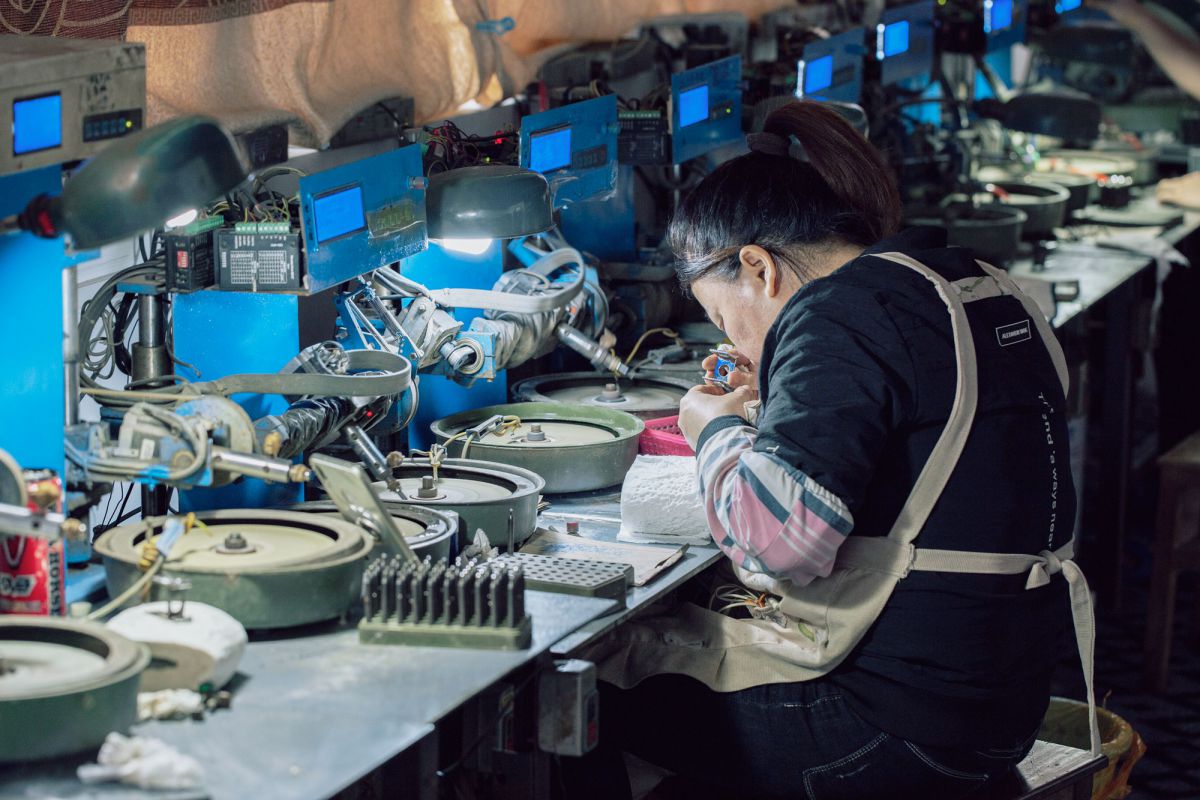
What the retail store actually charges for
A retail jewelry store is not a place that makes rings. It is a place that displays rings made by someone else, in a space that costs rent, with staff on commission, under lighting chosen to flatter the stone. None of that is dishonest, but it is all part of the price. When you buy a ring in a mall store, you are paying for the location, the brand markup, the salesperson's commission, and the inventory sitting in the case. The actual ring, the metal and the stone, is often a smaller fraction of the ticket than people expect.
That is why two rings that look identical can differ in price by a factor of two or three depending on the store. You are not paying for a better ring. You are paying for the box it came in.
What buying direct from the factory gets you
When you buy from a workshop, you cut out the middle layers. The money you spend goes into the stone, the metal, and the hands making the ring, rather than into retail overhead. For the same budget, a direct client usually gets a bigger or better stone and a sturdier band. That is the single biggest advantage, and it is not a small one.
The second advantage is choice. A retail case holds the designs that sold well last season. A workshop builds what you describe. If you want a low-set solitaire with a brushed band and a hidden engraving, that is a normal Tuesday for us. In a retail store, that combination may not exist, and the salesperson will steer you toward whatever is in the case. Direct custom work is built around you, not around inventory.
The third advantage is the relationship. When your ring needs a prong retipped in five years, you bring it back to the bench person who made it, not to a sales desk that may have changed hands three times. We know the rings we make. We remember the client, the stone, and the design. That continuity is worth more than people expect.
What you give up going direct
This is the part we are honest about, because no workshop sales pitch will tell you it. Buying direct means you do not walk out with a ring in fifteen minutes. Custom work takes six to twelve weeks. You cannot see the ring in a glass case the day you decide. You are working from renderings, trust, and a process.
You also give up the instant retail experience. A nice store, a velvet box, someone handing you a glass of champagne. We are a workshop. We are not trying to be a showroom. If the experience of buying a ring is part of what you want, a retail store delivers that in a way a bench does not. That is a legitimate preference, and we do not pretend otherwise.
Finally, buying direct demands more from you. You have to describe what you want, approve renderings, and trust the process. If you want to hold the ring, feel the weight, and decide on the spot, a workshop cannot offer that. The trade for price and customization is time and a little patience.
When a retail store is actually the right call
There are situations where retail makes sense. If you need a ring this weekend for a surprise proposal, a custom workshop cannot help you. If you want to try on twenty settings in an afternoon and feel the weight of a ring on your finger before you commit, a store does that. If you want a known national brand and the resale expectations that come with it, retail is the route. These are real needs, and we tell clients so when they have them. We would rather send someone to a store for a weekend than have them commission a ring in panic for a deadline we cannot meet.
The middle ground many people miss
There is a third option that combines both: a retail store that works with a workshop to custom-build. Some stores offer custom design, and the actual making happens at a bench like ours. You get the showroom experience and the custom result, usually at a price between the two extremes. If you want to touch and feel but also want a ring built for you, ask whether the store has a custom program. You may get the best of both.
The short version
When clients ask us which way to go, we boil it down to this:
- You have time, a specific idea, and want the most ring for your money: go direct to a workshop. You will get a better stone and a sturdier band, built around you.
- You need a ring now, want to try things on, and value the retail experience: go to a store. You will pay more, but you walk out today.
- You want both: find a store with a custom program, or a workshop that lets you see physical samples before you commit.
There is no right answer for everyone. There is the answer that matches how you want to buy. We are biased toward the workshop route, obviously, because we live it. But we would rather a client go to a store than commission a custom ring they do not have the time or patience to enjoy. The ring is the point. How you buy it should serve the ring, not the other way around.
Warranty and aftercare: the difference that shows up later
One of the quiet differences between buying retail and buying direct is what happens after the sale. A retail store sells you a ring and hands you a warranty card, but the people who actually fix it are not in that store. The warranty may be honored by whoever owns the location five years from now. When you buy from a workshop, the aftercare comes from the same hands that built the ring. We know the design, the stone, and the settings. A prong retipped on a ring we made is a familiar repair, done by the same goldsmith who set the stone in the first place.
This matters more than people expect. A ring bought online or in a chain store often cannot be serviced by anyone who knows how it was made. When a prong loosens, the client has to mail it somewhere or wait in a queue. When you buy direct, you bring it back to us. We check the prongs, tighten them, and hand it back. The relationship does not end at the sale. It is just getting started.
Returns and refunds, told honestly
Here is a difference we are upfront about. A retail store has a return policy because they are selling inventory. If you do not like the ring, you bring it back and pick another. A custom workshop cannot return a ring that was built to your exact finger size, stone, and design. Once it is cast, it is yours, because no one else can wear a ring made for your hand and idea. This is why we spend so much time on renderings and approvals before we pour the gold. By the time the ring exists, you have already approved what it will look like. We do not do returns on custom work, but we do almost unlimited revisions before casting.
This is a fair trade. You get a ring built exactly for you, and you take the time to make sure it is right before we commit the metal. If the idea of a no-return custom piece makes you nervous, start with a simpler design, or buy a beautiful ready-made piece from a workshop that offers both. Know what you are getting into before you sign the design approval.
How to vet a workshop before you commit
Because you are trusting a bench with a big purchase, vetting matters. Look at a workshop's portfolio, not just their marketing. Do the pieces look well finished, with tight prongs and clean bands? Can they describe their process, from CAD to casting to setting, without hand-waving? Do they offer a detailed appraisal and aftercare? A reputable workshop answers all of this readily. One that is vague about how a ring is made, or pushes you to decide in the room, is treating you like a retail customer, not a partner in a build.
We would rather a client ask a hundred questions and take their time than commit on a rush. The right workshop wants you to be sure, because the ring has to last longer than the sale.
The bottom line
Buying direct from a workshop gives you a better ring for the money, built to your idea, with aftercare from the people who made it. It asks for patience, a little trust, and the willingness to wait weeks rather than minutes. A retail store gives you the instant experience, the showroom, and the walk-out-today convenience, at a higher price and with a less personal relationship. Know which one you need. Both are legitimate. The wrong choice is picking a workshop when you need a ring tonight, or paying retail markup when you could have had the same ring built for less. We are biased, but we would never pretend there is only one door that works.
The middle path we recommend most
If the choice between retail and direct feels like too much of either extreme, the middle path is what most of our clients end up on. They find a workshop with a small showroom or an online gallery, look at actual finished rings rather than rendered ideas, read how we work, and then commission a piece. They get the price and customization of a workshop, with enough samples and conversation to feel confident. You do not have to choose between a cold factory and a pushy store. A good custom studio is somewhere between the two: a bench you can visit, a portfolio you can see, and a person who will answer questions for as long as you need. That is what we try to be. If that sounds like the right fit, come see the bench. The ring is not on a shelf. We will build it with you.
Whichever door you choose
At the end of the day, the ring is the same object either way. It is gold, a stone, and a setting, worn on a finger for decades. The difference is who builds it, what you pay, and how much of the price is the ring versus the room it sits in. Choose based on how you want to buy, not on which marketing message reached you first. If you want to touch, compare, and walk out today, a store is honest about that. If you want a ring built to your idea at a price that reflects the actual work, a workshop like ours is the better path. We will tell you which one fits, even when the answer is that you should go elsewhere. The ring matters more than the sale.
Whichever way you choose, the ring should be the ring she wears for the next fifty years, not the one that looked best on a display pedestal. Buy it for the hand and the life. We will help you get there.