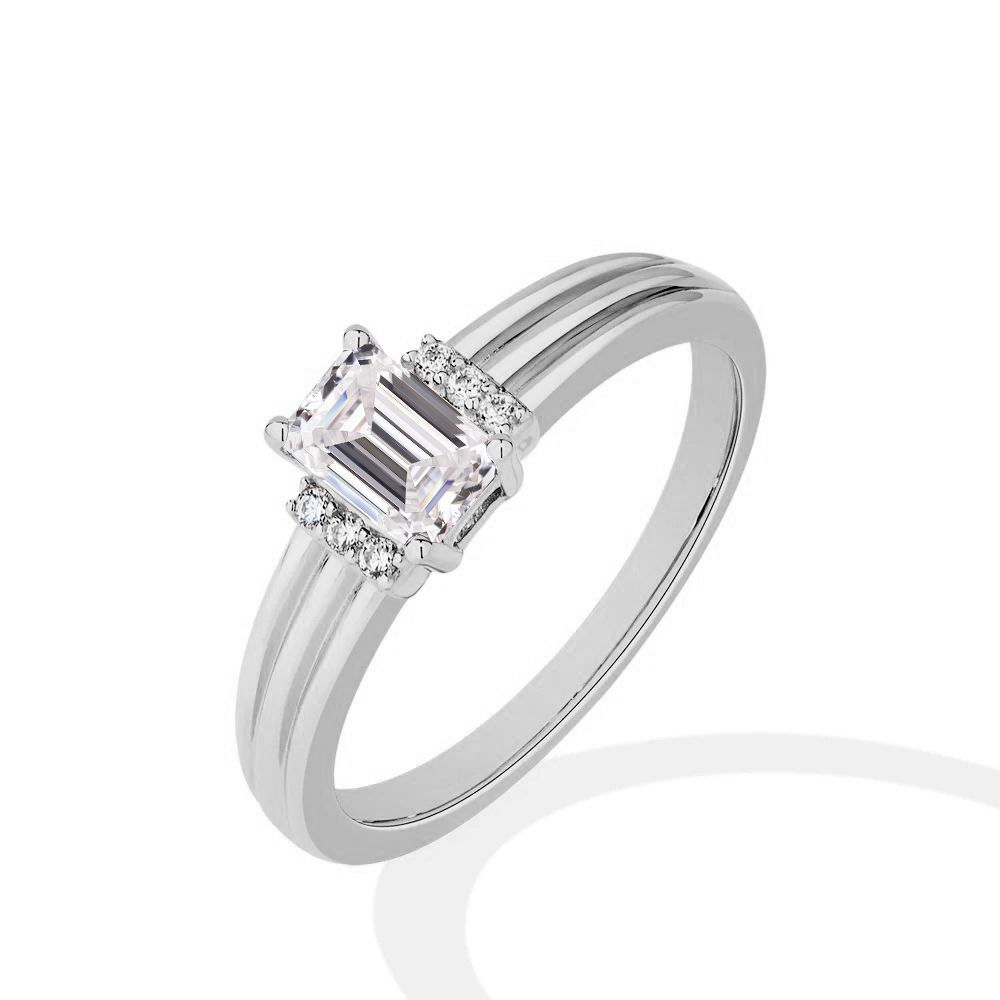
Engraving is the cheapest personal thing you can add to a ring and the easiest to get wrong. We engrave most rings that leave the workshop, and roughly one in twelve comes back later for a correction.
Two methods, different results
Hand engraving uses a hardened steel graver pushed by the palm, sometimes with a chasing hammer on deeper work. The line has a V-shaped cross section, cut into the metal. It has weight and a slight taper where the graver entered and left. A good hand engraver leaves a line you can feel with a fingernail for decades. It is also slow and expensive. A short script line inside a band runs $90 to $180 depending on the lettering, and our engraver is booked roughly two weeks out.
Laser engraving vaporises a shallow path into the surface with a focused beam. It is fast, precise and cheap, usually $25 to $50 for a full inside line, and it can render tiny text and even a fingerprint or a waveform. The line is a uniform groove with a slightly frosted floor. It is shallower than a hand cut, and on the outside of a band that is the important difference.
Inside or outside
Inside the shank is protected. Nothing rubs it except the finger, and skin contact is gentle. A laser line 0.15mm deep inside a ring will still read clearly after ten years.
The outside is a different story. A band 2mm wide rotating on a finger contacts surfaces constantly. We measure wear on outer engraving at roughly 0.02mm to 0.04mm per year of daily wear on a gold band. A laser cut 0.1mm deep on the outside is legible for about three to five years, then softens, then disappears. A hand cut at 0.3mm lasts much longer, but even it will blur on a ring worn while lifting weights or working with abrasives.
If the engraving is the whole point of the piece, put it inside, or put it on a face that sits flat and rarely contacts anything.
What actually fits
- A size 6 band, 2mm wide, inside circumference about 52mm, fits roughly 34 to 40 characters in a standard 1.2mm block font before it wraps into the sizing gap.
- Script takes about 30% more room than block for the same words.
- A date, two initials and a short word is comfortable. A full sentence usually is not.
- Below 2mm band width, lettering gets small enough that laser is the only sane option.
- Comfort-fit interiors are curved. Text near the edges of a curved interior distorts under the laser, so we keep it centered.
Mistakes we see
Spelling, most often. We now read every line aloud to the client and send a rendered proof for them to approve in writing. Two names with unusual spellings have been caught this way in the past year.
Dates that are wrong on purpose and wrong by accident. We have engraved the wedding date a month early because a client wrote the wrong month in the form. Both of us missed it. We rebuilt the ring at our cost, because that is the right way to handle it.
Deep laser passes. A shop trying to make laser engraving permanent will run multiple passes and cut too deep, which thins the shank at its weakest point. Below the sizing area, that is a real structural problem. We cap laser depth at 0.2mm inside.
Engraving over a previous solder seam. The metal there is a different alloy and the line cuts unevenly. If you have had a resize, tell the engraver where the seam is.
Finally, engraving a ring that is still going to be resized. Sizing cuts through the underside, which is exactly where the text lives. Engrave last, or accept that a resize will interrupt the line.