The Best Engagement Ring Settings for an Active Life
Bench notes · The Journal
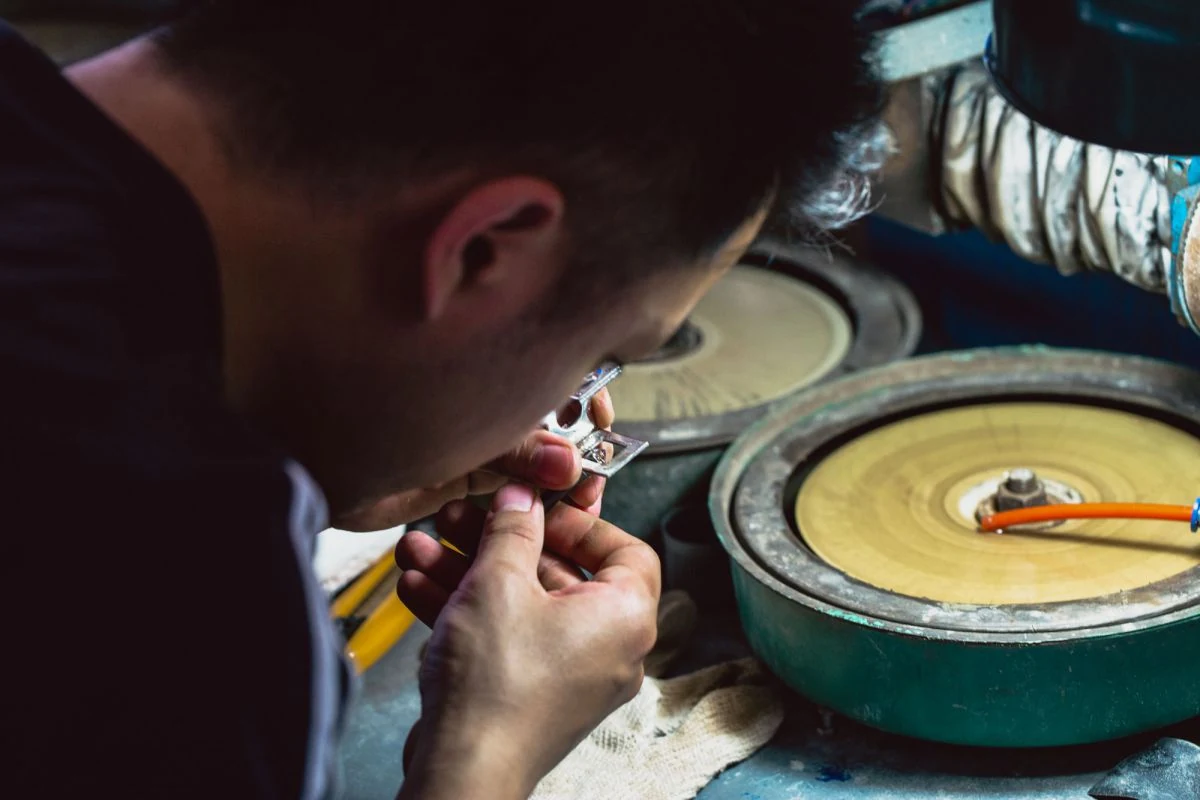
Half the clients who walk in for an engagement ring say the same line: "I don't really wear nice jewelry." They mean it, and we take it seriously. A ring that looks fragile on a pad but sits on a hand that lifts, cleans, drills, kneads, or weights is going to come back to us bent, scuffed, or missing a stone.
We build rings for active hands every week. The rules are not complicated, but they run against what you see in advertising.
01The enemies are not dramatic. They are boring.
No one drops their engagement ring off a cliff. The real enemies are repeated small knocks: the steering wheel, the gym dumbbell, the counter edge, the zipper, the sweater cuff. Thin prongs open from a thousand tiny brushes, not one crash. A high head gets scuffed on desks. Open pave catches on yoga mats and hair.
So the active-life ring is not about being "tough." It is about being low, closed, and smooth.
02The settings we reach for first
03The settings we steer away from
High cathedral heads. Double halos. Micro-pave all the way around the shank. Tall flying-prong solitaires. Tension settings. These are gorgeous rings, but on an active hand they come back to us. A micro-pave diamond on a shank will pop out the first time you grip a barbell. We have seen it. We would rather tell you now than fix it later.
If you already own a ring that is starting to show it, read our note on prong wear warning signs. The fix is cheap before the stone goes.
04Metal matters as much as setting
14k gold is our honest default for active rings. It is hard enough to resist dings, soft enough to be comfortable, and easy to repair. Platinum is lovely and denser, but it is also softer and will scratch and develop a patina faster on a working hand. White gold needs rhodium touch-ups every couple of years. If you are choosing, our note on choosing metal for an engagement ring walks the trade-offs.
Avoid 18k and up for an active ring. Higher gold content means softer metal, more dings, faster wear. 14k is the sweet spot.
05Stone choice for active wear
A diamond at VS clarity and a good cut is fine. But if you are extremely rough, consider a slightly lower setting profile and a bezel. For colored stones, sapphire is the practical choice - it is second only to diamond in hardness and takes daily life. Opal, emerald, and pearl belong on rings you wear to dinner, not rings you wear to the gym. If you are weighing center stones broadly, our piece on moissanite vs diamond covers the hardness and care side too.
06The honest habit
No ring is truly gym-proof. Even a bezel-set band can bend if you grip something hard. We tell active clients the same rule we give ourselves: take the ring off for the gym, for heavy lifting, for gardening, and for any task where your hand is the tool. A cheap ring dish by the sink solves more problems than any setting design. You can build the most durable ring on earth; a daily off-and-on habit doubles its life.
07What a great active ring looks like
In practice, it is a 2.2 to 2.5mm shank in 14k gold, a low partial bezel or six short prongs, a center stone seated close to the finger, and zero pave on the underside. It does not look like a showcase ring. It looks like a ring you forgot you were wearing. Five years later it still looks like that, which is the whole point.
If you also plan to wear a wedding band flush against it, build the shoulder for that from day one. Our wedding band stacking guide covers how the two rings should sit so the active life does not chip either stone.
08The off-and-on habit beats every setting
We build the most durable ring on earth, and it still comes back bent if the client grips a dumbbell with it on. The single best habit is a ring dish by the sink and one in the gym bag. Take it off for lifting, gardening, painting, and any task where your hand is the tool. A bezel survives more than a prong, but nothing survives a direct leveraged blow. We also tell active clients to skip the high-profile and pave designs, because those collect grit. Build the low, closed, smooth version, take it off when your hand is the tool, and the ring will outlast the wedding.
09Bottom line
Low, closed, smooth. Bezel or short six-prong. 14k gold. Take it off when your hand is the tool. That is the whole formula. We build it every week, and the rings we build this way are the ones that come back to us for cleaning, not for repair.
The Wikipedia article on rhodium explains why rhodium plating is applied to white gold and silver jewelry.
10Frequently Asked Questions
What ring sizes can you supply in bulk?
US sizes 5–12 including half sizes. Send a size breakdown with your order and we cast to that curve; comfort-fit inner bands reduce resize requests.
Can I order a mixed size run instead of one size?
Yes. Mixed runs are standard for wholesale: specify quantity per size and we pack and label by size at no extra labor cost.
What is the MOQ for custom ring designs?
50 pieces per design for existing molds; 100–300 pieces when a new mold or CAD model is required.
How should I price rings for retail margin?
Most partners use a 3–4x markup on FOB cost for sterling and 2.5–3x for moissanite solos, which keeps landed cost under 30% of retail.
Related reading: How to Allocate an Engagement Ring Budget, How to Stack a Wedding Band With an Engagement Ring, Insuring an Engagement Ring: What Appraisals Cover.
Send a sketch or a photo — our setter will answer with stone options and a price band.
Talk to the atelier


