Designing a Custom Engagement Ring: A Step-by-Step Roadmap
Bench notes · The Journal
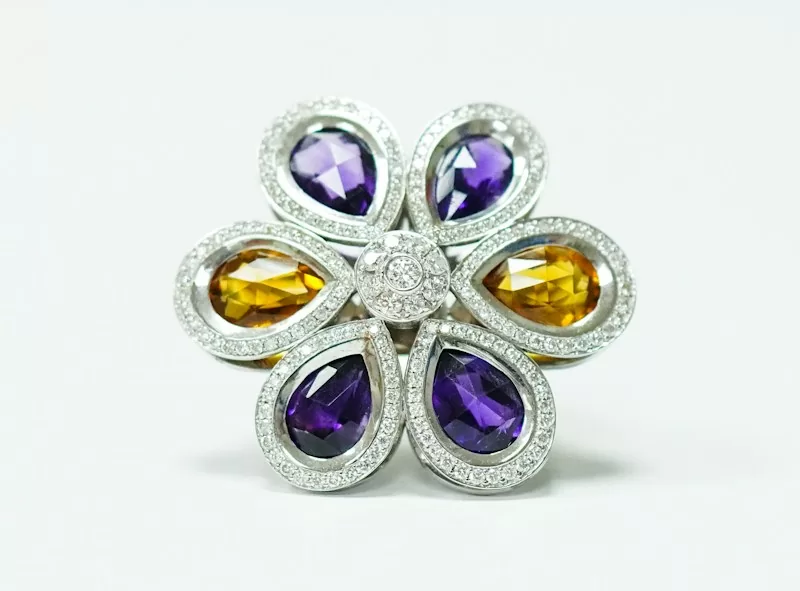
A stock engagement ring shows you what a designer thought a ring should look like. A custom one starts with the hand it will actually live on, the life that hand leads, and the story the ring has to carry. That single shift in starting point changes nearly every decision that follows.
01Start from the hand, not the catalog
The first working session is rarely about stones. It is about proportion. A center stone that reads generous on a slim finger can look heavy on a wider one, and the reverse is just as common. Finger length, knuckle width, and how the hand rests naturally all influence whether a solitaire should sit low or high, whether the shoulders should taper, and how wide the band can go before it fights the knuckle. We measure the finger at the base and again across the knuckle, because a ring that slides on but sits loose around the finger is a ring that turns on the hand all day.
Bring your daily routine into that conversation. Type on a keyboard? Build furniture? Wash your hands a hundred times a shift? Those details tilt the decision toward a lower, more protected setting before you ever pick a stone.
02Budget divides into three buckets
Before any sketch, split the budget the way the atelier will actually spend it:
Clients who skip the contingency line almost always end up trading their preferred center stone for a setting they settled on. Holding that buffer costs less than renegotiating halfway through the build.
03Center stone: shape drives the setting
Pick shape before setting, never after. A round brilliant can sit in almost anything, but an elongated oval, pear, or marquise carries its own geometry. Pear tips chip unless they are protected, emerald cuts show inclusion clarity far more than brilliants, and cushion cuts look very different in a tight claw versus a soft bezel. Tell the jeweler how the ring will be worn. Those answers decide prong height and seat depth faster than any trend board does.
Certification matters here. A GIA or AGS diamond report with clear proportions is worth more than a loose “eye-clean” promise, and a matched lab-grown stone should arrive with its own grading paperwork we can verify against the stone's laser inscription under loupe.
04Setting and metal are decisions, not defaults
Prong, bezel, pavé, tension: each changes how light moves through the stone and how the ring survives a decade of knocks. Bezel settings suit active hands but sacrifice a little open sparkle. A six-prong solitaire reads classic and protects the girdle well. Pavé shoulders add width and quiet brilliance, and they pair naturally with a wedding band cut to the same contour. Metal choice follows skin tone and the gold content the wearer actually wants to live with; we lay that trade out in our guide on gold versus platinum.
05Pair it with a wedding band early
Engagement rings designed in isolation often meet a wedding band that will not sit flush. A raised setting, a curved shoulder, or a pavé gallery can leave a visible gap that irritates both wearers. Decide the band style at the design table rather than after the proposal. A simple straight band, a contoured wrap, or a pavé match each pull on the center setting differently, and the gallery can be built around that choice from day one.
06From sketch to CAD to wax
The first drawings are loose on purpose. They test layout — where the stone sits, how the shoulders flow, how wide the top reads on the finger. Only after the layout is approved do we move into a CAD render carrying real measurements. The render lets you see the ring on a finger-shaped model and request changes that are still free at this stage. Once the design is printed or carved in wax, invested, and the metal is poured, changes become expensive. This is the moment to scrutinize proportions, not the day you pick it up.
07Spend the mounting, not just the stone
There is a quiet mistake couples make: spending the whole budget on the center stone and underspending the mounting. A well-cut stone in a thin, flimsy head looks like a rental. Hold at least a fifth of the budget for the mounting, so the head is stout, the prongs are properly sized, and the gallery sits on a band that will not warp in five years. The stone is what people notice; the mounting is what keeps the stone on the hand.
Document the piece before pickup. We photograph the finished ring on the finger, record the stone certificate numbers, and note the exact alloy and size. When the ring is eventually insured or resized, that file is the starting point, and it makes the first claim or the first resize a paperwork exercise rather than a scramble.
08What to ask before you commit
A serious atelier answers these without hesitation: how many revision rounds are included in the quote, what happens if the chosen center stone is unavailable at casting, how the finished ring is sized, and what the lifetime service terms cover. Get those answers in writing alongside the delivery date. A custom engagement ring built around one person's hand should fit that hand as precisely as it fits the story.
Gemstone grading terminology used here follows the Gemological Institute of America’s gem encyclopedia.
09Related Reading
10Frequently Asked Questions
What ring sizes can you supply in bulk?
US sizes 5–12 including half sizes. Send a size breakdown with your order and we cast to that curve; comfort-fit inner bands reduce resize requests.
Can I order a mixed size run instead of one size?
Yes. Mixed runs are standard for wholesale: specify quantity per size and we pack and label by size at no extra labor cost.
What is the MOQ for custom ring designs?
50 pieces per design for existing molds; 100–300 pieces when a new mold or CAD model is required.
How should I price rings for retail margin?
Most partners use a 3–4x markup on FOB cost for sterling and 2.5–3x for moissanite solos, which keeps landed cost under 30% of retail.
Send a sketch or a photo — our setter will answer with stone options and a price band.
Talk to the atelier


