Custom Jewelry in Small Runs: MOQs, One-Offs and Working
Bench notes · The Journal
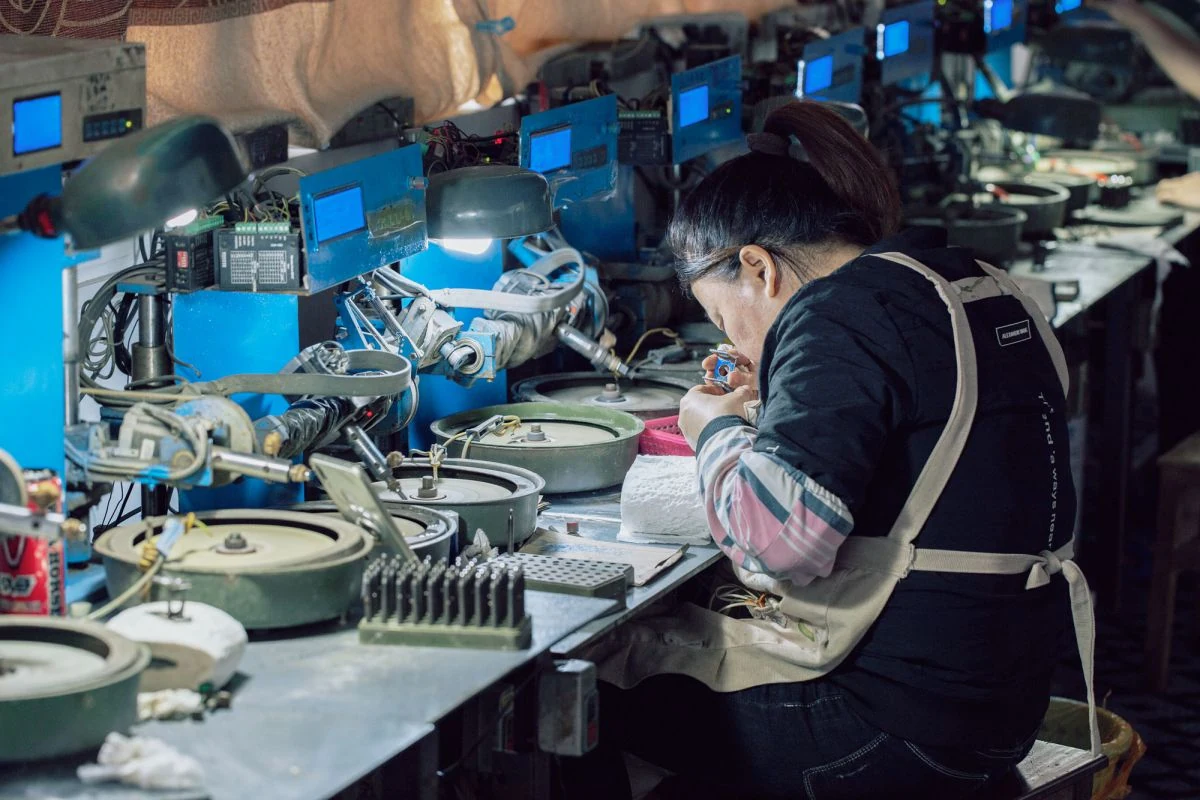
Many people assume custom jewelry factories only take bulk orders for brands. That reputation is outdated. A direct custom manufacturer can build a single ring, a pair of earrings, or a small run of coordinated pieces, and understanding how minimum order quantities actually work removes a lot of the friction. Whether you are buying one piece for yourself or five for a wedding party, here is how the order logic plays out.
A minimum order quantity, or MOQ, is the smallest batch a factory will produce economically. High-volume jewelers quote MOQs because setting up casting and bench time for one piece is inefficient when your normal run is hundreds. But custom shops that specialize in direct client work price differently: they treat the one-off as the normal unit. The design and setup cost happens once, and whether you order one or ten, the per-piece cost changes mainly because the setup is divided across more units. That is why a small run of matching pieces often costs only a modest step up from a single piece.
For a true one-off, you are paying for the full design journey: consultation, CAD or wax modeling, revisions, casting and hand setting. There is no bulk discount because there is no bulk. What you gain is complete control over the design and no leftover inventory. This is the right path for an engagement ring, a family-stone reset or a gift with meaning - exactly the kind of project we walk through in our first consultation guide.
For a small run, the math shifts. Design is the fixed cost; each additional piece after the first adds mainly materials and labor. A run of five matching pendants, for example, costs more than one pendant but less than five times as much, because the CAD model and the design decisions are reused. If you are a small boutique seller, this is the same logic behind private-label production - you design once and produce in a run you can actually sell through.
Know where to save on a small run. Complex settings with many stones multiply cost per piece, because setting labor repeats on every unit. Simplify the shared design, keep the stone count modest, and reserve the complexity for the one hero piece. Read through what custom jewelry actually costs so you can see which line items scale and which are fixed. Then confirm the quote itemizes setup separately from per-piece labor.
Revisions behave differently in a run than in a one-off. In a single piece, a CAD revision costs a bit of extra bench time. In a run, you want the design locked before production begins, because re-running five units after approval wastes material. Our note on how CAD revisions work explains the approval checkpoint - use it, and do not rush sign-off just because you are ordering several pieces.
Lead times also scale with complexity, not quantity. Five identical pendants do not take five times as long as one; the design phase is shared, and production runs in parallel. Build your buffer around the most complex single piece, not the total count. For time-sensitive gifting, check whether a rush schedule is available and what it adds.
Plan the run with room to adjust. Even in a small batch, the first piece is often a sample you approve before the rest are produced. Use that sample to check the finish, the clasp and the comfort on a real wearer. Catching a problem on the first of five beats catching it after all five are made. This sample step is how direct custom shops protect you, and it is one reason the experience feels more personal than ordering from a catalog.
Know when a one-off beats a run. If the piece is for a single person - an engagement ring, a gift, an heirloom reset - there is no reason to order more than one. Bulk ordering only helps when you genuinely need multiple identical or related pieces, like a bridal party or a small collection for a shop. Ordering extras you do not need just to clear an MOQ ties up money in jewelry you will never use. The right shop will build the single piece happily without nudging you toward a run you did not ask for.
And keep the paperwork straight. Even for a handful of pieces, ask for an itemized quote and a clear timeline in writing. It removes ambiguity about what is included and what counts as an extra, and it gives you one number to compare against if you shop around. Direct custom work is personal, but it still deserves a clean order record.
The honest takeaway: small-run and one-off custom jewelry are both normal, affordable paths when you work with the right shop. Design once, reuse the model, and let the run size follow what you actually need instead of a factory's minimum.
The history and conventions of engagement rings are outlined in the Wikipedia entry on engagement rings.
01Related Reading
02Frequently Asked Questions
How do I verify a factory before placing a bulk order?
Request a production video, business license, export records and a paid sample run. A factory that accepts a 50-piece test order is usually a real manufacturer.
What payment terms do you offer?
30% T/T deposit with the balance against the bill of lading. This protects both sides on first orders and can move to net terms after a track record.
What is your normal reject rate?
3–5% under 10x loupe inspection for cast and set pieces. Defective units are replaced free in the next shipment.
Where is the factory located?
Wuzhou, Guangxi, China—the core lab-grown and moissanite manufacturing cluster. Shipments go via Guangzhou or Shenzhen ports.
Send a sketch or a photo — our setter will answer with stone options and a price band.
Talk to the atelier


