How Much Does Custom Jewelry Really Cost? Honest Breakdown
Bench notes · The Journal
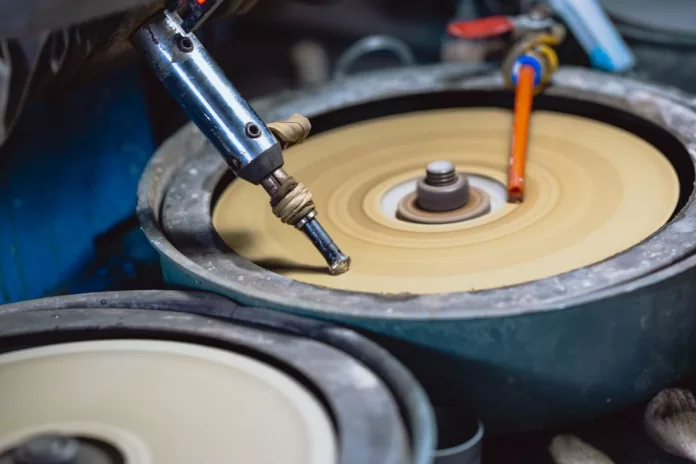
"How much does custom cost?" is the question every potential customer asks, and the answer that makes them nervous is "it depends." That sounds like evasion. It is not. A custom ring can land anywhere from under a thousand dollars to well over ten thousand, depending on a handful of choices that are entirely yours. Here is where the money actually goes.
01The five cost buckets
A custom ring breaks into five parts. The center stone, the metal, the design and modeling time, the casting and bench work, and the small stones (if any). Once you see the buckets, you see which ones you control.
02The center stone: the biggest lever
On most engagement rings, the center stone is half to two-thirds of the total price. This is the bucket you control the most. A moissanite center costs a fraction of a lab-grown diamond, which costs a fraction of a mined diamond. The setting and craftsmanship are identical. If your budget is tight, changing the stone material is where you get back the money, not by skimping on the setting.
The math on this is covered in moissanite vs lab-grown diamond, but the principle is simple: the stone is a commodity you can choose. The craft is the same either way.
03The metal: weight matters more than purity
People fixate on platinum vs gold and assume platinum is automatically double the price. It is more expensive per gram, yes, but the bigger driver is how much metal the ring uses. A slim, light shank in platinum can cost less than a heavy, chunky band in 14k gold, because the gold weighs more.
The alloy matters too. 14k gold is more durable and slightly cheaper per gram than 18k. 18k looks richer but scratches more. For a daily-wear ring, 14k is the honest recommendation, and it saves you a little money over 18k without a visible difference to anyone but a jeweler.
04Design and modeling time: the part people forget
This is the cost that surprises people. Custom design takes hours: consultations, CAD work, revisions, renderings, physical model review. Some shops fold this into the price; some charge a design fee up front that comes off the final piece. Either way, you are paying for a skilled person's time, and that time is real.
The way to control this bucket is to be decisive. Come with clear references, answer questions quickly, and limit revisions. Every "let's try one more version" costs time, and time becomes price.
05Hidden fees worth asking about
When you compare quotes, ask specifically about a few line items. Is there a design or CAD fee, and does it come off the final price? Is stone setting included, or charged per stone? Is polishing and finishing included, or a separate step? Is there a rush fee, and what triggers it? What does resizing cost later, and replating? A quote that looks cheap on the center stone can come in higher once these are added. The honest shops list them up front. The ones that do not are not cheaper - they are just less clear. Get the total, not the headline number.
06Casting and bench work: the fixed cost
Casting, stone setting, polishing, and finishing are largely fixed costs. They do not change much whether your ring is simple or ornate, because a bench jeweler's hour is a bench jeweler's hour. What adds cost is complexity: pave work, hand engraving, many small stones, antique reconstruction. Each added detail adds hours.
07What actually makes custom cheaper than retail
Here is the part that surprises people. A well-made custom ring from a direct workshop often costs less than a comparable ring at a retail store, because you skip the retail markup, the middleman, and the brand overhead. This is the point of factory-direct vs retail jewelry: the same craft, without the storefront. Custom is not automatically a luxury. It is a way to get exactly what you want at a price you control, by choosing the buckets yourself.
08The honest bottom line
A realistic custom engagement ring, with a moissanite or equivalent center, in 14k gold, simple setting, lands in the low-to-mid thousands. Move to a lab-grown diamond and a more detailed setting, and you move up from there. The exact number is set by your choices, not by the word "custom." Tell your maker your budget up front. A good shop will design to it, not against it.
The other thing that surprises people is how little a simple custom ring costs compared with a named-brand equivalent. The craftsmanship is the same, the metal is the same, and the stone choice is often better because you picked it. You are not paying for a storefront, a sales staff, or a marketing budget. You are paying for the hours on the bench and the material. That is why a direct workshop often undercuts retail on the exact same result, and it is worth remembering the next time a quote feels high.
If you want the schedule behind the price, how long a custom ring takes pairs naturally with this, because time is one of the costs you are paying for.
For third-party reference, the Wikipedia article on moissanite details moissanite’s discovery, optical properties and use in jewelry.
09Frequently Asked Questions
How does the custom OEM process work?
Send a reference, sketch or CAD file. We quote, produce a 3D render, then a wax or resin model for approval before casting. Nothing goes to bulk without written sign-off.
How long does a custom sample take?
About 20 days for a new CAD model, including one revision round. Repeat designs reuse the existing mold and ship in 3–5 days.
What is the custom MOQ?
100–300 pieces per design depending on the mold and stone setting complexity.
Do you sign NDAs for private label?
Yes. Private-label clients get an NDA and exclusive mold use for the agreed term.
Related reading: How Much Does a Custom Ring Actually Cost? A Transparent Breakdown, Custom Jewelry Pricing: Transparent Factory Cost Breakdown, How Long Does a Custom Ring Really Take?.
Send a sketch or a photo — our setter will answer with stone options and a price band.
Talk to the atelier


