Custom Jewelry CAD and Prototyping: From Sketch to
Bench notes · The Journal
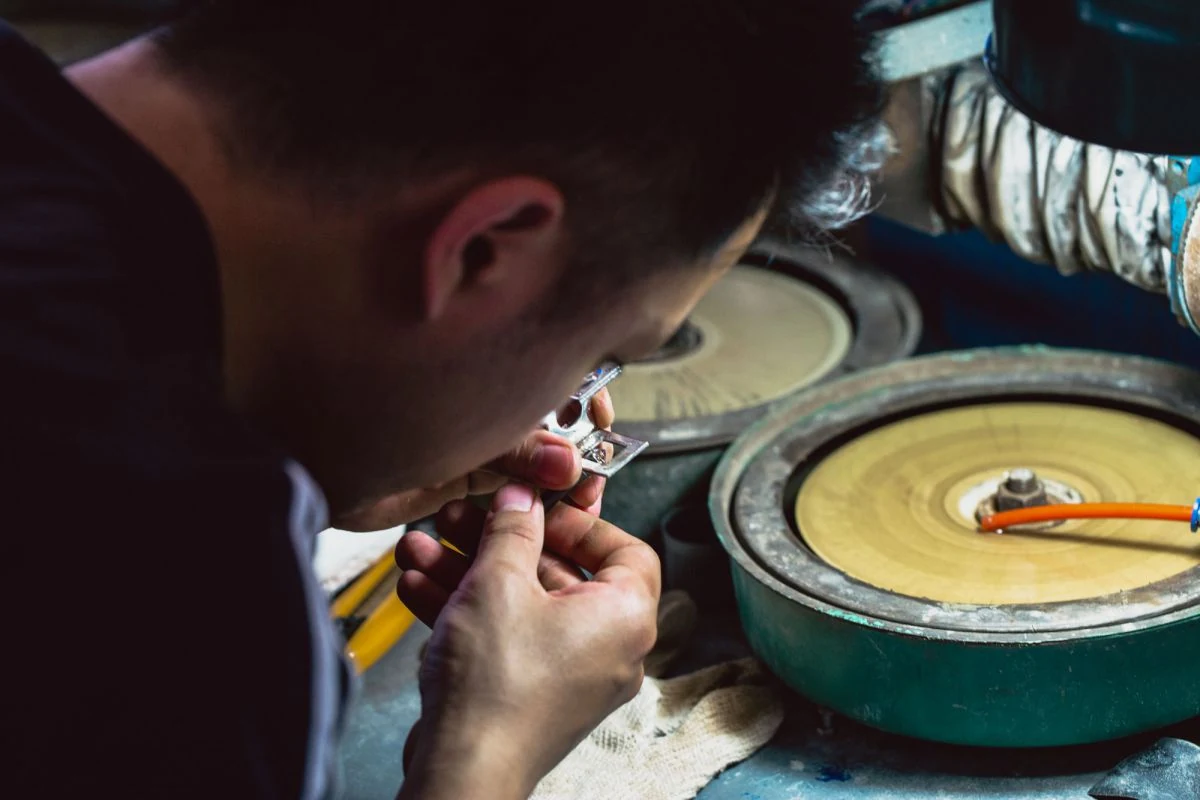
A boutique approved a pendant design off a screen render, ordered 60 pieces, and found when they arrived that the pendant sat crooked on every chain. The bail angle looked right in the render but was wrong on the body, and by the time the pieces were cast, the CAD had been through three production files no one updated. The fix was not a better render. It was a physical prototype before bulk. This is how custom jewelry CAD and prototyping is supposed to work, and the checkpoint that saves a run of 60 pieces from becoming a write-off.
01Why a screen render is not enough
CAD rendering is fast and cheap, which is exactly why it is dangerous to rely on alone. A render shows geometry; it does not show weight, chain swing, finger feel or how the metal behaves at the bench. The gaps are predictable:
| What you approve | What the render hides | What a prototype reveals |
|---|---|---|
| Bail angle on a pendant | How it swings on a chain | The pendant hangs level or tilts |
| Ring shank width | How it feels on the finger | Comfort fit versus a sharp edge |
| Pavé density | Under-scale sparkle | Actual stone size against the metal |
| Weight | Not shown in a render | Heavy pieces feel different at bench |
For a single commission, a crooked bail is a remake. For a 60-piece boutique run, it is a lost season. Prototyping is the step that separates those two outcomes.
02The CAD and prototyping workflow
The process moves in controlled files, so the version that gets cast is the version that was approved.
- Brief and reference. You send a sketch, a photo, or a physical piece. We note dimensions, stone sizes and target weight.
- CAD modeling. A jeweler builds the model in Rhino with real wall thicknesses and stone seats. Thin walls under 0.4 mm are flagged — they crack at casting.
- Render approval. You see the design from multiple angles and approve the look. This is the cheap checkpoint; changes here cost nothing but time.
- Resin 3D print. The approved model is printed in high-resolution resin. This is the physical prototype you hold in your hand.
- Wax casting of the prototype. For high-value pieces, we cast one metal sample so you can weigh, wear and set a real stone before bulk. This is the step most factories skip.
- Bulk production. Only after the prototype is signed off do we cast the run. The approved CAD file is locked and versioned.
CAD and render take about a week. A resin prototype ships in another few days. A metal sample adds roughly a week. Total pre-bulk time is two to three weeks — against a remake of a 60-piece run, that is cheap insurance.
03Which buyer you are changes the prototype level
Opening order under 20 pieces. A resin 3D print is usually enough. You can hold the scale, check the bail and feel the weight approximation without paying for a metal sample.
Run of 20 to 100 pieces. Add a cast metal sample. Setting a real stone in the sample shows how the prongs read at production scale and confirms the finish before the full run.
Private-label flagship design. Prototype twice: a resin print for form, a cast sample with your packaging for the full unboxing. This is the piece that represents your brand on every shelf, so the prototype budget earns its keep.
04Frequently Asked Questions
How much does a CAD and prototype cost?
CAD modeling is quoted per design and is credited back against orders of 50 pieces or more. A resin prototype ships with the CAD stage at no extra charge; a cast metal sample is a small flat fee that is also credited on bulk reorders.
Can I supply my own CAD file?
Yes. We accept STL and Rhino files and review them for casting feasibility — wall thickness, undercuts, stone seats. We flag issues before printing so you do not pay to prototype a file that will not cast.
How long does the CAD stage take?
First renders return within three to five business days from a clear brief. Revision rounds are fast because the model is already built. A resin prototype follows approval within a few more days.
What happens if I want changes after the metal sample?
We revise the CAD and print a new resin. A change after casting a metal sample adds time and a small fee, which is why we push for approval at the resin stage. Changes before metal are essentially free.
Do you keep the CAD after the order?
Yes. Approved CAD is versioned and stored for your reorders, so a restyle becomes a quick file update rather than a new project. On an NDA, your custom designs are not shared with other buyers.
05Key takeaways
Start a CAD project: send a sketch or reference, first renders in three to five business days. See our OEM service, read about engagement ring manufacturing, or review private label. Context in the buying guides.
Independent background on moissanite — how its hardness and refractive index compare with diamond — is documented in the Wikipedia article on moissanite.
06Related Reading
Send a sketch or a photo — our setter will answer with stone options and a price band.
Talk to the atelier


