Custom Engagement Ring Manufacturing: How an OEM Factory
Bench notes · The Journal
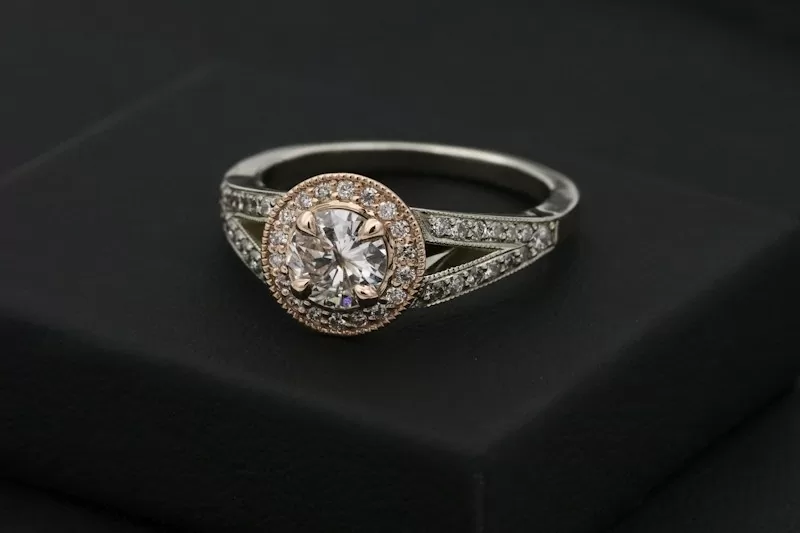
A bridal salon in Austin ordered 120 custom engagement rings from a new factory two seasons ago. Within four months, 17 of them came back: five with loose side stones, four with a shank that would not pass ring size 6.5, and eight with prongs that caught on hair. The salon absorbed the rework and lost two repeat clients. Here is how our custom engagement ring manufacturing line is built to prevent that, and the inspection points you should write into every purchase order.
01Where engagement ring orders actually fail
The trade average for first-order returns on custom bridal work sits between 12% and 18%, according to boutique owners we work with. Most of those returns are not catastrophic; they are small tolerances stacked together until the piece feels cheap on a customer's finger. The table below compares what most factories do against the tolerances we hold.
| Inspection point | Industry typical | Our standard |
|---|---|---|
| Shank roundness after casting | Visual only | Micrometer check, within 0.08 mm |
| Prong tightness on stones | Visual, eye loupe | 1.5 kg prong-pull test on every stone |
| Ring-size channel | Assumed from mold | Mandrel verified at +/-0.25 size |
| Finish before plating | One polish pass | Three polish grades, final check under 10x loupe |
Loose stones are the single biggest complaint. A prong that looks closed under a loupe can still spin a 2 mm side stone if the prong tip was not burnished over the crown. We burnish every tip and then pull it.
02The manufacturing line, start to finish
When a design lands on our bench, it goes through six fixed stations rather than being handed to one bench jeweler end to end.
- CAD and review. Your sketch or reference photo becomes a Rhino model with exact stone seats, then we send a rendered image for approval before any metal moves.
- Wax printing. The model is printed as a high-resolution resin pattern on a 3D printer calibrated to shrink compensation for the alloy you chose (10k, 14k, 18k or platinum).
- Lost-wax casting. The wax tree is invested, burned out and cast under vacuum to cut porosity. Porous shanks fail at the polishing stage; ours rarely do.
- Pre-setting cleanup. The casting is sprue-removed, filed and tumbled before any stone touches the piece. Filing after setting scratches stones.
- Hand setting. Stones are seated, prongs raised and burnished. Pavé rows are set under magnification, not by feel.
- Polish, plate and QC. Rhodium plate at 0.5 micron versus the more common 0.3 micron, then a final QC pass that includes the prong-pull and mandrel checks above.
Lead time from approved CAD to finished parcel runs three to four weeks for a custom bridal order. Rush commissions on a single design can move faster, but bulk orders never skip the wax approval step.
03Which buyer you are changes what you ask for
Opening boutique (first order under 30 pieces). Start with two or three proven designs from our catalog rather than a fully original sketch. You get the OEM manufacturing quality without the CAD development cost, and you learn our QC reports before you commit to a private label.
High-end salon (30 to 150 pieces per run). Ask for the full spec sheet: alloy certificate, stone certificate (GIA for diamonds, GRA for moissanite), prong-pull report and ring-size distribution. We export to US and EU retailers with DDP shipping and the customs paperwork included.
Brand with its own line. Move into a private label program where your logo goes inside the shank and your packaging ships with the order. CAD files stay yours on a signed NDA.
04Frequently Asked Questions
What is the minimum order for custom engagement ring manufacturing?
Our opening MOQ is 10 pieces per design, which is low enough for a boutique test run. Reorders on proven designs drop to 5 pieces and usually ship in two to three weeks once the CAD is approved.
Can you cast my own CAD files instead of yours?
Yes. We accept customer-supplied CAD in STL or Rhino format and review it for casting feasibility first. We flag thin walls, undercuts and seats that will not hold stones before we print wax, so you do not pay for a failed casting.
Do you supply stone certificates with each ring?
Every center stone ships with its certificate: GIA or IGI for natural and lab-grown diamonds, and GRA for moissanite. Side stones are listed on the QC sheet with carat weight and clarity grade rather than individually certified.
What is your defect rate and RMA window?
Our measured first-order defect rate is under 1.5% against a trade norm near 12%. Defective pieces are covered within 60 days of delivery; we either remake the unit or credit it, whichever keeps your shelf stocked.
Can you match a ring size distribution for my market?
Yes. Tell us your size spread, and we cast to it. US bridal skews to sizes 5 to 7, but we hold full half-size runs from 4 to 10 and adjust up or down by two sizes at no charge inside the tolerance band.
05Key takeaways
Request a sample parcel of two engagement ring styles: MOQ 10 pieces per design, CAD approval included, ships in about three weeks. See our custom engagement ring service, browse moissanite rings, or read more in our buying guides. For private-label terms, visit private label custom jewelry.
For HS classification of jewelry in customs and export documentation, the WCO Harmonized System nomenclature is the authoritative nomenclature.
06Authoritative References
For buyers who need to verify the technical and regulatory basis of this guide, the following independent institutions publish authoritative reference data:
07Related Reading
Send a sketch or a photo — our setter will answer with stone options and a price band.
Talk to the atelier


