Coordinates Necklaces: Getting the Engraving Right
Bench notes · The Journal
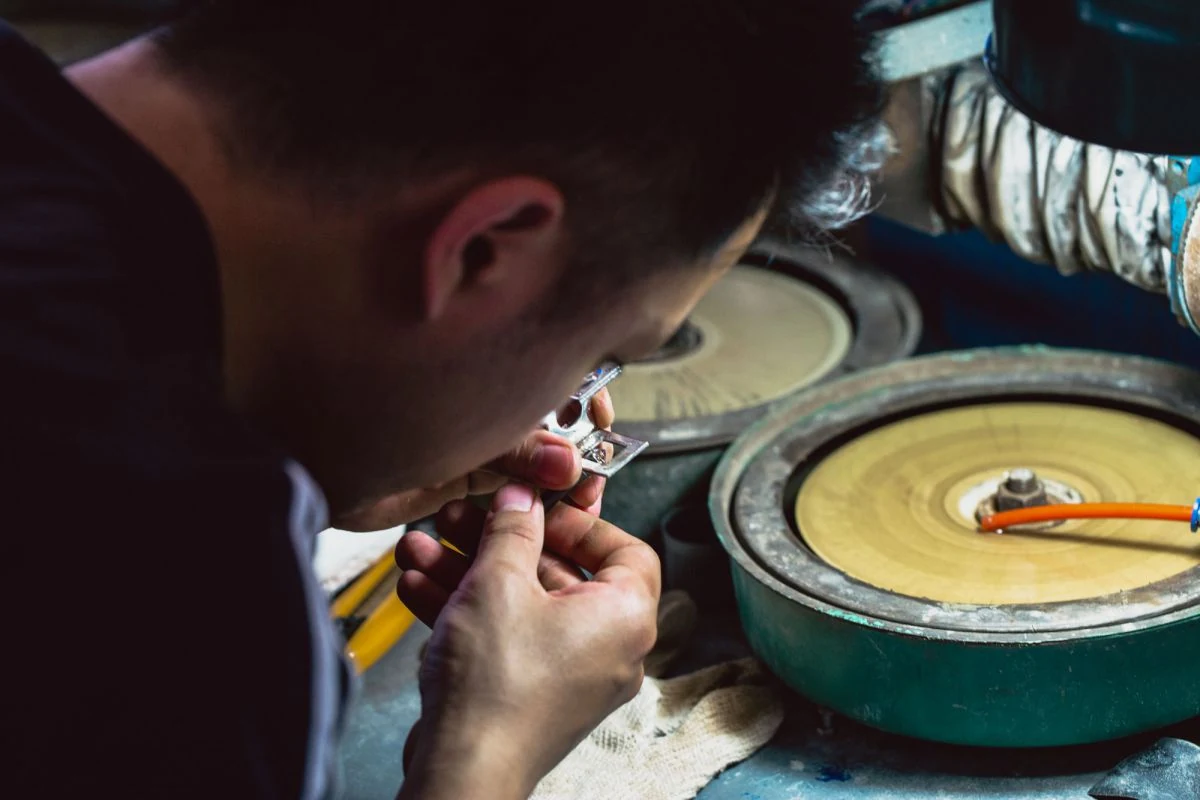
A coordinates necklace carries a lot of emotional weight in very few characters. The latitude and longitude of a proposal spot, a childhood home, a first date, or the hospital where a child was born. The design challenge is that the piece is basically a tiny engraved plate, and when engraving is too small or too shallow, the meaning becomes invisible in a year. Factory-direct custom work lets us control exactly how that information is cut.
01Accuracy comes first
Before any design discussion, we confirm the actual coordinates. People often pull numbers from a phone map that are rounded to the road, not the door. We ask clients to open the exact pin in a mapping app, long-press the precise spot, and send the full coordinate string to at least four decimal places. Four decimals get you within a few meters, which is close enough to be meaningful. Two decimals put you in a different neighborhood. Getting this right early matters because CAD revisions are far cheaper than re-engraving a finished pendant.
02Where the numbers live
Coordinates are long: roughly 15 to 20 characters including decimals and separators. That dictates the pendant shape. A slim horizontal bar is the classic home for coordinates, because the numbers read naturally left to right. A round disc works if you arrange the latitude on one line and longitude on the next, smaller. A vertical pendant limits the text badly and usually forces illegible fonts. We generally steer clients toward a bar, an oval, or a softly rounded rectangle.
Size the pendant to the text, not the other way around. A 20mm wide bar in a clean script looks elegant; the same text on a 12mm bar looks like a lottery ticket. Our piece on what engraving lasts covers the depth and font rules that keep numbers readable after years of wear.
03Laser versus hand engraving
For precise numeric text, laser engraving is the practical choice. It reproduces exact digits at small sizes with consistent depth, and it does not wander the way a hand-chased letter can. Hand engraving adds personality to script names and signatures, but coordinates are data, and data rewards precision. We use laser for the coordinate string and reserve hand engraving for a small accompanying date or initial if the client wants that warmth.
Depth matters more than you would think. Engraving that is only a few microns deep disappears after a few polishes. We cut coordinates to a depth that survives routine cleaning, and we avoid filling the engraving with enamel, because the enamel chips out over time. A clean, shallowly shadowed engraving is more durable than a black-filled one.
04Metal and chain choices
Engraving reads differently by metal. On yellow gold, the numbers catch their own shadow and stay legible. On polished white gold, we often recommend a brushed or matte finish on the engraved face so the letters pop; a mirror polish makes shallow engraving disappear. Rose gold adds warmth and photographs beautifully, which matters because most people will take photos of this gift. Chain length is a personal choice, but an 18-inch chain lets the pendant sit at the collarbone, where the coordinates are actually visible.
05Proofing before production
This step is non-negotiable. We send a digital proof showing the exact text, font, size, and placement before we cut any metal. Numbers are easy to transpose, and a swapped latitude and longitude moves the location hundreds of miles. A two-minute proof check prevents a heartbreaking mistake. The render versus final expectations idea applies here too: what you approve on screen is what gets cut, so we take the time to get the proof right.
06Gifting and timing
Coordinates necklaces are a top push and anniversary gift, which means they are often ordered against a date. Build in the normal custom timeline, and if you are up against a deadline, check the rush options early rather than late. Pair the pendant presentation in a simple box, because the design itself is the statement.
A coordinates necklace succeeds when the wearer can actually read the numbers years later. That is a manufacturing detail as much as an emotional one, which is exactly why ordering it custom, with proofing and proper depth, beats grabbing one off a rack.
07Choosing the right coordinates
Not every location makes a great coordinates piece. A family home address works beautifully; a busy intersection is less meaningful. The most popular choices are the proposal spot, the childhood house, the beach where someone grew up, or the hospital coordinates of a birth. Avoid coordinates tied to something likely to change, like a rental apartment someone will move out of, unless that transience is exactly the memory you want to keep. Double-check the numbers against the map on your phone before sending them over, because a coordinate necklace with the wrong location is the one mistake we cannot fix after the metal is cut.
The Wikipedia article on rhodium explains why rhodium plating is applied to white gold and silver jewelry.
08Related Reading
09Frequently Asked Questions
Which chain lengths should I stock first?
16 to 18 inch covers most necklines and gift purchases. Add 20 inch for layering sets and 24 inch for pendant lines.
Are your chains nickel-free and hypoallergenic?
Yes. Sterling silver is 92.5% silver; stainless lines use 316L. Both are nickel-safe for reactive customers when plated correctly.
Can necklaces be personalized?
Laser engraving on pendants and clasps is available from 50 pieces, with 3–5 day turnaround on the engraving step.
What is the bulk lead time?
15–20 days under 500 pieces; 25–30 days for custom pendants or new molds.
Send a sketch or a photo — our setter will answer with stone options and a price band.
Talk to the atelier


