Channel Set vs Pave Bands: Which One Actually Lasts?
Bench notes · The Journal
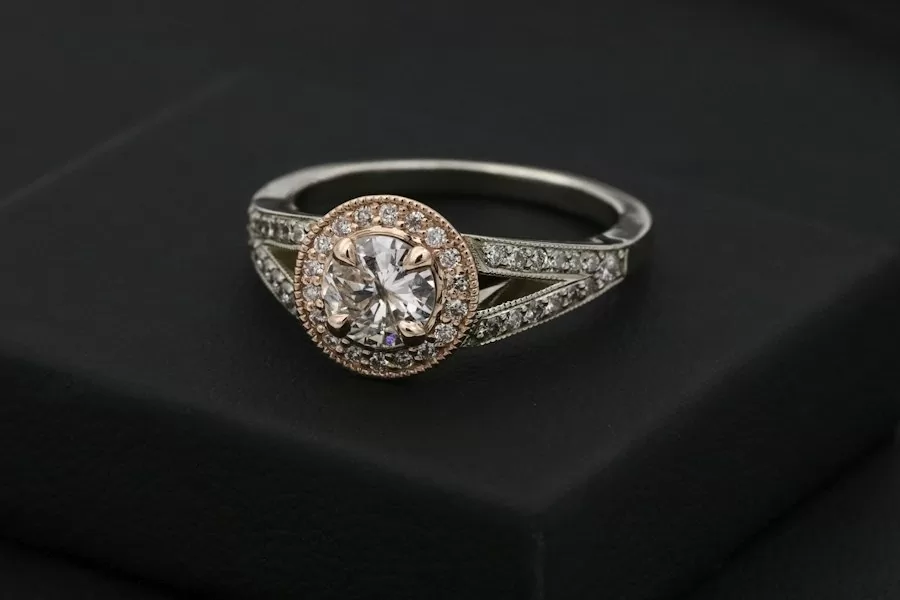
Walk into any jewelry store and you will see two band styles everywhere: the channel set row, where stones sit in a groove between two walls of metal, and the pave band, where dozens of tiny stones are held by minuscule prongs like a cobblestone street. They can look almost identical from across a room. On a bench, they behave like completely different objects. After years of repairing both, we have a pretty clear picture of which one survives daily life and which one starts asking for attention.
01How each setting holds the stone
In a channel setting, each small diamond or moissanite sits in a milled channel cut into the band. The two side walls of metal are burnished over the girdle of the stones, trapping them between the walls with no exposed prongs sticking up. The stones are essentially recessed inside the band profile. Nothing protrudes to catch a sweater, a seatbelt, or a doorframe.
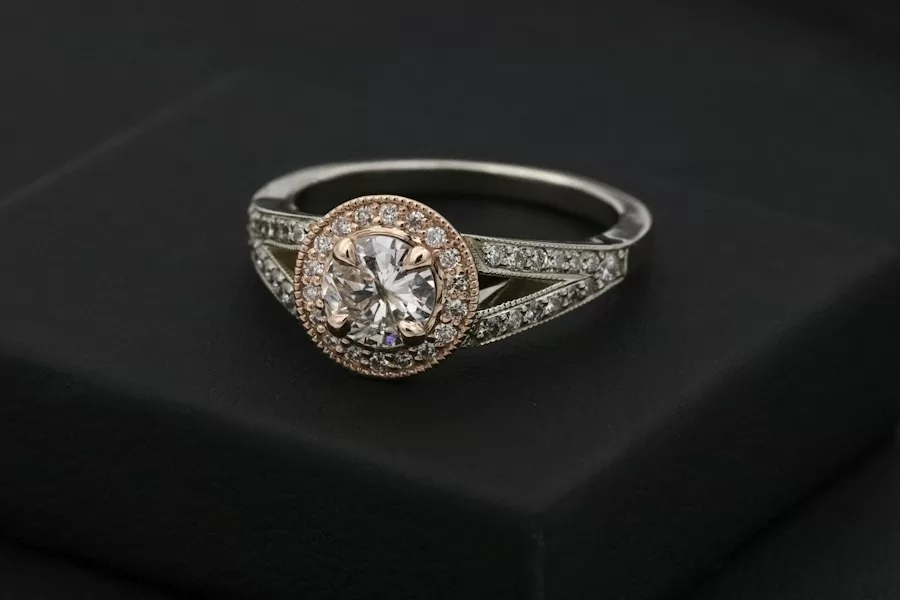
In a pave setting, by contrast, each tiny stone (usually a single point or 1.3mm to 1.8mm) sits in a small seat and is held by two or four tiny beads of metal pushed over its edge. Those beads are the only thing keeping the stone in. They are delicate by design, because the whole point is to hide them and let the stones read as a continuous glittering line.
02The snag problem
The number-one repair we see on pave bands is not a lost stone so much as a bent or pulled bead. Once one bead gets caught on fabric, it bends upright, the next bead catches on the same thread, and within a week you have a loose stone. Nurses, chefs, mechanics, and anyone who works with their hands live in gloves or sleeves, and pave bands catch on lint, hairnets, and rubber constantly. We have pulled whole pave rows off bands where the owner simply did the dishes.
Channel settings rarely snag. Because the stones are recessed below the wall tops, a fabric thread has to actually dip into the channel to catch anything, and that almost never happens in normal wear. A channel band will slide past a knit cuff cleanly where a pave band will grab it.
03Loose stones and re-tipping
When a pave bead wears, the fix is re-tipping or re-building the bead, which is fiddly on a band with thirty stones. Each bead has to be picked up with a fine bur, the stone reseated, and a new ball formed under magnification. It is slow, patient work, and doing it well means removing the grime around the stone first. A band that has lost several beads often needs a full pave re-set rather than a single repair, because once one bead loosens, the neighboring stones vibrate against each other and start to loosen too.
When a channel stone loosens, the fix is simpler: the walls are burnished back down against the girdle. You do not need to rebuild individual prongs. The tradeoff is that you cannot easily replace a single channel stone without opening the channel, which means lifting the whole row. In practice, though, channel stones rarely loosen in the first place, because the walls distribute the pressure across the entire row rather than resting it on two tiny beads.
04Stone size and visibility
Pave lets you use very small stones, which is why it looks so continuous and sparkly. But small stones also mean small seats and tiny contact points. A channel setting needs stones large enough (usually at least 1.8mm) to have a girdle the wall can grip firmly. That means a channel band reads a bit chunkier, with more visible gaps between stones. You trade some sparkle density for a lot of durability.
If you want the pave look but cannot accept the upkeep, many clients end up choosing a micro-pave done very well with heavier gauge metal, or a bead and rail hybrid where a subtle rail sits under the beads. It is not as seamless as true pave, but it holds up three times as long between services.
05Which one should you order?
If the band is an everyday wedding ring that will never come off, choose channel. If it is an anniversary band that stacks occasionally, or a right-hand ring worn for evenings, pave is a reasonable splurge. If you work with your hands, have a tactile job, or simply hate bringing jewelry in for service, channel is the honest answer. We build both, and we will tell you straight up which one your lifestyle actually earns.
Whichever you choose, plan on an inspection every six months. A channel band needs its walls checked for spreading; a pave band needs its beads checked for bending. Catching either early is a five-minute repair. Ignoring it for two years is a re-set.
Independent background on moissanite — how its hardness and refractive index compare with diamond — is documented in the Wikipedia article on moissanite.
06Related Reading
07Frequently Asked Questions
How do I verify a factory before placing a bulk order?
Request a production video, business license, export records and a paid sample run. A factory that accepts a 50-piece test order is usually a real manufacturer.
What payment terms do you offer?
30% T/T deposit with the balance against the bill of lading. This protects both sides on first orders and can move to net terms after a track record.
What is your normal reject rate?
3–5% under 10x loupe inspection for cast and set pieces. Defective units are replaced free in the next shipment.
Where is the factory located?
Wuzhou, Guangxi, China—the core lab-grown and moissanite manufacturing cluster. Shipments go via Guangzhou or Shenzhen ports.
Related reading: Pave-Set Ring Durability: What Actually Wears, Channel Set Wedding Bands: Durability and What to Look For, Earring Back Types: Which One Actually Keeps Your Studs On?.
Send a sketch or a photo — our setter will answer with stone options and a price band.
Talk to the atelier


