Casting Porosity: What Factories Check Before Your Ring
Bench notes · The Journal
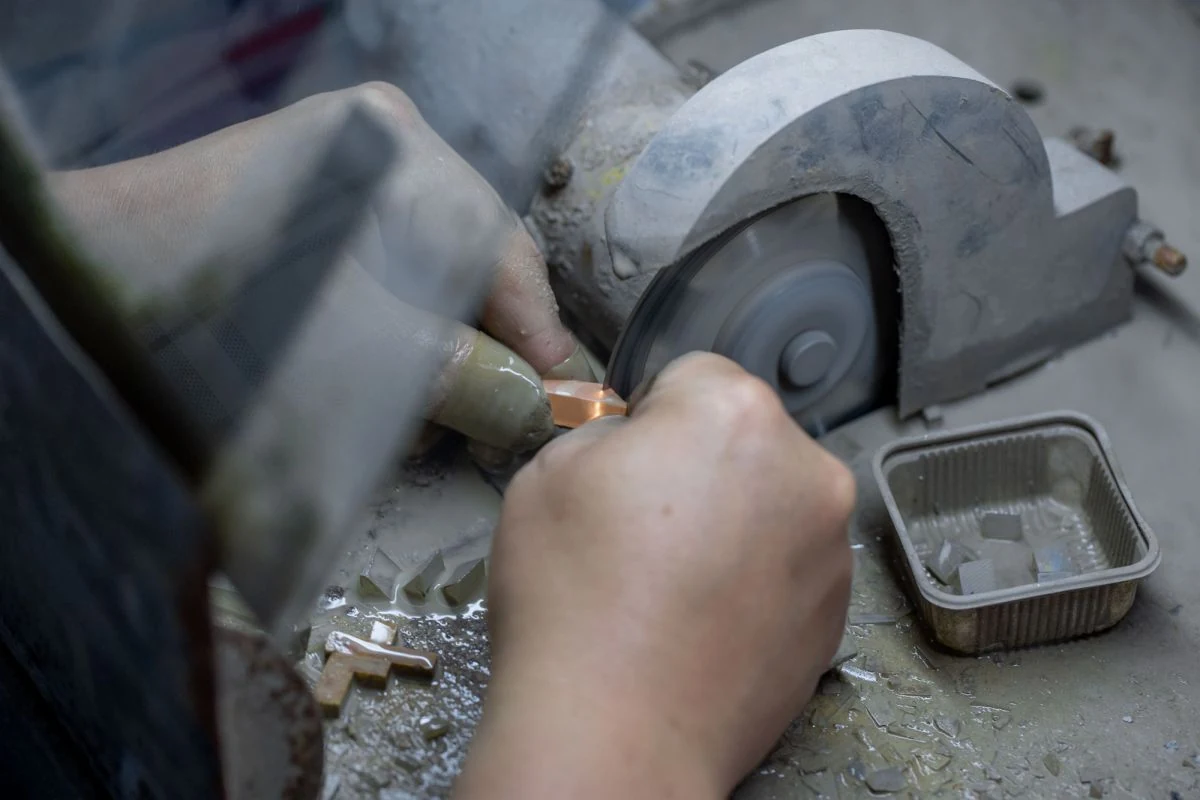
Every cast jewelry piece has a story hidden inside it. When molten metal flows into a mold, it does not fill perfectly. Trapped gas, shrinking metal, and small voids leave microscopic pockets in the finished metal called porosity. In a well-run factory, that porosity is expected, inspected, and managed. In a sloppy one, it ships as a ring that pocks, tarnishes oddly, or cracks years later at the worst possible moment. Porosity is the quiet defect that separates a factory-direct build from a hobbyist casting, and it is worth understanding because you cannot see most of it with the naked eye.
01What porosity actually is
Porosity comes from a few sources. Gas porosity happens when dissolved gas in the molten metal forms bubbles as it cools. Shrinkage porosity forms where the metal solidifies unevenly, leaving small cavities near thick sections. Inclusion porosity traps oxide or flux inside the casting. Tiny, scattered pores under a micron are normal in any cast alloy and are effectively invisible after polishing. The problem is clustered, connected pores near a high-stress area—a thin shank, a prong base, a joint—because they act as starting points for cracks. We cover the casting process itself in how lost-wax casting works, and porosity is simply the side effect that a quality-control step exists to catch.
02How a good factory checks
The first line of defense is process control. Investing the metal at the right temperature, using proper sprue and vent design, and letting the piece cool slowly all reduce porosity before it happens. The second line is inspection. Casters look at the casting under magnification, especially on the interior of a ring shank where porosity tends to show as tiny pits. They weigh the piece against the CAD model to confirm the metal volume matches—a ring that is unexpectedly light can signal a hidden void. For higher-value pieces, X-ray or radiographic inspection reveals internal porosity that polishing would smooth over. The pieces that fail this inspection go back for repair or are recast. That rework step is expensive, and it is exactly the cost difference you are paying for when you choose a factory with standards.
03How porosity shows up later
Porosity that passed inspection still occasionally surfaces. After a year of wear, a small pit may break through the polish on the outside of a shank, looking like a tiny dark dot. On a white gold ring that has been rhodium plated, the plating can fill the pit until it wears, then the dot appears. On a ring that was badly cast, clustered porosity near the base of a prong is why prongs suddenly fail long before they should. A small pit is a cosmetic annoyance and an easy fix. A crack growing from a void is a structural problem, and it is the kind of thing an inspection should have caught.
04What can be fixed, and what cannot
Surface porosity is repairable. A jeweler can fill a small pit with solder or laser, then rebuild the polish. This is a normal part of refinishing and not a sign the ring is ruined. Internal porosity that causes a crack in a shank is more serious and may require replacing the shank entirely—we discuss that limit in when a ring is beyond repair. The point is not that porosity never happens. It is that the factory's job is to catch the dangerous version before it ships, and to make the cosmetic version cheap to fix afterward.
05Why this matters for your custom order
When you order a custom ring, you are not just buying a design. You are buying the factory's willingness to throw away a bad casting. A shop that cuts costs by shipping the first casting off the bench will save money on that ring and cost you later, when a pit appears or a prong fails. Ask a factory how they inspect castings, whether they X-ray high-stress pieces, and what they do when a piece fails inspection. The answer tells you more about the build than any photo of a finished ring ever will, and it is the difference between a piece you hand down and one you end up rebuilding from scratch in ten years.
You can ask about porosity without sounding like an engineer. A simple question—“do you inspect the shank and the head before shipping?”—is enough to tell whether the factory has a process. Shops that are proud of their work will explain it; shops that have never thought about it will change the subject to the price. That conversation takes two minutes and protects a piece that you will wear for decades. Porosity itself is not something you can prevent entirely, any more than you can prevent bubbles in poured concrete. What you can control is who is looking for them before the piece reaches your finger.
The Wikipedia article on rhodium explains why rhodium plating is applied to white gold and silver jewelry.
06Related Reading
07Frequently Asked Questions
What ring sizes can you supply in bulk?
US sizes 5–12 including half sizes. Send a size breakdown with your order and we cast to that curve; comfort-fit inner bands reduce resize requests.
Can I order a mixed size run instead of one size?
Yes. Mixed runs are standard for wholesale: specify quantity per size and we pack and label by size at no extra labor cost.
What is the MOQ for custom ring designs?
50 pieces per design for existing molds; 100–300 pieces when a new mold or CAD model is required.
How should I price rings for retail margin?
Most partners use a 3–4x markup on FOB cost for sterling and 2.5–3x for moissanite solos, which keeps landed cost under 30% of retail.
Send a sketch or a photo — our setter will answer with stone options and a price band.
Talk to the atelier


