CAD Design for Custom Jewelry: OEM Render-to-Cast Workflow
Bench notes · The Journal
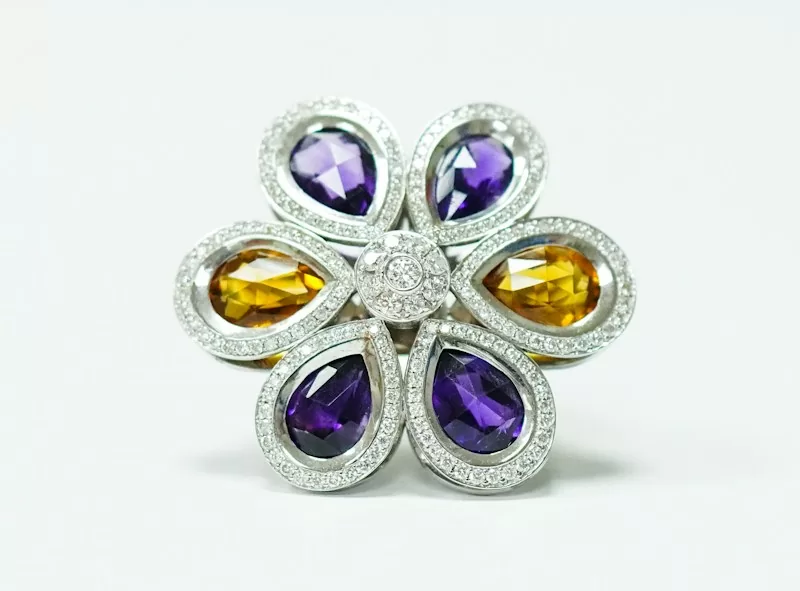
A boutique sent us a design file from a freelance illustrator: a delicate vine ring with 47 micro-pavé stones and a 0.8mm band. On screen it was beautiful. In casting it would have broken, because a 0.8mm shank cannot support 47 stones and the prongs would have been too fine to set. This is why CAD design for custom jewelry is not drawing; it is manufacturable engineering. The workflow below is how we turn a client's idea into a casting-ready model, and the tolerance rules retailers should insist on from any factory.
01The cost of a design that only works on screen
Rendered jewelry ignores gravity, metal flow, and setting physics. A model that looks thin and elegant on screen can cast with porosity, snap at the thinnest point, or arrive with prongs too small to seat stones. Each failed casting wastes metal, stone-setting time, and the client's deadline. We treat CAD as the first manufacturing gate, not a marketing picture.
| CAD failure | Untested render | Manufacturable CAD |
|---|---|---|
| Shank thickness | 0.8mm aesthetic | 1.2mm structural minimum |
| Prong size | Too fine to set | 0.45mm setting-ready tip |
| Stone count vs. support | Unbalanced | Load checked before print |
| Wall thickness | Evenly thin | Thickened at stress points |
| Revision rounds | Open-ended | Two included, then billed |
02Our CAD-to-cast workflow
- Brief and reference: we collect the client's inspiration photos, measurements, and the existing ring the piece must match.
- Structural CAD: the designer models to casting tolerances: minimum shank 1.2mm, prong tips 0.45mm, and walls thickened at stress points.
- Manufacturability review: a second engineer checks the model for metal flow, porosity risk, and setting feasibility before any print.
- 3D resin print: the model is printed and physically checked for proportions and fit, especially on contoured bands.
- Revision gate: two revision rounds are included; after that, changes are quoted hourly so the project stays on schedule.
- Casting and QC: the approved print goes to lost-wax casting, then through our standard pull-test and polish gates.
Our structural minimums run about 20% above a pure aesthetic model, which is deliberate: a slightly thicker shank disappears on the finger but saves the piece from snapping. We have shipped custom CAD work to US and EU clients for over a decade, and the reorder rate on approved designs is high because the cast matches the render.
03How to brief CAD for different projects
Retailers reselling CAD: send your client a measurement kit and reference photos; we return renders you can show the customer, with two revisions built in.
High-end bespoke: commission a physical resin sample alongside the render so the client holds the design before metal is cast. This is standard on pieces above a certain value.
Private-label lines: CAD fees are credited back on your second production order, and we hold the model file for fast repeat casting.
Buyers sometimes ask why we show a resin print before casting, when a render already looks final. The reason is that proportion and weight read differently in the hand. A band that looks slender on screen can feel heavy and wide once printed, and a stone arrangement that looks balanced from a render can crowd the finger in 3D. The resin step is cheap insurance against a casting the client dislikes, and it is the reason our post-delivery "it's not what I expected" rate is close to zero. We photograph the print next to a coin for scale, so the client judges the real thing rather than a flattering angle.
04Frequently Asked Questions
How many CAD revisions are included?
Two revision rounds are included in every custom CAD quote. After those, changes are billed hourly so the project stays on deadline. We photograph the resin print for you to approve before casting.
Can you work from a sketch or a phone photo?
Yes. Hand sketches, reference photos, and even a rough drawing are enough to start. We turn them into a manufacturable CAD and flag any parts that would not survive casting before you approve anything.
What is the minimum shank thickness for a durable ring?
We set a 1.2mm structural minimum for a stone-set shank, and 1.3mm for engagement settings. Thinner models may look elegant on screen but will deform or snap under wear. We show clients this trade-off rather than casting a fragile design.
How long does CAD take before casting?
First renders arrive within 5 to 7 working days. With two revision rounds and the resin print, the model is casting-ready in roughly 2 to 3 weeks before the metal work begins.
Do you keep the CAD file after production?
Yes. We hold the manufacturing CAD on file so future reorders and resizes are fast and consistent. For private-label clients, we do not reuse your design for other retailers in your market.
05Bottom line
Start a CAD project: send your sketch or reference and we return a casting-ready render within 7 days. See the full bespoke process, explore moissanite rings, or contact us via here.
For third-party reference, the Wikipedia article on moissanite details moissanite’s discovery, optical properties and use in jewelry.
06Related Reading
Send a sketch or a photo — our setter will answer with stone options and a price band.
Talk to the atelier


