Bypass Engagement Rings: What the Setting Actually Does
Bench notes · The Journal
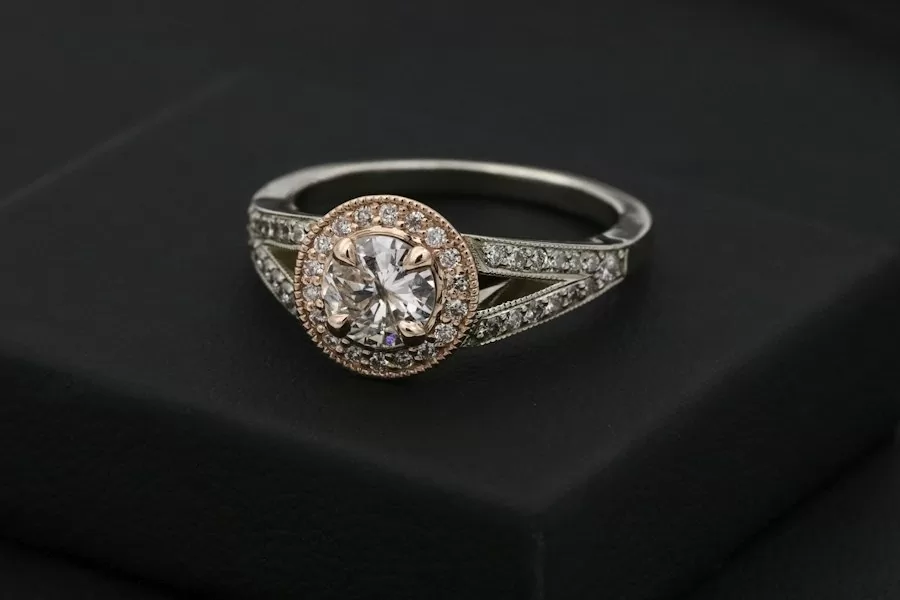
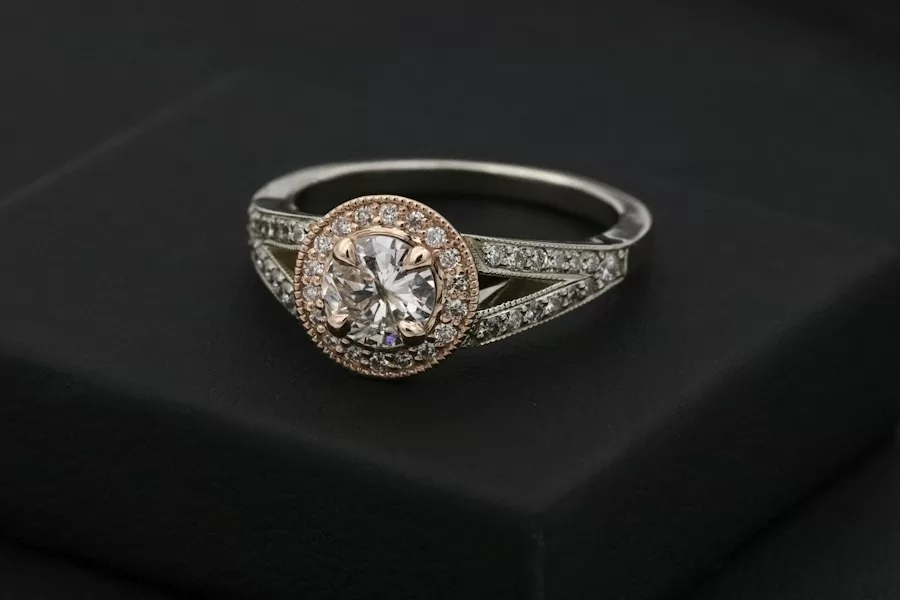
The bypass engagement ring is one of those settings that reads instantly as designed rather than stocked. Two shanks curve in from either side and sweep past one another to cradle a center stone, often meeting at a slight twist. It is romantic, modern, and quietly flattering. But a bypass is not a neutral setting choice. It changes how the finger looks, how the stone is protected, and how comfortable the ring feels over a full day.
01What a bypass actually does visually
The curved shanks draw the eye inward and upward toward the center stone, which has the happy side effect of making shorter or wider fingers look longer and slimmer. That is why bypass designs pair so naturally with pear, marquise, and oval stones: the elongated lines stack. A bypass also leaves the center stone slightly more open than a halo, so the stone reads larger than its carat weight without the added width of surrounding diamonds.
For someone who wants an unusual ring without going full avant-garde, the bypass is the sweet spot. It is recognizable as an engagement ring, but no one will mistake it for a standard solitaire from a chain store.
02The stone-protection trade-off
Here is the honest part. Because the shanks sweep past rather than fully enclosing the stone, a bypass typically exposes more of the stone's girdle and corners than a bezel or cathedral setting. A round diamond handles that exposure fine. A softer, cornered stone like an emerald or an oval with thin tips does not. If you are pairing a bypass with a colored stone that chips easily, we usually add small hidden guards or deepen the prong coverage at the corners.
The good news is that the bypass structure itself can be engineered to protect. We often build the shanks so they rise into partial bezels at the contact points with the stone, combining the graceful look with real coverage. Compare this approach with the options in our cathedral and bezel guide and you will see how much engineering goes into a silhouette most people describe in a single word.
03Comfort and balance
A poorly balanced bypass spins on the finger. Because the visual weight twists one way, gravity and hand motion can rotate the ring so the center stone ends up sideways. We solve this two ways: by weighting the shanks evenly on both sides of the stone, and by widening the shank at the base for comfort-fit contact. A custom bypass should sit just as straight as a standard solitaire after a day of typing.
Band width also matters. A narrow, delicate bypass looks elegant on slender fingers but wears faster on a rough daily routine. If you are choosing a band profile, our breakdown of ring width and profile for your hand pairs naturally with a bypass design conversation.
04Metal and detailing options
Two-tone bypass rings are stunning: a white gold shank cradling a yellow gold twist, or platinum with rose gold accents. The metal contrast makes the sweep legible at a glance. We also like adding a thin milgrain edge or a few hidden accent diamonds along the inside curve for someone who wants detail that reveals itself over time. Our two-tone wedding band guide shows how the same color logic extends to stacking later.
05Who should (and should not) choose a bypass
A bypass works beautifully for someone who wants a distinctive silhouette, wears a center stone that is reasonably hard, and is okay with a setting that is slightly more involved to size. It is less forgiving for someone who knocks their ring against desks constantly, or who wants a perfectly symmetrical, traditional solitaire look.
06Manufacturing notes
We design the bypass in CAD first, because the curvature of each shank has to match the exact finger size and stone dimensions. A curvature that looks right in a render can pinch a real finger, so we iterate the CAD before casting. The CAD revision process is where a bypass gets dialed in. After casting, the twist is hand-finished so the two shanks meet cleanly without a visible seam.
The result is a ring that feels like a collaboration between you and the bench. That is the whole point of going custom: a silhouette that reflects the wearer, not a shelf.
07Pairing it with a wedding band
A bypass ring has a curved silhouette, so the wedding band conversation matters. A straight band may sit slightly gapped against the twist, which some people love and others find awkward. We often design a contoured or notched band that tucks under the bypass shank for a snug fit, or a curved band that echoes the sweep in the opposite direction. Our guide to wedding band stacking covers how these profiles meet. Decide the band early, because the bypass curvature is far easier to engineer around a known partner ring than to retrofit later.
The history and conventions of engagement rings are outlined in the Wikipedia entry on engagement rings.
08Related Reading
09Frequently Asked Questions
What ring sizes can you supply in bulk?
US sizes 5–12 including half sizes. Send a size breakdown with your order and we cast to that curve; comfort-fit inner bands reduce resize requests.
Can I order a mixed size run instead of one size?
Yes. Mixed runs are standard for wholesale: specify quantity per size and we pack and label by size at no extra labor cost.
What is the MOQ for custom ring designs?
50 pieces per design for existing molds; 100–300 pieces when a new mold or CAD model is required.
How should I price rings for retail margin?
Most partners use a 3–4x markup on FOB cost for sterling and 2.5–3x for moissanite solos, which keeps landed cost under 30% of retail.
Send a sketch or a photo — our setter will answer with stone options and a price band.
Talk to the atelier


