Bridal Bracelets: Stone Choice: Moissanite - JewelF & Co.
Bench notes · The Journal
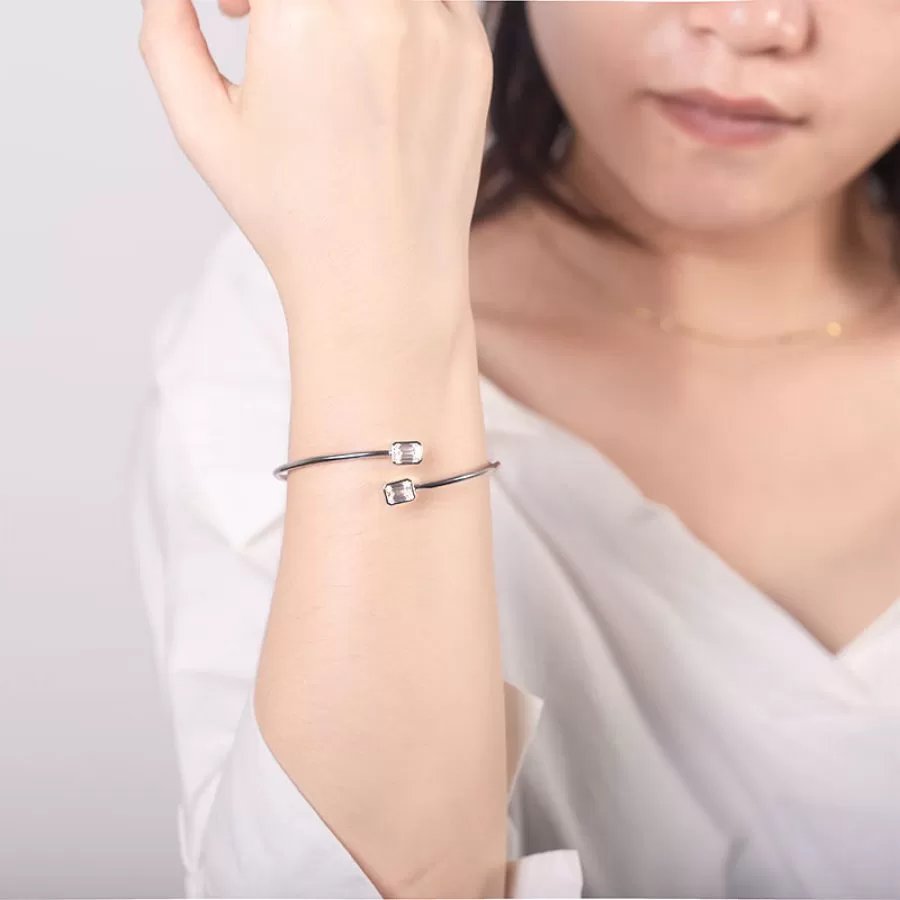
The stone on bridal bracelets decides three things at once: the retail price, the disclosure you must make, and the returns rate. Choosing it by sparkle alone is how buyers end up with a listing that cannot be defended.
01Moissanite: the value stone
Moissanite is silicon carbide, hardness 9.25, with more fire than diamond. On bridal bracelets, it delivers a diamond-like look at a fraction of the cost, and it is the stone most US buyers can sell at USD 80 to 200 retail.
The variables are cut quality and color grade. A well cut near-colorless stone looks clean; a poorly cut one shows a bow-tie under office light.
Ask for the mill certificate and the stone invoice. Two documents turn a material claim into something an auditor can check.
02Lab grown diamond: the bridal stone
Lab grown diamond is chemically diamond, hardness 10, and needs the same disclosure as natural. It carries a certificate cost that moissanite does not, which matters at wholesale volume.
Use lab grown on bridal bracelets when the retail price supports a certificate and the buyer can answer the disclosure question.
| Stone | Hardness | Sparkle | Certificate | Retail band |
|---|---|---|---|---|
| Moissanite | 9.25 | High fire | Optional | Entry to mid |
| Lab grown diamond | 10 | Diamond | Required at grade | Mid to high |
| Natural diamond | 10 | Diamond | Required at grade | High |
| CZ | 8.5 | Bright, flat | None | Entry |
Read the table as a checklist rather than a recommendation. The right row depends on the price band, the wear pattern and the channel you sell into.
Ask for the mill certificate and the stone invoice. Two documents turn a material claim into something an auditor can check.
03Zircon and cubic zirconia: the entry tier
CZ is hard enough for fashion and cheap enough for test orders, but it clouds over time and it cannot carry a diamond claim. Zircon is a natural stone with lower hardness and a different care story.
Keep these clearly labelled in the listing. A mislabelled stone is a compliance problem, not a margin decision.
04Specifying the stone so the lot matches the sample
Write five fields: stone type, size in millimetres, color grade, cut and setting type. Add the tolerance: plus or minus 0.2 mm on the seat, and a color match within one grade.
Photograph the approved stone next to a ruler. That photo is the reference for every later lot.
Capacity is the constraint that price cannot solve. In peak season a cheaper factory with no slot is more expensive than a dearer one with a date.
05What to check before the order
Run the five checks below in order. The first two protect the money, the last three protect the launch date.
If a supplier cannot answer three of the five, treat the quote as a starting point rather than a plan. Ask again in writing and keep the answer with the PO.
06Frequently Asked Questions
Is moissanite a good stone for bridal bracelets?
Yes for value-driven lines. It is hard, bright and inexpensive, provided the cut is good and the listing says moissanite.
Do lab grown diamonds need a certificate?
At most US retail price points, yes, and the listing must state lab grown. Certificate cost is part of the landed price.
Can I mix stone types in one design family?
Yes, but keep the SKUs separate and label each clearly. Mixed labelling is where compliance problems start.
How do I check the stone size in a lot?
Measure ten stones per size with a caliper and compare to the approved reference photo.
What is the most common stone complaint?
A color mismatch against the sample, usually because the factory switched rough without telling the buyer.
How do I know a supplier is reliable?
Two clean repeat lots and two on-time shipments. Before that it is a sample, not a supplier.
Send the bridal bracelets design and target price. We return a stone comparison with size tolerance, disclosure wording and the landed cost at each grade. See the full range at JewelF & Co..
Buyers who get consistent lots are not luckier. They wrote the spec down and checked the first carton against it.
Send a sketch or a photo — our setter will answer with stone options and a price band.
Talk to the atelier


