Black Rhodium Rings: The Look, the Wear, and the Care
Bench notes · The Journal
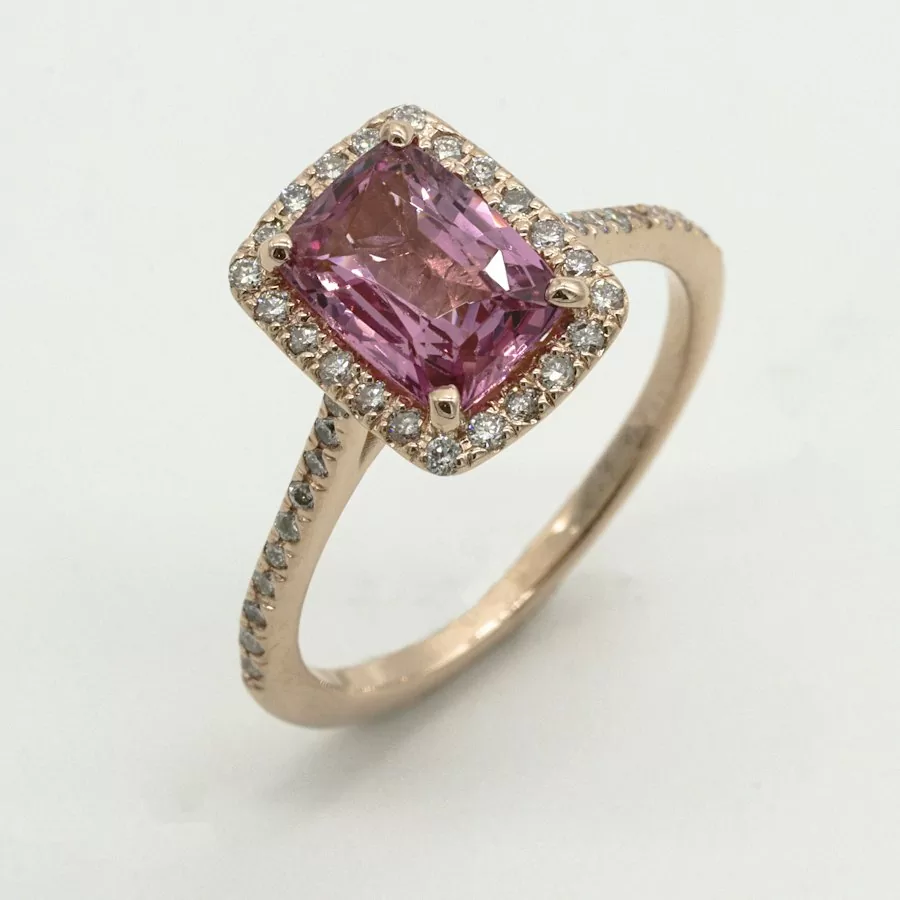
Black rhodium (EU ECHA nickel safety regulations) rings have a moody, modern look that plain gold or silver cannot match. The surface goes deep charcoal to near-black, and it makes diamonds and gemstones pop against a dark background. It is a favorite for men's bands, gothic-inspired engagement rings, and two-tone designs where the dark metal frames a lighter setting. But black rhodium is not a metal you wear. It is a plating—a very thin layer applied over solid gold, platinum, or silver—and anyone buying one should understand what that means before they fall in love with the finish.
01What black rhodium actually is
Rhodium is a member of the platinum family, and in its normal form it is a bright, reflective white metal—the same stuff used to dip white gold, as we cover in white gold rhodium re-plating. Black rhodium is rhodium alloyed and treated to deposit a dark layer. The plating is applied by electroplating, measured in microns. A standard plating is thin, and it exists only on the surface. Underneath, the ring is whatever metal you paid for: 14K gold, platinum, sterling silver. The black color is not in the metal itself.
02How it wears
Plating wears where the ring touches things. On a ring, that means the outside of the shank, the edges of the prongs, and anywhere the ring brushes against a desk, a phone, or another surface. Over months of daily wear, the high spots start to show the underlying metal. On a gold ring, that looks like warm gold peeking through the black on the edges. On a silver ring, it shows as bright silver. This is not a defect—it is what plating does. The honest expectation is that a black rhodium ring worn daily will need a re-plating every one to two years, often sooner if it is on an active hand. That cost and timeline should be part of the purchase decision, not a surprise later.
03Why people still choose it
Because the look is genuinely distinctive. A black rhodium setting makes a diamond appear to float in darkness, and it pairs beautifully with two-tone designs, where the black holds the center stone and a warm yellow gold band wraps the finger. It is also reversible: when the plating wears, you can re-plate it black, or strip it and wear the underlying gold or silver as a normal piece. That flexibility is part of why it stays popular despite the maintenance. Solid black metals like tungsten or carbon fiber are permanent, but they cannot be resized or repaired the way a gold or platinum ring can, which is the tradeoff we walk through in titanium and tungsten ring tradeoffs.
04Caring for a black rhodium ring
The care rules are simple but worth following. Skip the ultrasonic and steam cleaner, both of which can speed up plating wear. Use a soft cloth and mild soap. Take the ring off before heavy work, hand sanitizer, or chlorine exposure, all of which dull plating faster. Store it separately so it does not scratch against other pieces in a box. The goal is not to keep the plating pristine forever—that is unrealistic—but to avoid accelerating wear with chemicals and impact. When it finally looks worn, a re-plating is a quick, inexpensive bench job and returns the ring to day-one black.
05What to ask before you order
If you are designing a custom ring and considering a black finish, ask what base metal it sits on and how thick the plating will be. Thicker plating costs a little more and lasts longer. Ask what the re-plating service costs and how long it takes. And ask what the ring looks like underneath, because that is what you will see on the high spots in year one. Get those answers up front and the black rhodium finish stops being a gamble and becomes a deliberate choice—one that looks as good on day 365 as it did on day one, once you know the refresh cycle.
Color pairing is worth a moment. Black rhodium makes white stones look whiter and colored stones look deeper, which is why it is so often used as a halo background. It also plays well against warm metals: a black head holding a diamond, joined to a yellow gold shank, reads as deliberate and modern rather than gothic. If you are not sure you want full black, a partial finish—black on the outer surface only, with the inside of the shank left in the base metal—wears longer because the high-contact inside never needs to look perfect.
Re-plating is a quick bench job, but it does mean taking the ring off the finger for a day or two. If you wear the ring as a wedding band, plan the refresh around a long weekend so you are not without it on an important day. Most shops can turn a re-plating around in a few business days, and it is one of the least expensive pieces of ongoing maintenance a custom ring can ask for.
06Related Reading
07Frequently Asked Questions
What ring sizes can you supply in bulk?
US sizes 5–12 including half sizes. Send a size breakdown with your order and we cast to that curve; comfort-fit inner bands reduce resize requests.
Can I order a mixed size run instead of one size?
Yes. Mixed runs are standard for wholesale: specify quantity per size and we pack and label by size at no extra labor cost.
What is the MOQ for custom ring designs?
50 pieces per design for existing molds; 100–300 pieces when a new mold or CAD model is required.
How should I price rings for retail margin?
Most partners use a 3–4x markup on FOB cost for sterling and 2.5–3x for moissanite solos, which keeps landed cost under 30% of retail.
Send a sketch or a photo — our setter will answer with stone options and a price band.
Talk to the atelier


