Bespoke Custom Bracelet Bangle Cuff Design
Bench notes · The Journal
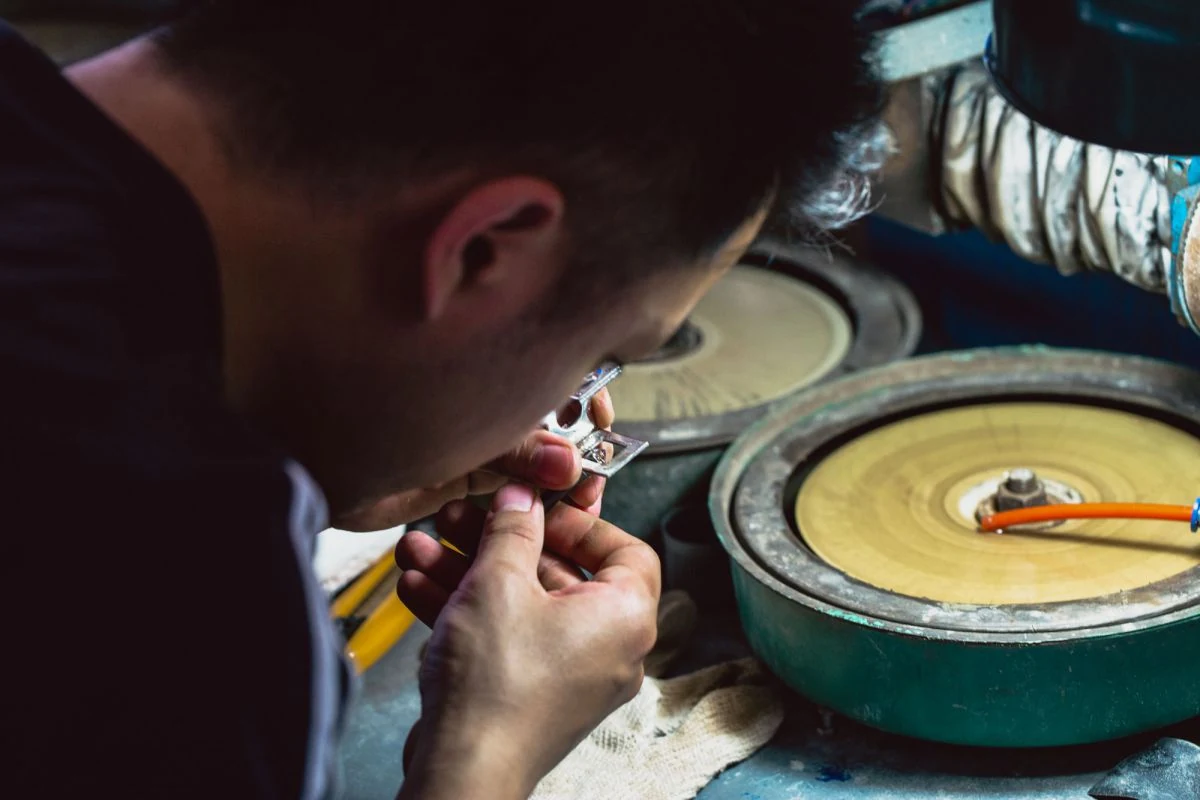
Bracelets are the most physically engaged piece of jewelry anyone wears. Rings sit on a finger and move as the hand moves; necklaces swing freely above the chest; earrings hang from ears that are largely stationary. But a bracelet wraps a joint—the wrist—that bends, rotates, and impacts surfaces thousands of times a day. Every time you type, open a door, hold a steering wheel, pick up a glass, rest your arm on a desk, your bracelet takes contact. A bespoke bracelet has to look beautiful, feel comfortable, and survive all of that without breaking, flipping, scratching, or losing its shape.
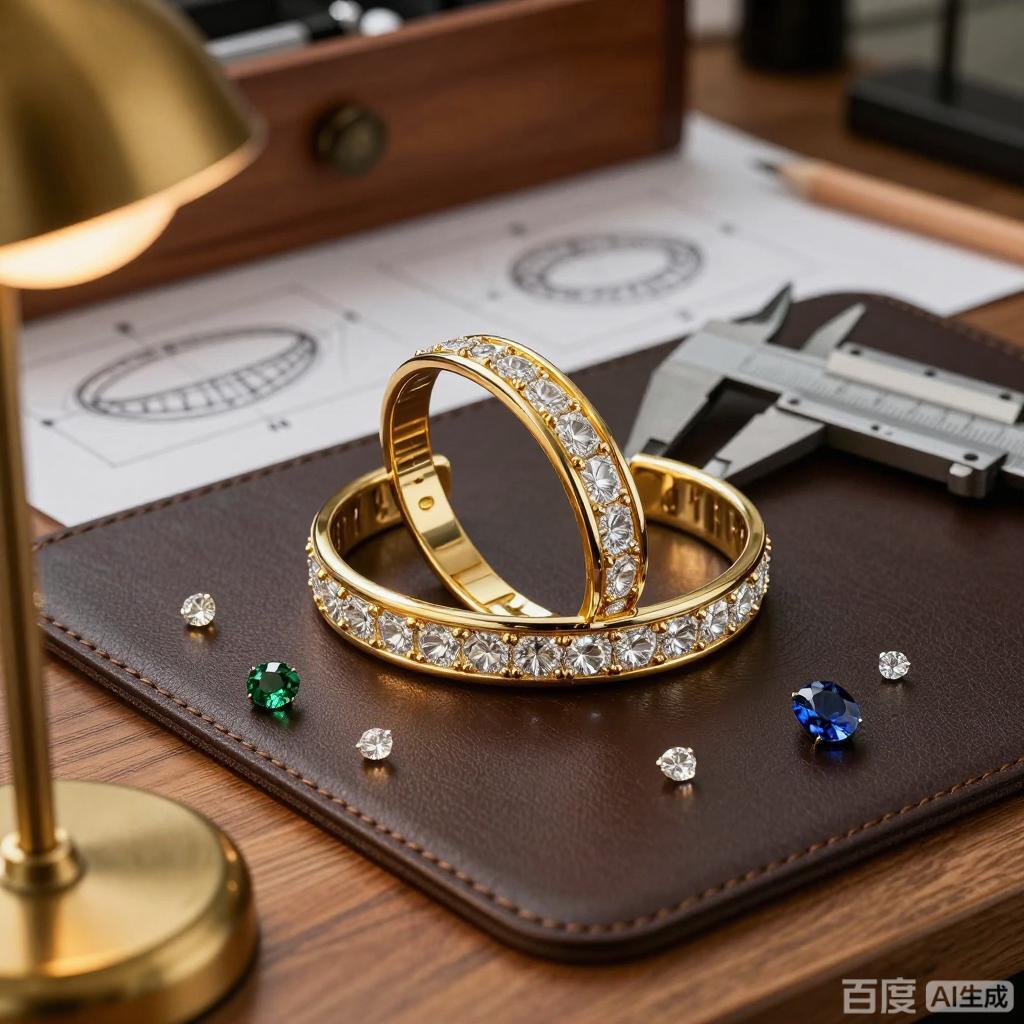
HOLYCOME has designed and manufactured over 1,200 bespoke bracelets for private clients and partner brands since 2016, spanning tennis bracelets, bangles, cuffs, chain bracelets, charm bracelets, bolo/slider bracelets, men's ID bracelets, bridal bracelets, and heirloom redesigns. This article walks through our bespoke bracelet design process, the engineering constraints unique to bracelets, how we help clients choose between styles, pricing, lead times, and how to get started.
01Why Bracelets Deserve Bespoke Design
Mass-produced bracelets are built in standard sizes—7 inches for women, 8 inches for men—and standard styles. Three problems arise:
- Wrist size variation is enormous: Women's wrists range from 5.5 to 7.5 inches in circumference; men's from 6.5 to 8.5 inches. A 7-inch bracelet that fits one person perfectly will dangle on a small wrist or not close on a large one. Bangles must fit over the hand (knuckle width), which varies independently of wrist size—two people with the same wrist circumference can need different bangle diameters.
- Tennis bracelets need to fit exactly: A loose tennis bracelet twists on the wrist, leaving stones facing inward (rubbing against skin, not visible). A tight tennis bracelet is uncomfortable and restricts movement. Tennis bracelets should be sized so you can slide one finger between the bracelet and your wrist—this requires wrist measurement at the narrowest point plus 1–1.5cm.
- Cuffs must be shaped to the wrist: A cuff formed to a generic round mandrel will not follow the flattened oval shape of an actual wrist. Custom cuffs are shaped to the wearer's wrist cross-section (we ask for wrist width + depth measurements) so they sit without rocking or gapping.
Bespoke solves all three: the bracelet is sized to you, shaped to your wrist, and engineered for how you actually wear it.
02The Bespoke Bracelet Design Process
Stage 1: Consultation (Free, No Obligation)
We ask:
Watch wearers often design bracelets for the opposite wrist or design a slim bracelet that sits above or below the watch without clashing. We can design watch-accented sets (bracelet on the same wrist as the watch, sized and shaped to sit beside the watch without scratching).
Stage 2: Concept Sketches (2–5 Days)
After paying the design deposit ($200, credited to the final piece), we produce 2–3 concept sketches showing the bracelet from top and side view, drawn at actual scale against a wrist outline. For bangles and cuffs, sketches show cross-section shape and opening gap. For tennis bracelets, sketches show stone size, link width, and clasp style. Directions include:
- Tennis bracelets: Single-row, multi-row, graduated (larger stones in center), with or without accent stations, in diamond, lab-grown, moissanite, or colored stones.
- Bangles: Slim stackable bangles, wide statement bangles, hinged bangles, diamond-set bangles, engraved bangles, enamel bangles.
- Cuffs: Slim open cuffs, wide sculptural cuffs, torque cuffs (twisted), diamond/stone-set cuffs, engraved/hammered/finishes.
- Chain bracelets: Delicate cable/curb/figaro chains, charm bracelet bases, paperclip chains, heavy Cuban/curb chains for men.
- Bolo/slider bracelets: Adjustable chain with sliding bead, sometimes with a central stone or charm.
- Charm bracelets: Chain base with custom-designed charms representing milestones, family, places, interests.
- Men's styles: ID bracelets, Cuban/curb chains, leather-and-metal combinations, signet-style cuffs.
Stage 3: CAD Design and Renders (5–10 Days)
Bracelet CAD is built around three critical dimensions:
- Inner diameter/circumference: Tennis and chain bracelets: circumference = wrist + 1–1.5cm for a comfort fit. Bangles: inner diameter matched to hand-knuckle measurement (not wrist). Cuffs: inner circumference = wrist circumference, with a 25–30mm gap.
- Cross-section shape: Bracelet shanks can be half-round (comfort-fit interior, domed exterior), flat (flat interior, flat top), oval-comfort (rounded interior, flat exterior), knife-edge, or round wire. The interior shape determines comfort—flat interiors sit more securely but can dig into the wrist; round interiors rotate freely but spin; half-round (our default for bangles and cuffs) combines comfort with stable positioning.
- Clasp and safety: Clasp design depends on bracelet style and value. Tennis bracelets always use box clasp with figure-8 safety plus two safety chains; bangles use hidden box clasps; chain bracelets use lobster clasps; cuffs have no clasp (open-end); bolo/slider use the slide mechanism.
Specific engineering by style:
- Tennis bracelets: Pin diameter sized to stone width (0.30–0.60mm stainless steel or white gold pins); links contoured to wrist radius (65mm diameter for women's, 70mm for men's); figure-8 safety plus two safety chains standard; stone seats cut for exact stone dimensions.
- Hinged bangles: Three-knuckle hinge with steel pin (more durable than two-knuckle hinges used in cheap bangles); hidden box clasp opposite the hinge; 30-cycle open/close test in QC.
- Cuffs: Formed on oval wrist mandrel (not round bangle mandrel) for a proper wrist fit; work-hardened/tumbled to spring temper so the cuff flexes but returns to shape; ends rounded and polished (no sharp points that press into the wrist).
- Charm bracelets: Jump rings for each charm double-soldered (never split rings); chain gauge sized to charm weight (heavier charms require thicker chains); charms spaced to avoid tangling.
You receive 4–6 renders plus a dimensioned technical drawing. Two rounds of revisions included.
Stage 4: 3D Prototype (Optional, 3–7 Days)
For tennis bracelets, bangles, and cuffs, a resin prototype is strongly recommended (more than for rings or earrings) because bracelets are defined by fit, not just visual design. A tennis bracelet prototype on a wrist mandrel shows whether the links flex smoothly; a bangle prototype slid over the hand confirms fit; a cuff prototype placed on the wrist shows whether it sits without rocking. Prototypes ship for $30–50 and are particularly valuable for clients designing bridal bracelets or cuffs that will be worn daily.
Stage 5: Stone Sourcing (Runs in Parallel, 5–10 Days)
For tennis bracelets and stone-set bangles/cuffs, we source stones matched across the entire bracelet. Tennis bracelets require end-to-end color matching (even a half-grade color difference in one stone is visible in a continuous line). For diamond and lab-grown tennis bracelets, we color-sort stones in batches of 50+ to ensure consistent color/clarity from one end to the other.
Stage 6: Production (10–20 Days)
- Casting/forming: Bangles are either cast (from wax) or formed from solid tube/wire bent into shape (for simple round bangles). Cuffs are cut from sheet or formed from bent bar. Tennis bracelet links are cast individually or as continuous wax trees. Chain bracelets use chain from our chain machines or certified suppliers.
- Assembly: Hinges and clasps installed (for hinged bangles); tennis bracelet links connected with pins; cuff ends formed and rounded; charm jump rings attached.
- Setting: Stones set; tennis bracelets require the most careful setting because mis-set stones are immediately visible in a continuous line and flexing links stress settings.
- Engraving: Inside/outside engraving on bangles and cuffs (names, dates, coordinates, messages, handwriting, fingerprints). ID bracelets have plate engraving. Charm engravings are small but precise.
- Finishing: Polish, brush, hammer, oxidize, sandblast, enamel (as specified); rhodium for white gold/silver. Inside surfaces are polished smooth to avoid scratching the wrist.
- Forming and contouring: Tennis bracelets contoured to wrist mandrel; cuffs adjusted to oval wrist shape; bangles checked for roundness/ovalness; chain bracelets laid flat to confirm no twists.
- QC: Clasp cycle test (30 open/close for bangles, 20 for lobster clasps); tennis stone tightness test (every stone); safety chain inspection for tennis; hinge smoothness check; cuff spring-temper test (opens and returns to shape); bangle roundness check (within ±0.5mm at four axes); charm pull-test (2kg per charm); engraving quality check; hallmark stamping (inside bangle, near clasp on chain); size verification against specified wrist/bangle dimensions.
Stage 7: Photography and Shipping (2–5 Days)
Finished bracelets are photographed (flat lay, on wrist form, details of clasp/engraving/closure) and photos sent to you for approval before dispatch. Bracelets ship fully insured in presentation boxes via DHL/FedEx, with care cards, polishing cloths, and certificates as applicable.
03Choosing Between Bangle, Cuff, and Tennis
Clients often come in unsure whether they want a bangle, cuff, or tennis bracelet. Here's how we frame the choice:
| Style | Daily wear? | Fit flexibility | Stone setting | Best for |
|---|---|---|---|---|
| Tennis bracelet | Yes (with care; avoid heavy impact) | Exact fit; not adjustable | Continuous stones | Bridal, anniversary, everyday luxury, heirloom |
| Bangle (slip-on) | Yes | Fits over hand; not adjustable on wrist | Can be set or plain; most are plain or lightly set | Stacking, everyday wear, ethnic/traditional designs |
| Bangle (hinged) | Yes | Clasp closure; more precise fit | Set, engraved, enamel, or plain | Clients who want a bangle fit without hand-over-knuckle sizing |
| Cuff | Yes | Slightly flex-adjustable (within limits) | Set or plain; popular for wide sculptural forms | Statement pieces, men's, modern/minimalist, southwestern/tribal styles |
| Chain bracelet | Yes (everyday casual) | Adjustable with extender chain | Charms, small station settings | Layering, charm collections, casual everyday |
| Bolo/slider | Yes | Fully adjustable | Central stone or charm | Gifting (no sizing needed), everyday, minimalist |
04Pricing and Lead Times
| Order type | Price range | Lead time |
|---|---|---|
| Simple bespoke chain bracelet (14K gold, no stones) | $300–$800 | 3–4 weeks |
| Bangle (plain 14K gold, no stones) | $600–$1,500 | 4–5 weeks |
| Bangle (diamond-set or engraved hinged) | $1,500–$5,000 | 5–7 weeks |
| Cuff (plain, substantial, 14K gold) | $800–$3,000 | 4–6 weeks |
| Cuff (sculptural or diamond-set) | $2,500–$10,000+ | 6–8 weeks |
| Tennis bracelet (14K gold, lab-grown diamonds 2–3mm, 7 inch) | $1,500–$5,000 | 5–7 weeks |
| Tennis bracelet (18K/platinum, natural diamonds 3–4mm, 7 inch) | $5,000–$25,000+ | 6–8 weeks |
| Charm bracelet (chain base with 5–10 custom charms) | $1,000–$4,000 | 5–7 weeks (charms are the majority of lead time) |
| Men's ID/curb bracelet | $800–$5,000 | 4–6 weeks |
| Bridal bracelet (coordinated with ring/earrings) | $1,000–$8,000 | 5–8 weeks (order 8+ weeks before wedding) |
| Silver bespoke bracelets (sterling silver, fashion) | $120–$600 | 3–4 weeks |
05FAQ
How do I measure my wrist for a bespoke bracelet?
We send a printable wrist sizer when you book a consultation. In general: wrap a flexible measuring tape snugly (not tight) around your wrist at the narrowest point (the bone area), then add 1–1.5 cm depending on how loose you like bracelets to fit. 1 cm extra is a snug fit; 1.5 cm is a comfortable everyday fit; 2 cm is a loose/drapey fit. For bangles, measure across the widest part of your hand (knuckles) with your thumb tucked in—that's the diameter the bangle must fit over. For cuffs, measure wrist circumference; we do the rest.
Can a tennis bracelet be worn every day?
Yes—with a few precautions. A well-made tennis bracelet with properly set stones and security clasp/safety chains can be worn daily, but we advise removing it for heavy impact activity (weightlifting, contact sports, gardening with tools) and for sleeping (sleeping in a tennis bracelet stresses the links and clasps against a bent wrist). Our tennis bracelets include annual inspection as part of lifetime care—we recommend a prong and pin check every 2–3 years, same as for rings.
Can you redesign an old bracelet into something new?
Yes. Clients frequently bring us inherited bracelets (outdated styles, broken clasps, a grandparent's bracelet they never wear) to redesign. We remove and document the stones, melt the metal if the client wants to reuse it (we discuss this on a case-by-case basis—sometimes old gold alloys are not ideal for re-casting due to solder contamination), and build a new bespoke bracelet (or ring, or earrings, or pendant) using the existing stones and metal where possible. Redesign projects carry additional sentiment and we handle them with extra care.
Can you make stackable bangle sets?
Yes. Stackable bangles (3–7 slim bangles worn together) are one of our most-commissioned bangle projects. We design sets that coordinate in finish and proportion but vary slightly (one smooth, one hammered, one diamond-set, one engraved, for example) so they layer well without looking identical. Stacked sets work best when bangles are relatively slim (2.5–4mm width) and have consistent cross-sections so they sit together without catching.
Do you make bracelets with hidden elements like rings?
Yes. Engraved messages inside bangles are the equivalent of hidden in-ring engraving—we regularly engrave handwriting, dates, coordinates, short messages, and soundwaves inside bangles and cuffs where they are only visible to the wearer. Cuffs can have hidden stones set inside (visible only if you look into the cuff interior), and bangles can have small personal elements (birthstones, a child's initial) set on the inner surface.
Can a bespoke bracelet match my existing engagement ring or wedding band?
Yes. Bridal and coordination projects make up roughly 30% of our bespoke bracelet work. We match metal (exact alloy and color), finish (polish/brush/hammer), stone shape, setting style, and design motifs (milgrain, filigree, halo shape) to existing rings so the pieces look like a cohesive set rather than random items. Clients often ship existing pieces to us or send high-resolution photographs with dimension references; for high-budget sets, we prefer to have the ring in hand during production for exact matching.
A bracelet might be the hardest-working piece of jewelry you own. It takes impact all day long, it moves with every gesture, and it sits in a position other people look at constantly. Getting a bracelet right means getting the fit right (not too tight, not too loose, shaped to your actual wrist rather than a generic mandrel), getting the clasp right (security without being impossible to fasten), getting the hinge right (smooth for years without loosening), and getting the materials right (pins thick enough, prongs tight enough, metal hardened enough). None of those things are visible from a photograph, which is why retail bracelets fail so often. Bespoke builds all of it in from the start. Book a free bespoke bracelet consultation to start designing yours.
The Wikipedia entry on engagement rings gives an independent overview of engagement ring traditions and settings.
06Related Reading
Send a sketch or a photo — our setter will answer with stone options and a price band.
Talk to the atelier


