3D Printing vs Hand-Carved Wax: Which Model Method Wins
Bench notes · The Journal
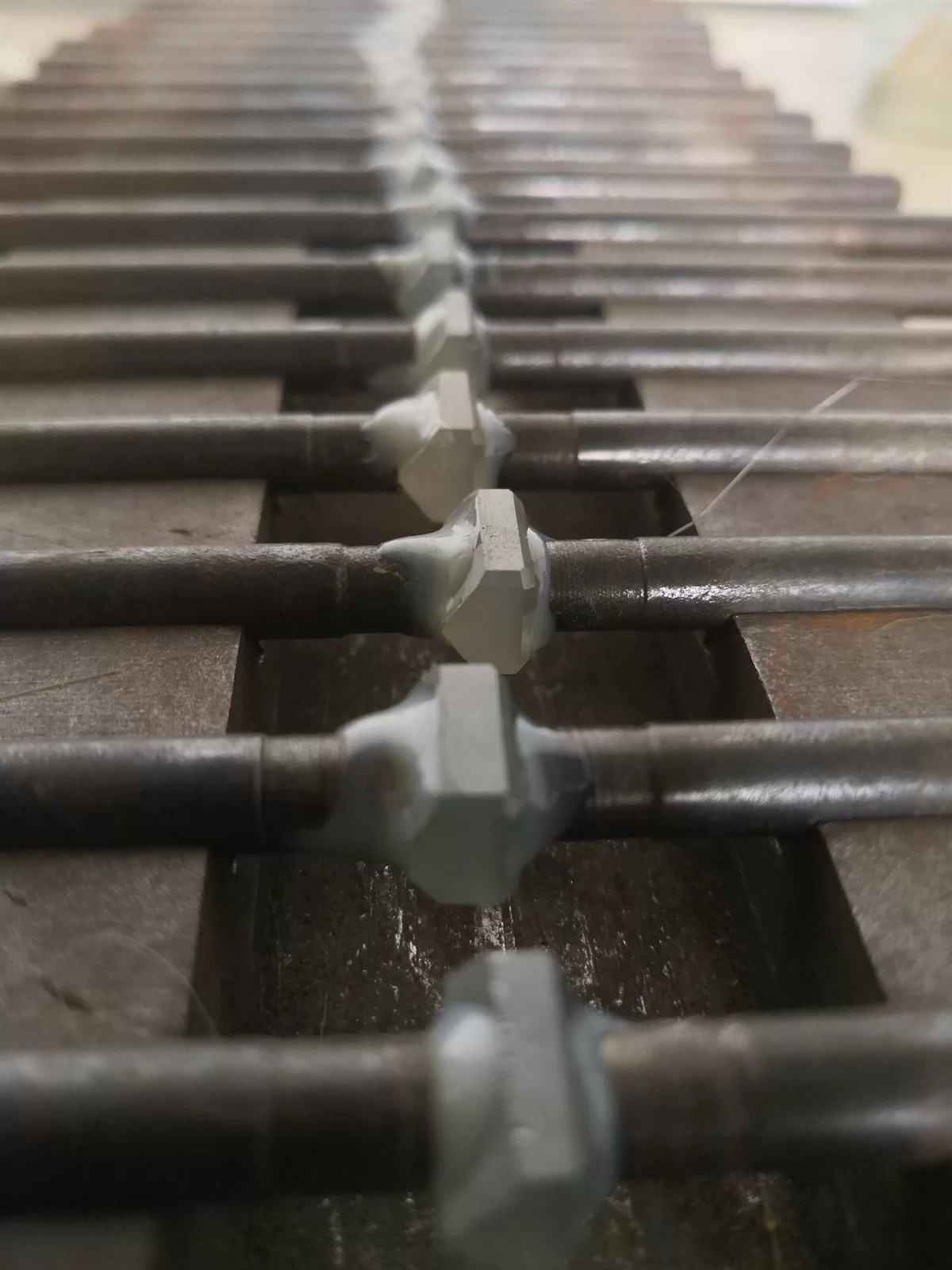
Every custom piece that reaches the casting stage starts as a model that is never worn. That model determines how the finished ring sits, how the stones seat, and whether the caster can pull a clean sprue without hidden voids. At a production atelier, the choice between a resin-printed model and a hand-carved wax comes down to geometry, budget, and how much revision the client expects before the torch is lit.
01What a 3D-printed model actually is
Lost-wax casting has not changed in its core chemistry: a disposable model is encased in plaster, burned out, and replaced with molten metal. What has changed is how that model arrives. Modern jewelry resins print at layer heights of 25 to 30 microns, which is fine enough that a well-supported build loses almost no detail to casting. Prongs, filigree, engraved texture, and pavé seats survive the burnout cleanly because the resin ash is low, controlled, and designed to leave no residue on the investment.
The printer also locks geometry. Once the CAD file is approved, the printed ring is exactly what the screen showed. A client measuring a printed model on their own finger is measuring the final ring minus a few tenths of a millimeter for metal shrinkage. That predictability is the printer's strongest argument. When a design has to match a stack of existing bands, or fit over a specific engagement ring, the printed model can be test-fitted before metal is spent.
Printed models also handle symmetry reliably. A pair of matching wedding bands carved by hand will never be perfectly identical; a printed pair will be. For clients who want a matched set, the printer removes a long hand-finishing debate.
02What hand-carved wax still does better
Wax carving begins with a tube or block of carving wax and a set of gravers. The carver builds volume subtractively, smoothing and reshaping as they go. Where the printer wins on repeatability, the carver wins on surfaces that do not translate cleanly to polygons: a slightly organic shank, a hand-felted texture, a wall thickness that changes mid-band because the client wanted weight one way and not the other.
Large sculptural pieces, signet rings with deep relief, cuff bracelets with a hammered surface, and anything meant to read as hand-forged still carve better than they print. A carver can also revise a wax in minutes that a CAD operator would rebuild in hours. For prototypes meant to be worn, twisted, and reshaped against a real hand, wax remains the faster loop. The carver can pull a section off, bend it, re-add it, and show the client a physical iteration the same afternoon.
Carved wax also handles undercuts and deep relief that would need elaborate support structures in a print. A crest or a figurative element that has to overhang the shank is trivial to build in wax; in resin, it risks a support mark that has to be cleaned up by hand anyway.
03Where the two methods meet cost
Printing a ring model costs the atelier machine amortization, resin, and post-processing time. It is cheap to repeat. Carving costs an experienced bench hand three to eight hours of labor, and every revision starts that clock again. For a first design that may change twice, printing usually comes out ahead. For a single, settled, sculptural design, carving avoids the CAD hours entirely.
Retail clients rarely see the model bill separately. They see it in the quoted price. Ateliers that print heavily can quote tighter because revision loops are shorter; ateliers that carve can justify a premium on pieces where the hand surface matters. Asking which method the maker plans to use is also a quick way to gauge whether the shop reads as a production line or a bench.
04Detail limits people miss
Printed resins struggle with extremely fine undercuts and very deep, narrow channels where support material cannot be removed. Carvers hit the opposite wall: thin, uniform prongs below 0.8 mm are hard to hold by hand but trivial in CAD. Prong count, basket structure, and pavé layouts generally favor the printer. Asymmetrical, weighty, organic forms favor the carver.
Wall thickness is another limit. Printed resins demand a minimum wall of about 0.4 mm or the burnout cracks the investment. Wax can go thinner because it flexes rather than ash. A delicate lace-like bracelet that would delaminate in resin often casts cleanly from a wax tube.
05Which to ask for
If your design depends on a precise stone seat, a consistent wall thickness, or multiple revision rounds on a locked geometry, ask for a printed model. If the piece is a sculptural signet, a textured band, or a form you expect to touch and reshape, ask the atelier to carve it. A mixed workflow is common: print the structural core, carve the exterior texture, cast once. That hybrid is often the sweet spot for a custom piece that needs both engineering and hand surface.
Questions worth asking your maker
Read more about how we handle both methods in our process guides.
The Wikipedia entry on engagement rings gives an independent overview of engagement ring traditions and settings.
06Related Reading
07Frequently Asked Questions
How does the custom OEM process work?
Send a reference, sketch or CAD file. We quote, produce a 3D render, then a wax or resin model for approval before casting. Nothing goes to bulk without written sign-off.
How long does a custom sample take?
About 20 days for a new CAD model, including one revision round. Repeat designs reuse the existing mold and ship in 3–5 days.
What is the custom MOQ?
100–300 pieces per design depending on the mold and stone setting complexity.
Do you sign NDAs for private label?
Yes. Private-label clients get an NDA and exclusive mold use for the agreed term.
Send a sketch or a photo — our setter will answer with stone options and a price band.
Talk to the atelier


