Clients sit across the bench from me, point at two metal swatches, and ask the question I hear five times a week: "So which is better, 14K or 18K?" It sounds like a simple choice, but the answer almost never is. People assume the higher number means a better ring, and that 18K is simply the upgraded version of 14K. In our workshop, that is not how we think about it at all. The karat number tells you how much pure gold is in the alloy, but it says nothing about how the ring will wear on your finger, what color it will actually look like, or how often you will need to bring it back to the bench.
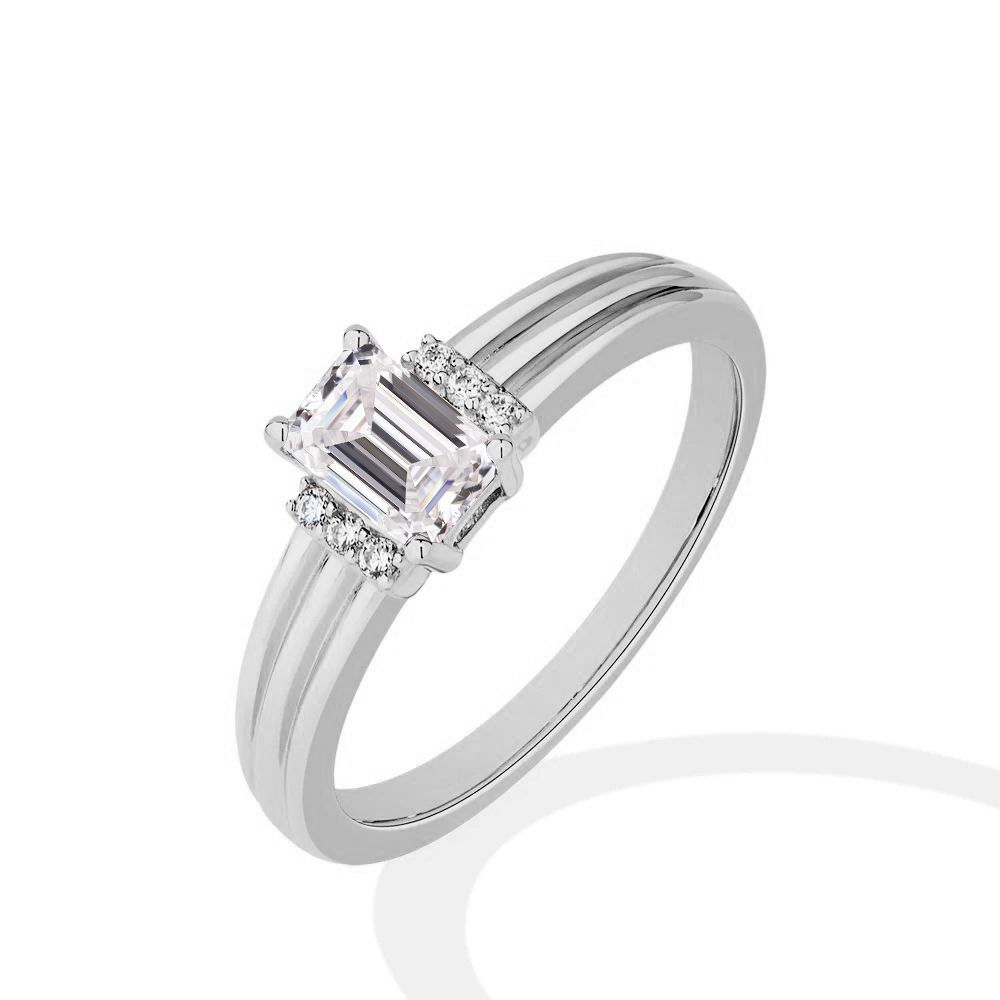
After years of making rings that go out into real lives, rings that get typed on keyboards, washed dishes, lifted toddlers, and knocked against gym equipment, I have stopped giving a straight "14K is better" or "18K is better" answer. Instead I walk clients through what the alloy actually does on their hand. Let me do the same for you here.
What the karat number actually means
Gold in its pure form is 24 karat. It is soft, richly colored, and too malleable for a ring you wear every day. When a jeweler talks about 14K or 18K, we are talking about the ratio of pure gold mixed with other metals, the alloy, to make the metal hard enough to hold a stone and survive daily contact.
- 14K gold is 58.3% pure gold, mixed with roughly 41.7% alloy metals, usually copper, silver, zinc, and sometimes nickel.
- 18K gold is 75% pure gold, mixed with 25% alloy metals.
That difference, 58% versus 75%, is the whole ballgame. It changes the color, the hardness, the price, and how the ring ages. It is not a quality ranking. It is a recipe. A well-made 14K ring is not a step down from a well-made 18K ring. It is a different tool for a different job, the way a chef's knife and a paring knife are both fine steel but meant for different work.
Color: why 14K and 18K do not look the same
This surprises people. Two rings, both described as "yellow gold," can look noticeably different depending on the karat. The reason is that pure gold has a very specific deep color, and every other metal you mix in dilutes or shifts that color.
18K yellow gold carries more pure gold, so the color is deeper, warmer, and richer. It has that saturated, almost honeyed glow people picture when they imagine fine gold. 14K yellow gold is paler and brighter, because the other metals dilute the gold color. Neither is wrong, but they read differently on the hand. I have had clients see an 18K yellow ring next to a 14K yellow ring and assume the 14K one was "less yellow." It is not less of anything. It is just alloyed down, and that paleness is exactly why many people prefer it for a modern, everyday look.
Rose gold behaves the same way, only more dramatically. The pink comes from copper in the alloy. An 18K rose gold ring has less copper relative to its gold, so the rose is softer and more muted, a champagne blush rather than a statement. A 14K rose gold ring has a higher proportion of copper, giving it a deeper, almost brick-rose tone that reads as distinctly pink. If you want a subtle warmth, lean 18K. If you want that distinctly pink vintage look, the one that photographs unmistakably, 14K often delivers it more strongly and at a lower cost because you need less copper to get there.
White gold is where most of the confusion lives. White gold is not naturally white. It is gold alloyed with white metals, usually palladium, silver, or nickel, and then rhodium plated to make it bright white. The underlying gold is actually a pale yellowish gray. Here is the karat difference in practical terms: 18K white gold has more gold in the mix, so the natural undertone is slightly warmer and the rhodium plating does more heavy lifting to mask it. 14K white gold, with more white alloy metal underneath, tends to sit a little whiter even before plating. In practice, though, both look white when they leave our bench, and both will need rhodium re-plating as the plating wears through contact with soap, lotion, and sweat. The difference between them is subtle, not dramatic. If you are choosing between them, let hardness and price drive the decision, not the white appearance.
Hardness and daily wear
Pure gold is soft. Mix in more alloy and the metal gets harder. That is the entire reason we alloy gold at all. A 24K ring would scratch in a week and lose its shape in a year.
14K gold is harder and more scratch-resistant than 18K. The extra alloy makes 14K noticeably more rigid. For a ring that gets worn every single day, through work, travel, and exercise, that hardness matters. A 14K band will take longer to show dings, its prongs will hold their shape longer, and the edges will wear down more slowly. A thin 14K band that you never take off will still look like itself a decade from now.
18K gold is softer. It takes a polish beautifully and feels luscious on the finger, heavier and smoother against the skin, but it also shows wear faster. Prongs can bend more easily if you knock the ring. Thin bands can flatten or ovalize over years of knocks against desks and doorframes. An 18K ring is not fragile. It is still a serious piece of jewelry, and many heirlooms are 18K. But it is less forgiving of a rough lifestyle, and it will spend more time back at the bench for prong retipping and polishing.
Here is how I frame it for clients: if you work with your hands, garden regularly, hit the gym four days a week, type for a living, or simply do not like fussing over jewelry, 14K is the practical choice. If the ring is more of a statement or heirloom piece that you will wear to dinner and events and take off for heavy work, 18K gives you a richer color and a more luxurious feel. There is no prize for toughing it out in a softer metal you cannot actually take care of.
Price: what you are actually paying for
Because 18K contains more pure gold, it costs more per gram. A comparable 18K ring will run roughly 15 to 25 percent more than the same design in 14K, depending on gold prices at the time. That gap widens on larger stones or heavier bands, where the weight of the metal itself becomes a real line item. A 3mm band and a 6mm band are not just different widths. The 6mm band uses roughly twice the gold, so the karat choice on a wide band matters far more than on a slim one.
What people sometimes miss is that you are not paying for "better." You are paying for more gold content. If your budget is tight and you want a bigger or better-cut stone, putting that money into the diamond and choosing 14K metal is often the smarter move. Most people looking at your ring will notice the center stone long before they detect whether the band is 58% or 75% gold. We build plenty of 14K rings around center stones that clients saved hard for, and the results look like money well spent.
Conversely, if you specifically want the deep color and weight of 18K, or if you are making a piece meant to be passed down, the premium is justified. Heirloom work in our shop almost always goes out in 18K, because the color photographs and ages beautifully, and the softer gold can be re-polished over generations without thinning out the structure. The metal becomes a document of the family rather than a disposable fashion choice.
Allergies and skin sensitivity
This is the question nobody asks until after the ring turns their finger green, or red, or itchy. The alloy metals in gold are what cause reactions, not the gold itself. Gold is one of the least reactive metals on earth, which is partly why we have used it for jewelry for thousands of years.
Nickel is the usual culprit. Some white gold alloys use nickel to get the white color, and roughly one in eight people react to it. The reaction shows up as redness, itching, or a rash under the band, sometimes only in warm weather when the skin sweats. If you have known metal sensitivities, ask specifically whether the white gold uses a palladium-based alloy instead of nickel. Palladium white gold is hypoallergenic and costs a bit more, but it saves a lot of discomfort. We spec palladium white gold by default for clients who mention sensitive skin.
Interestingly, 14K gold contains more alloy metal than 18K, so in theory a 14K ring has more of the potential irritant. In practice, modern 14K alloys for fine jewelry are formulated to avoid nickel, and the rhodium plating on white gold acts as a barrier anyway. If sensitivity is a concern, tell your jeweler up front and we will spec the alloy accordingly. Do not assume a "gold" ring will automatically be kind to your skin. Ask what is in the alloy.
Resale, heirlooms, and repeated repair
Gold is gold, and a refiner will pay you based on weight and karat. 18K has a higher melt value per gram because of its purity. But that is the wholesale melt price, not what you would get walking into a store. Do not choose 18K because you think you will sell the ring someday. Choose it because you like how it looks and feels on your hand.
For heirlooms, the softer 18K metal actually has an advantage that surprises people. It can be re-sized, re-shaped, and re-polished many times over decades without becoming brittle. 14K, being harder, can develop stress cracks at soldering points if it is worked too many times. Every time a ring is cut to resize it, the solder joint weakens a little. On a hard 14K band, repeated cutting and closing can eventually make that section unreliable. On 18K, the more ductile metal tolerates the work more gracefully. If you imagine a ring being worn by your child one day, 18K is the more forgiving long-term metal.
How we decide in the shop
When a client cannot choose, I walk them through three questions rather than hand them a verdict.
- How will you wear it? Daily and rugged points to 14K. Occasional and delicate points to 18K.
- What color do you really want? Bring photos of gold jewelry you already own and love. If you keep reaching for a warm rich gold, 18K yellow or rose. If you prefer a bright modern look, 14K or white gold plating.
- What is the rest of the budget? If the stone is the hero, 14K lets you spend more there. If the metal and band are the statement, 18K shines.
There is no universally correct answer, and anyone who tells you there is is selling something. The right karat for your ring is the one that matches how you actually live in it. Pick on purpose, tell your jeweler honestly about your work and your weekends, and the ring will fit your life for years. A well-chosen 14K ring worn daily will outlast a coveted 18K ring hidden in a box, every single time.
Where platinum fits in, for context
Since the question always comes up, it is worth saying a word about platinum, even though this article is about 14K versus 18K. Platinum is a completely different metal, denser and naturally white, and it does not need rhodium plating. It costs more than gold by weight, and it develops a soft patina over the years that some people love and others prefer to polish away. We use platinum for clients who want the most durable white metal and do not want to re-plate. But if your question is genuinely 14K versus 18K, you do not need to overthink platinum. Pick gold if the warm color is what you want. Pick platinum only if the white, the density, or the no-plating appeal to you specifically.
Frequently asked questions
Does 18K gold scratch easier than 14K?
Yes, slightly. Because 18K is softer, it takes a scratch a little more readily. The surprise is that a softer metal often scratches shallower, while a harder metal can show deeper gouges. In practice both will show wear, and both can be polished back. The difference is real but not dramatic for daily wear.
Can I switch karats later if I change my mind?
Not on the same ring. The band is one piece of metal. If you start in 14K and decide you want 18K, you are looking at rebuilding the band, not flipping a switch. This is why we spend time up front getting the karat right.
Is 14K good enough for an engagement ring?
Absolutely. The majority of engagement rings sold in this country are 14K, and for good reason: it is durable, affordable, and available in every color. "Good enough" undersells it. 14K is the professional default for a reason.